
Divine Incursions: Vol. 1 Review
Yen Press’s Divine Incursions, Vol. 1 drops you into a Japan where “miracles” don’t feel like blessings so much as bureaucratic disasters waiting to be filed. The hook is equal parts body horror and procedural drama, and the volume’s biggest strength is how calmly it treats the impossible—like the government has already accepted that the divine is a public‑safety hazard. Let’s get into it.
Plot
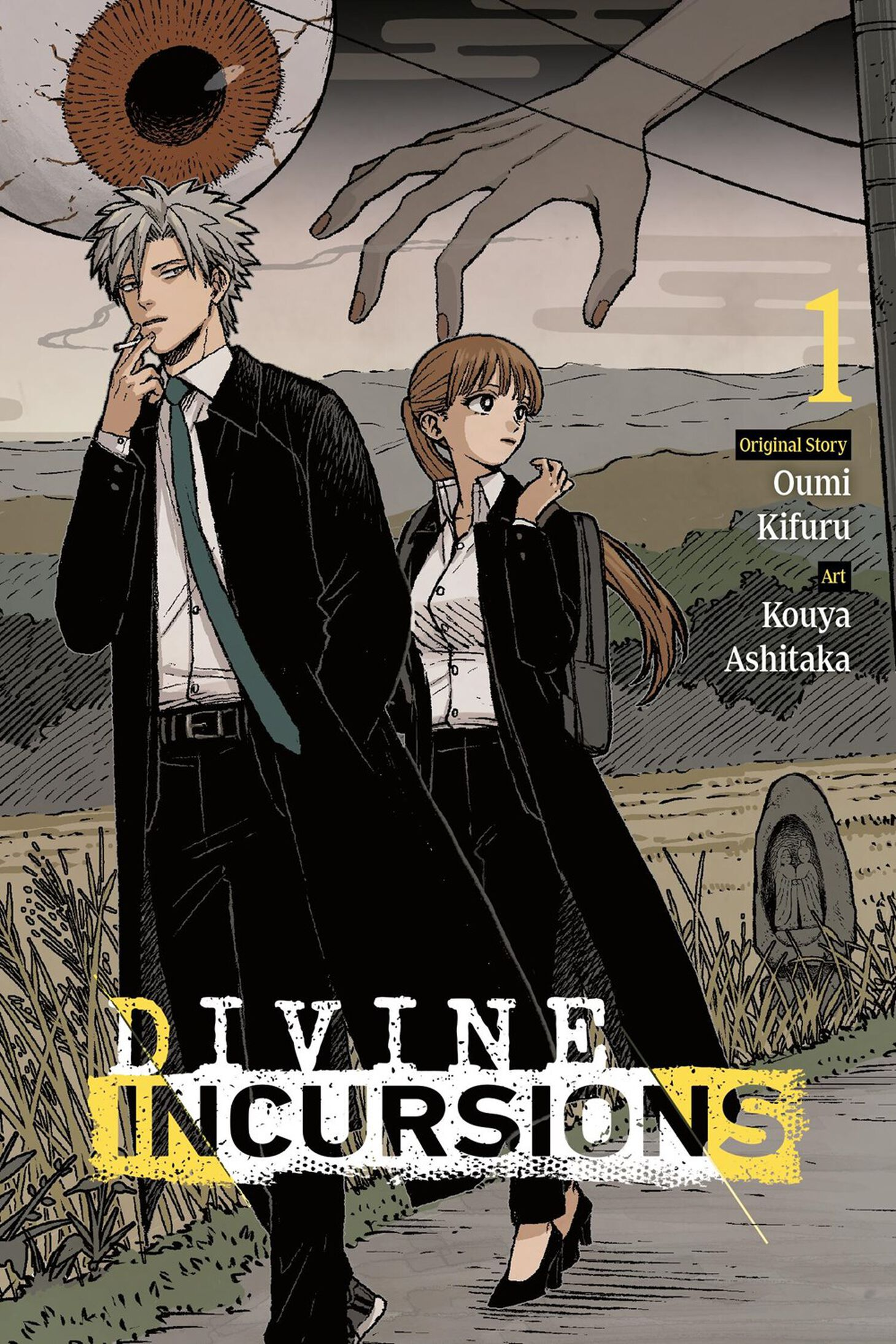
The premise is straightforward: titanic body parts fall from the sky, corpses appear with their organs missing, and the country keeps chasing dreams of eternal life and youth anyway. Into this steps Katagishi, an investigator in a covert government unit responsible for handling these “divine incursions,” paired with his junior colleague Miyaki.
The early chapters unfold like the opening of a case file. Katagishi and Miyaki leave Tokyo under a mundane cover story—at one point posing as municipal surveyors—and begin collecting local records and interviewing witnesses. The first mystery is rooted in a rural village with a story that’s both absurd and unsettling: residents claim a giant eyeball fell from the sky and crashed into a shed. The timeline stretches back to 1997, tied to a festival night when something went wrong near an elementary school.
What Volume 1 does well is resist the urge to over‑explain its cosmology. It establishes the baseline—divine phenomena as recurring, investigable events—and then lets tension build through documents, interviews, and the creeping realization that the “local god” angle isn’t folklore so much as an active threat.
Characters
Katagishi arrives with the air of someone who’s been doing this too long. He’s the weary senior agent who would rather skip another interview but still follows every lead. Miyaki, by contrast, brings energy and momentum—digging through village‑hall archives, keeping the investigation organized, and pushing conversations forward when they stall.
There’s also a personal thread tied to Katagishi that hints at the series’ longer arc: he’s pursuing these cases with private stakes connected to his missing wife. Even though Volume 1 is largely “case setup,” that motive matters. It reframes the work from routine cleanup into something more like a slow, determined search.
Art
Kouya Ashitaka’s art thrives on contrast. Clean character designs and readable layouts sit alongside imagery that’s willing to get grotesque when an “incursion” breaks through. The early chapters show strong control of tone—rural wide shots, festival flashbacks, lantern‑lit crowds, and deep shadows that make the countryside feel exposed rather than comforting.
The staging is also practical and clear. Investigators are framed with documents, photos, and witnesses, and then the art shifts to the uncanny—like that fallen eye—without changing its visual language. The impossible lands with matter‑of‑fact weight.
Themes
The central thematic claim is stated outright in the light‑novel framing: the gods aren’t “good” or “evil” in human terms, and the destruction they cause isn’t moral or intentional. Volume 1 leans into this by treating the investigators like civil servants responding to the incomprehensible—an implicit theme about bureaucracy trying (and often failing) to contain chaos.
Another recurring idea is desire. Humanity still wants immortality and youth even when the evidence suggests that divine “gifts” arrive as violations—of bodies, of privacy, of cause‑and‑effect itself.
Verdict
If you enjoy mysteries where the world keeps functioning around the nightmare, this one’s worth picking up—especially if you’re ready for a case that starts with an eyeball from the sky and ends with you contemplating the idea of “local gods.”