
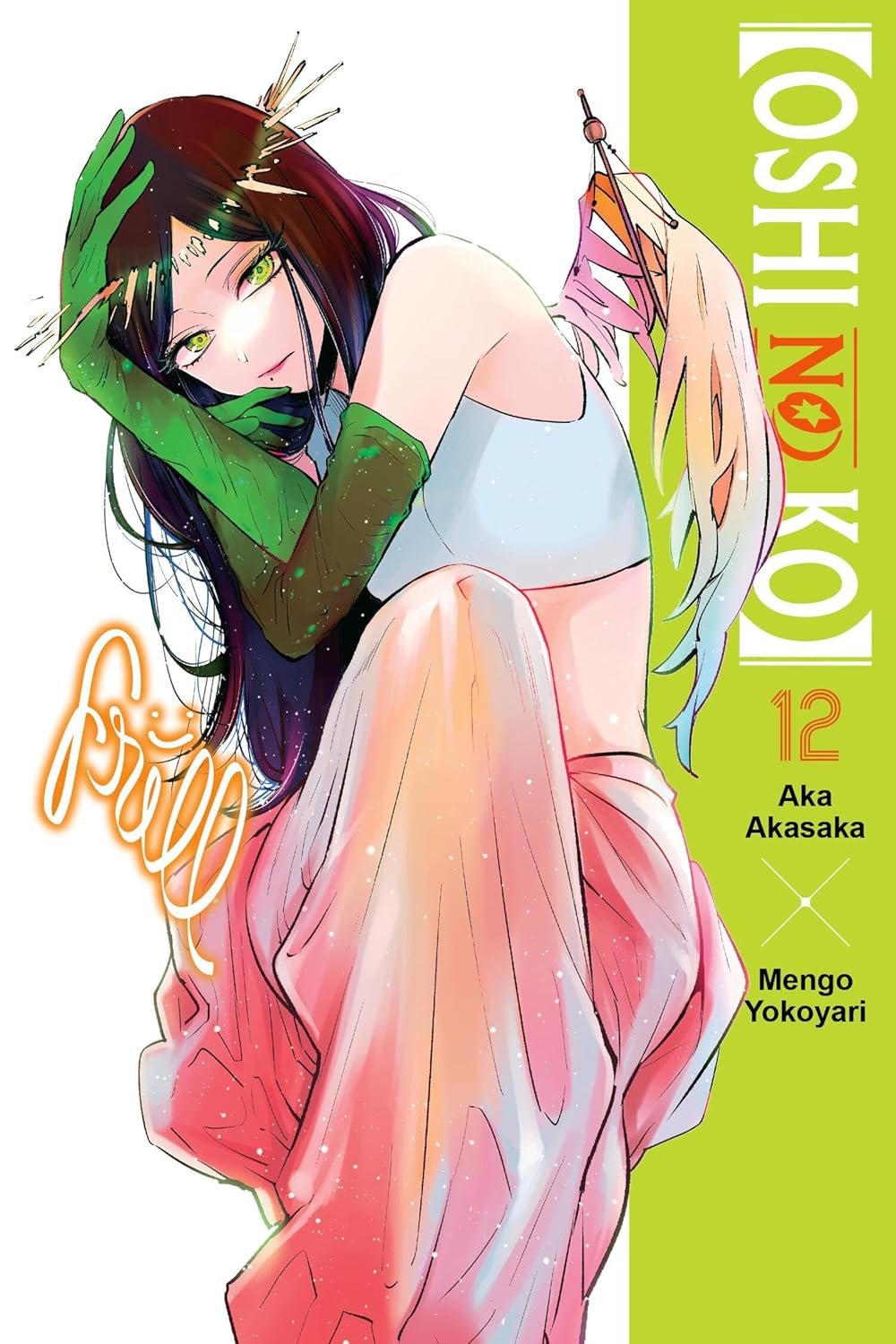
Oshi no Ko Vol. 12 is less about shock and rupture and more about momentum. It’s the volume where the long‑promised film finally begins to take shape, where Ruby steps into her own ambitions, and where the emotional center of the series shifts toward legacy, performance, and the weight of becoming Ai. It’s a distinct turning point, but a decisive one.
Plot
While a lingering tabloid story still hangs in the background, the real heart of Volume 12 is the early production of The Fifteen Year Lie. Aqua moves the project forward with a clarity that makes his intentions unmistakable, and Ruby finally recognizes the shape of his goals. Instead of recoiling, she chooses to step toward them. The volume follows her realization that she wants to play Ai herself, not out of vanity but out of a deep, complicated desire to understand her mother and reclaim the narrative surrounding her.
The chapters move through planning sessions and the emotional groundwork required to portray someone as mythologized as Ai. Ruby’s decision becomes the spine of the volume, and the story takes its time showing how much she has grown since the series began. Her confidence, her instincts, and her understanding of the industry all feel sharper, and the volume treats her development with a sense of earned weight.
Frill Shiranui also plays a role in this stretch, guiding Ruby through the emotional and technical demands of the role. Their scenes together are some of the strongest in the book, balancing rivalry, mentorship, and a shared understanding of what it means to perform someone else’s truth. By the end of the volume, the film is no longer just Aqua’s project—it’s Ruby’s calling.
Characters
Aqua remains focused, but his presence here is less domineering than in earlier volumes. His goals are clearer, and Ruby’s growing awareness of them shifts their dynamic in subtle ways. Ruby herself is the major standout, as her emotional arc is handled with restraint, and her decision to embody Ai feels like a culmination of everything she has endured thus far.
Conversely, Kana appears less as a scandal magnet and more as someone caught in the industry’s machinery, but her role is secondary to Ruby’s rise. Frill, the cover character, is the quiet anchor of the volume—perceptive, composed, and unexpectedly supportive. Her interactions with Ruby highlight both her talent and her ability to read people with unnerving accuracy.
Art
Mengo Yokoyari’s art leans into emotional nuance rather than spectacle. Close‑ups carry the weight of Ruby’s realizations, and the early production scenes are rendered with a grounded sense of process—written pitches, pre-production meetings, and the stillness before the chaos begins. The contrast between the polished world of filmmaking and the private, vulnerable moments between characters remains one of the series’ strongest visual signatures.
Themes
The volume shifts the thematic focus from scandal to inheritance. Ruby’s desire to play Ai reframes the story’s long‑running questions about identity, performance, and truth. Instead of exploring the idol’s lie through exposure or backlash, Volume 12 examines what it means to embody that lie on purpose—to step into someone else’s myth and make it your own.
The tension between performance and reality deepens as the film moves forward. The narrative asks what it means to portray a life shaped by secrecy, and whether reenacting trauma can be an act of understanding rather than exploitation. Ruby’s growth becomes the thematic anchor, showing how ambition, grief, and love can coexist in the same role.
Verdict
Oshi no Ko Vol. 12 is a quieter but deeply important installment. It marks the moment Ruby stops being a supporting player in Aqua’s revenge and becomes a driving force in her own right. For readers invested in Ruby’s journey—and in the making of The Fifteen Year Lie—this volume is essential.