
Semantic Error: Vol. 5 Review
Vol. 5 of Semantic Error has the vibe of the penultimate episode before a season finale. After four volumes of friction hardening into something real, this is where the story finally dares to picture the worst-case version of their future, the one where Sangwoo and Jaeyoung look up and realize the other person is simply… gone.
Plot
In Vol. 1, Sangwoo Choo lives by rules and efficiency, so when his groupmates ghost a class presentation, he cuts their names, including the absent Jaeyoung Jang, accidentally blowing up Jaeyoung’s plans and inviting retaliation. The twist is immediate and cruelly funny. Sangwoo later realizes the design major he wants to hire for his game is the same guy he sabotaged, and Jaeyoung has every reason to make himself a problem.
Vol. 2 shifts the dynamic from open hostility into something more destabilizing. Jaeyoung starts acting different, suddenly “nice,” teasing with affectionate touches, pulling his weight, and making it harder for Sangwoo to treat him like a solvable nuisance. Sangwoo’s binary options are simple on paper, avoid him or accept the chaos, but the story enjoys watching that clarity collapse.
Vol. 3 pushes the relationship into its most volatile early stage. Sangwoo is attracted, but he’s resistant to the idea of a male partner and completely inexperienced at navigating what he’s feeling. Jaeyoung, meanwhile, is juggling Sangwoo’s denial, a rival, and a compromise that keeps things “purely physical,” even as the emotional side keeps rising anyway.
Vol. 4 is the honeymoon stretch with a timer ticking in the background. They’re closer than ever, almost able to ignore reality, until the end of the school year and Jaeyoung’s study-abroad plans force the question they’ve been postponing: whether this relationship has a future that survives distance.
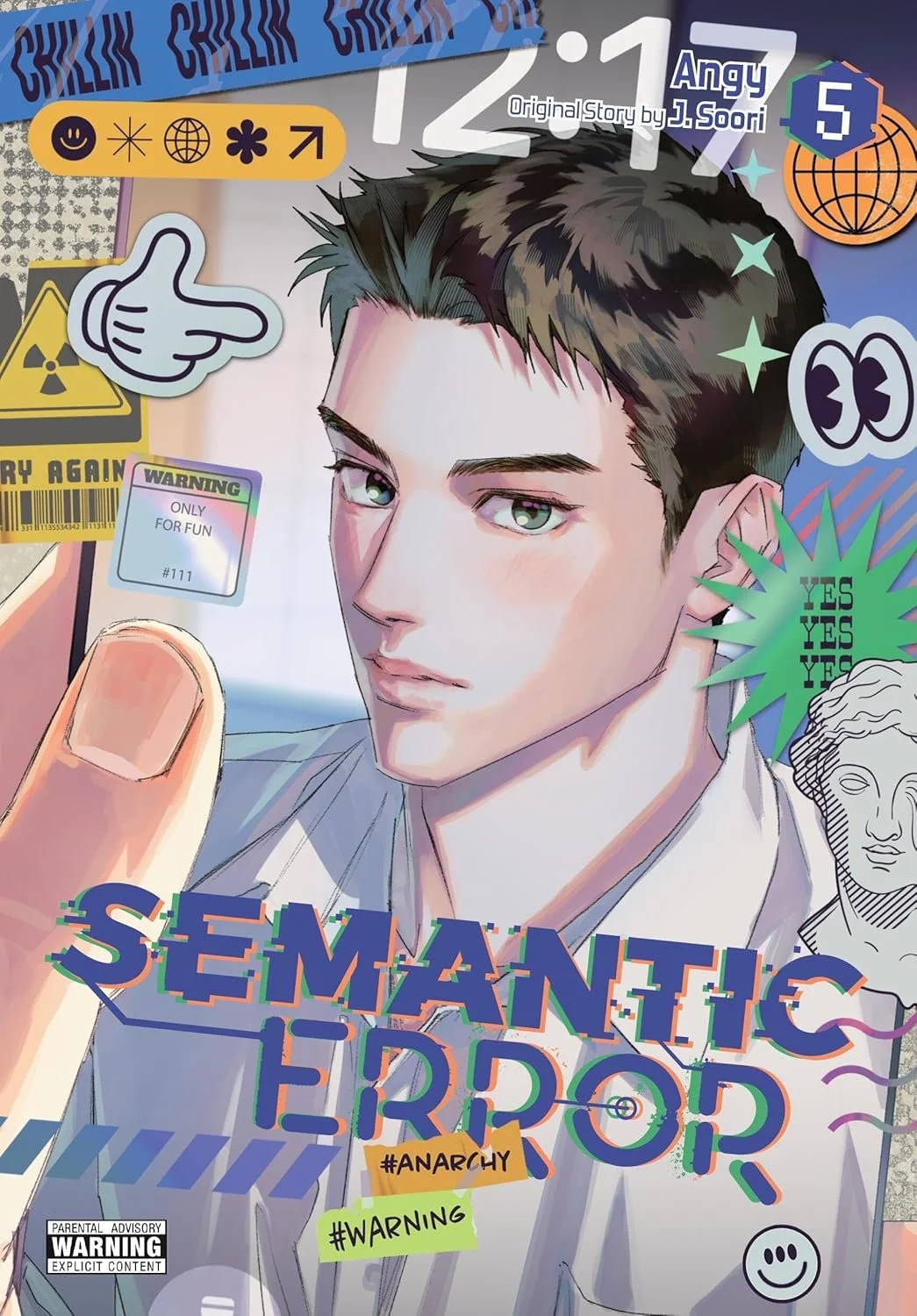
Vol. 5 is framed as the moment those fears stop being theoretical. Sangwoo and Jaeyoung get a glimpse of what life looks like without the other, and it hits Sangwoo hardest because the thing he once wanted most, to “debug” Jaeyoung out of his life, now reads like heartbreak.
Characters
Sangwoo remains one of the most compelling kinds of romance leads, not because he’s prickly, but because he’s direct about it. He doesn’t try to turn rigidity into mystique. He’s structured, stubborn, and he approaches emotion like a problem that can be managed with enough discipline. That’s why Vol. 5’s central idea lands so cleanly. When he’s forced to picture a future where Jaeyoung isn’t there, the usual logic shortcuts stop working, and the truth hits with nowhere to hide.
Jaeyoung’s strength has always been his ability to disrupt without turning mean. Early on he’s a thorn, sure, but he’s also the one most willing to adjust. The “Jaeyoung 2.0” shift in Vol. 2 reads like a decision to win Sangwoo over through steadiness, patience, and presence. Then Vol. 3 and Vol. 4 deepen him into someone warmer and more intentional, a person with his own plans and pressures who still chooses Sangwoo even when keeping things casual would be easier.
What makes them work long-term is that the story never treats either of them as a fix for the other. Sangwoo isn’t cured by romance, and Jaeyoung isn’t reduced to a seductive solution. They challenge each other’s defaults. Sangwoo learns to stay inside feelings instead of trying to contain them. Jaeyoung learns what it means to be loved by someone who expresses devotion through decisions more than speeches.
And by the time the volume lands on its final conversation, that growth pays off. The moonlit beach scene is tender without being saccharine, giving them room to name what they are to each other. It’s one of the series’ strongest moments because it feels earned, quiet, and completely sure of itself.
Art
Angy’s visual storytelling is a huge reason this series reads so fast. The character acting is crisp and legible, especially when the comedy is coming from micro-reactions, the tiny flinch of Sangwoo’s composure, the way Jaeyoung can look amused and genuinely affectionate at the same time. The art excels at tonal pivots, too. A scene can start as banter and end with a quiet emotional bruise, and the transition doesn’t feel like a genre switch, but more like the relationship deepening in real time.
Vol. 5 should benefit from that strength because the premise is emotional, not logistical. A “glimpse” of life without each other depends on expression and pacing more than plot mechanics. If the book is going to sell heartbreak as realization instead of melodrama, it needs faces you can read and silence that doesn’t feel empty. But given the well-rounded nature of the series so far, it’s no surprise that the volume hits every visual beat.
Themes
At its core, Semantic Error has always been about control meeting inevitability. Sangwoo’s worldview relies on systems, rules, and predictable outcomes. Jaeyoung is the variable that keeps proving the system incomplete. Vol. 1 literalizes that with the class project fallout, then turns it into romance, where the “bug” is not a person to remove, but a connection that refuses to be deleted.
Vol. 4 then introduces time as the real antagonist. Study abroad and the end of the school year force them out of the present-tense comfort of physical closeness and into future-tense honesty. Vol. 5 takes the next step and makes absence imaginable, which is a brutal but effective way to clarify love. When you can picture the empty space someone would leave behind, you stop pretending the relationship is optional.
There’s also a quieter theme that keeps paying off, identity without apology. Vol. 3’s tension around what it means to be in a homosexual relationship reads like two people trying to understand themselves at the same speed they’re trying to understand each other.
Verdict
Vol. 5 looks positioned to deliver the kind of emotional gut-check this series has been earning for a while. The early volumes thrive on irritation, attraction, and denial, but the longer it goes, the more it becomes about choice, the daily decision to keep showing up even when the future is scary.