
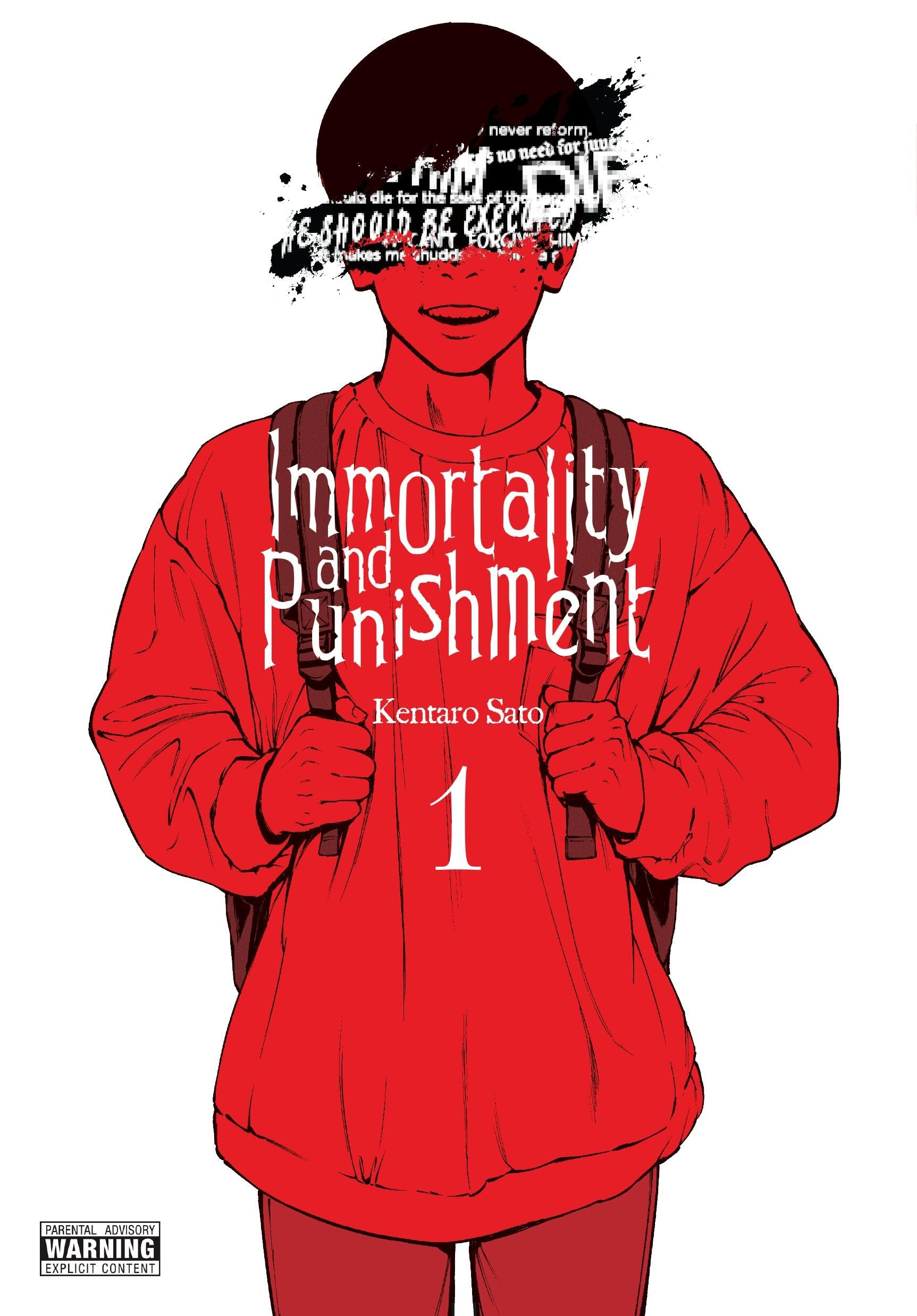
Kentaro Sato’s Immortality and Punishment, Vol. 1 drops you into a nightmare that’s small in footprint and huge in pressure: one man, one love hotel, and a city outside tipping into something utterly monstrous. Let’s break it all down!
Plot
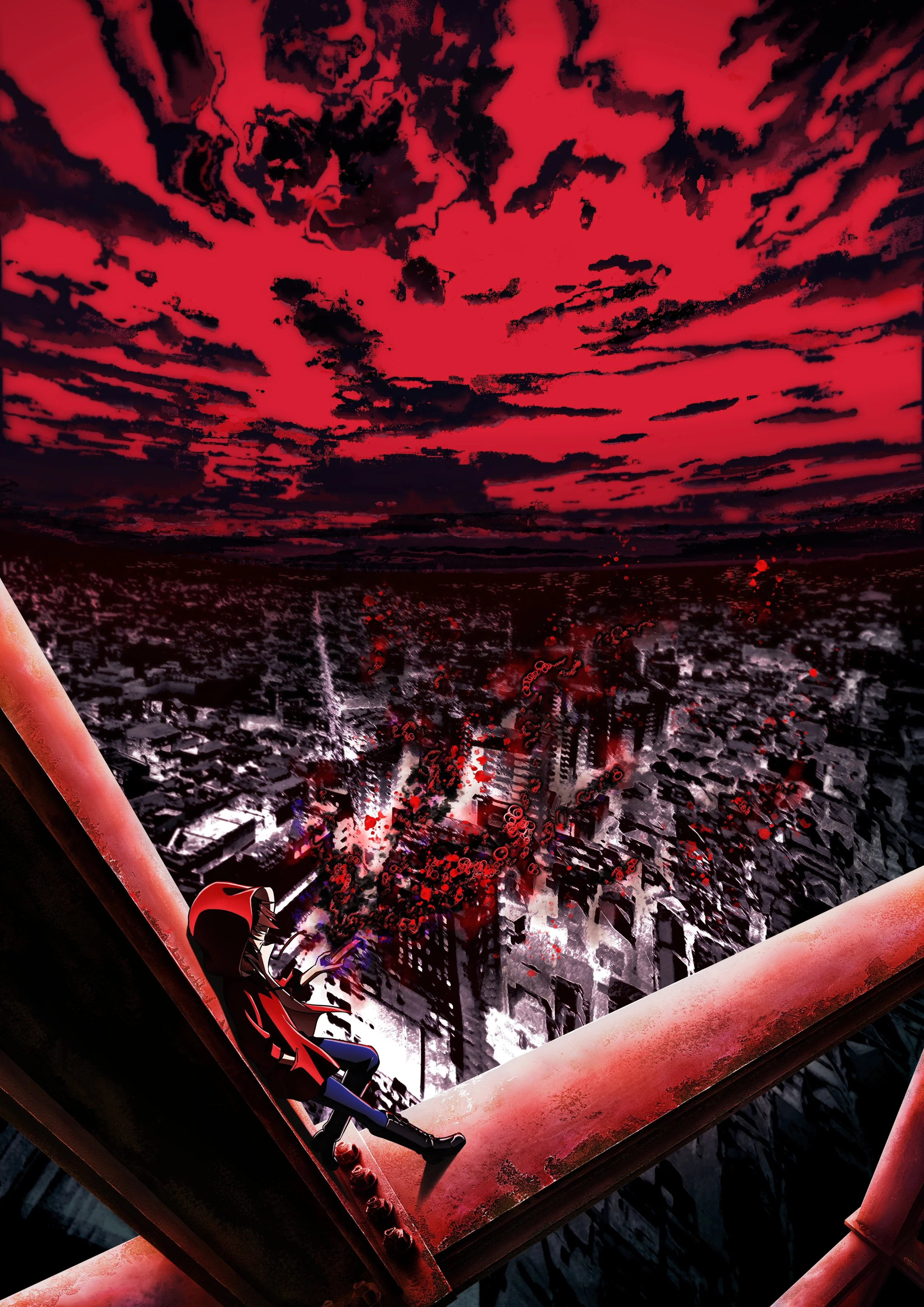
The opening situation is blunt and suffocating. A young man is trapped, broke, and alone in a love hotel, already spiraling before the bigger crisis even arrives. Then the streets go sideways as grotesque, gore-splattered figures begin appearing across the city, sparking the collapse of public order.
Vol. 1’s best trick is how it layers desperation. First, there’s the practical problem (no money, no clear exit, nowhere to run), then the external threat (the outbreak-like chaos), and finally the internal one. Though in its entirety, the volume then goes on to treat survival as an assignment you literally can’t refuse.
Characters
The story’s center is Yakaze Fumito, a name and backstory that immediately complicate your empathy. As someone with a dark past and even a dark present, he’s the central figure now trapped in that love hotel while Tokyo fills with “infected” threats.
That choice is the point: the lead isn’t a random bystander who “deserves” the reader’s uncomplicated rooting interest. He’s a man marked by what he’s done and, in some instances, what he’s capable of. Vol. 1 asks you to sit in the tension between revulsion and momentum—because regardless of how you feel about him, you’re stuck in the room with him, watching him decide what kind of person is left when fear strips everything down.
Even early on, the series signals that other survivors are close enough to matter, turning the hotel into a social experiment under siege rather than a solo endurance run.
Art
Sato’s art pushes speed and claustrophobia. Panels favor tight interiors, hard expressions, and abrupt shifts into violence—less “cinematic sweep,” more “cornered animal.” The staging makes the building feel like a trap with moving walls, including corridors, doors, and thresholds that become moral checkpoints, because every choice to open something (or not) carries consequences.
The linework also does a lot of psychological labor. When Vol. 1 slows down, it’s usually to sit on the uglier emotions—shame, disgust, dread—rather than to offer relief. And in terms of classic, immersive horror genre stylization—this one goes hard.
Themes
Despite the title, Vol. 1 is careful about what it proves versus what it promises. The “immortality” idea reads, at this stage, more like a framing device than a confirmed superpower—survival as a curse, and endurance as a sentence. What the text does clearly foreground is atonement-as-punishment—the demand to keep living specifically because death would be an escape hatch.
It’s also a story about containment. A love hotel is already a place built on secrecy and compartmentalized lives; in a crisis, that architecture turns predatory. People become rumors behind closed doors. Help becomes negotiation. Morality becomes something you revise minute to minute. It’s only the first volume, but there’s no shortage of content to unpack.
Verdict
As a first volume, Immortality and Punishment hits with nasty confidence. Expect a brutally efficient setup, a protagonist designed to challenge your instincts, and a setting that turns simple movement into suspense. Furthermore, if you want horror that treats “staying alive” as morally loaded work—Vol. 1 is a sharp, grim start.