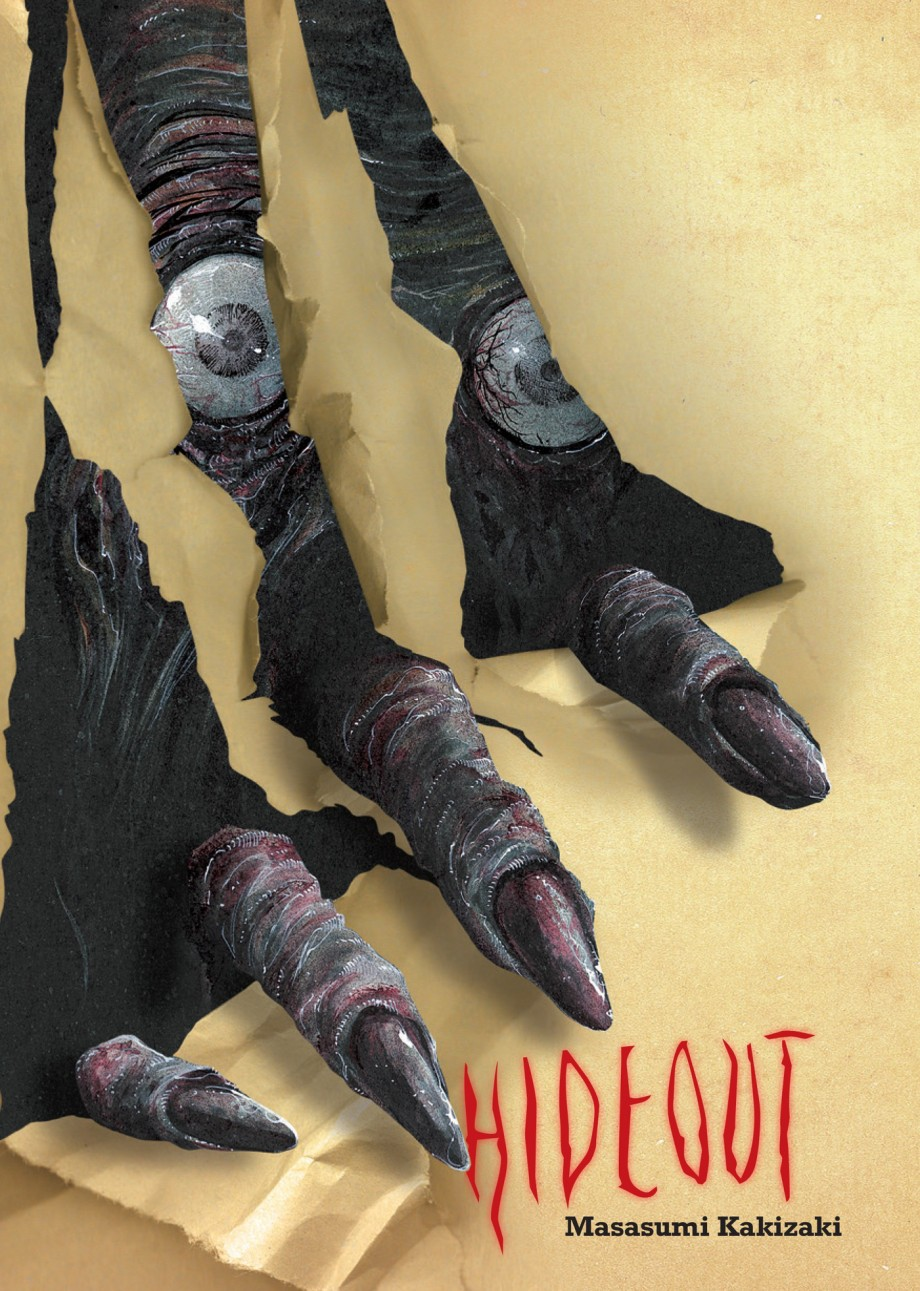

Hideout takes a seemingly ordinary escape and drags it somewhere far more sinister. In fact, Masasumi Kakizaki compresses psychological horror, marital resentment, and survival into a single claustrophobic descent, using isolation and mounting desperation to expose how quickly buried anger can become something monstrous. That said, here’s why this one is a must-read for all horror fans.
Plot
Seiichi Kirishima and his wife Miki travel to a southern resort island after the death of their young son, supposedly searching for an experience said to offer newfound happiness. Their relationship has deteriorated under the weight of grief, financial strain, and mutual resentment, but before they can arrive, Seiichi reveals another purpose entirely. He intends to kill Miki and reclaim his life.
That plan quickly spirals beyond his control. Heavy rain, dense forest, and Miki’s escape push the pursuit toward a cavern where Seiichi finds himself confronting something far more dangerous than the crime he intended to commit. Across only nine chapters, Kakizaki turns the initial chase into an increasingly disorienting survival nightmare, moving between the cave and flashbacks that gradually explain how the Kirishimas reached this point. The brisk pace works in its favor, keeping each revelation close to another escalation without stripping the story of its psychological context.
Characters
Seiichi is intentionally difficult to sympathize with, yet the manga gives his deterioration enough context to make him more than a simple villain. He was once a working writer, husband, and father whose life unraveled through professional failure, money problems, grief, and growing resentment. None of that excuses the decision he makes on the island by any means, but the gradual reconstruction of his past makes his descent more disturbing because it develops from recognizable disappointments that have been allowed to curdle into something far worse.
Miki is equally important to that dynamic. Her comfort in anger and grief prevents the marriage from being reduced to one man inexplicably snapping, while the flashbacks expose a relationship in which blame has replaced whatever intimacy once held it together. The figure dwelling inside the cave naturally adds another form of human degradation to the story, creating a threat that initially appears almost inhuman while further complicating where the manga ultimately locates monstrosity.
Art
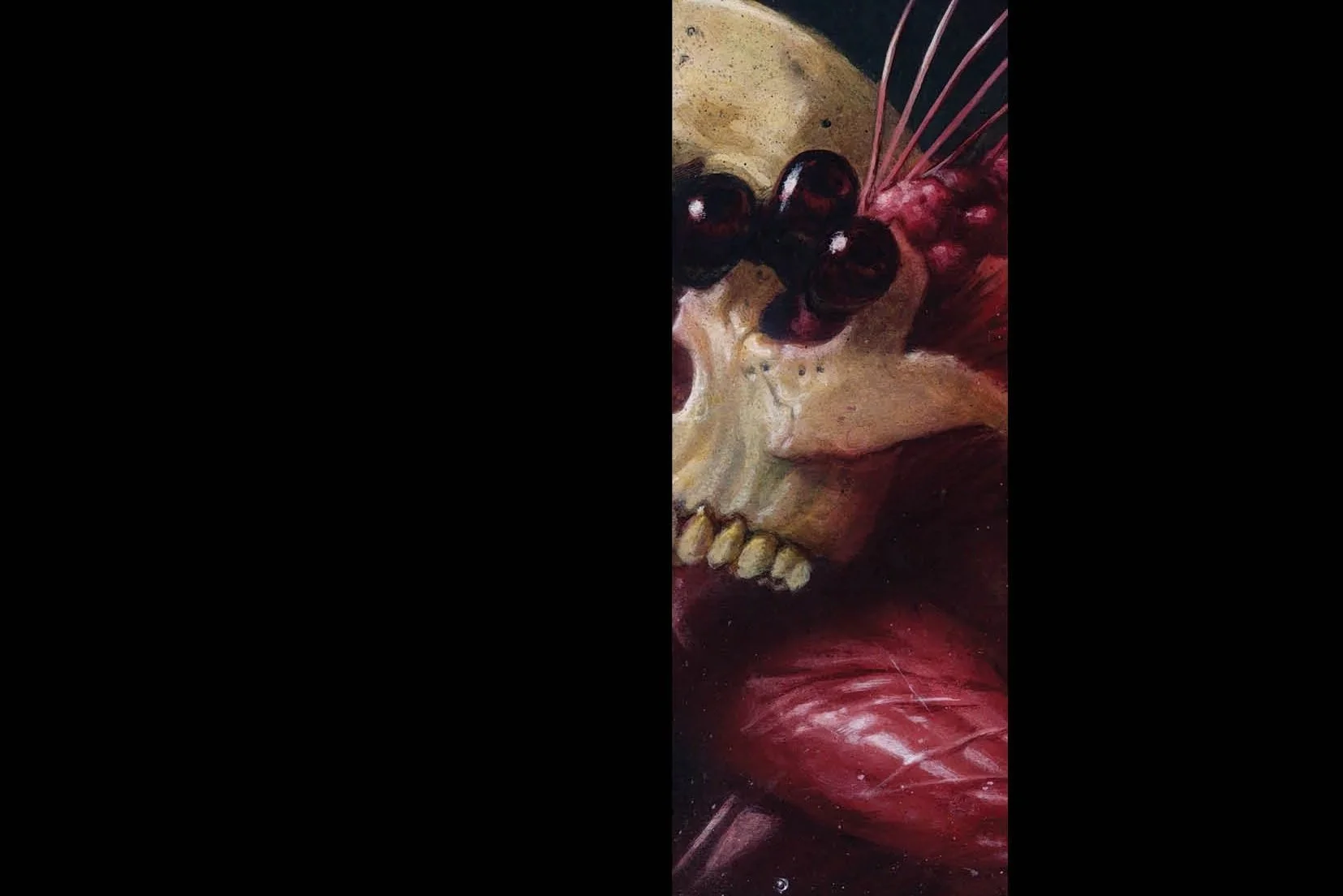
Kakizaki’s artwork is easily one of Hideout’s greatest strengths. The cave is rendered through dense blacks, rough textures, cramped spaces, and heavily worked backgrounds that make it difficult to establish a comfortable sense of direction. Large panels and sudden page turns are used aggressively, allowing distorted faces, widened eyes, filthy skin, and unexpected movement to interrupt stretches of near-total darkness with startling force.
There is also a smart visual divide between past and present. Flashbacks tend to carry greater clarity, while the cave grows increasingly oppressive as Seiichi loses his bearings, sense of time, and eventually much of his connection to the outside world. Kakizaki reportedly visited a cave while researching the manga, and that attention to space shows in how physical the environment feels. Abrams’s edition also preserves eight pages from the original color serialization, giving this single-volume release an especially strong presentation.
Themes
Grief is only the beginning of what Hideout examines. Seiichi and Miki have both been damaged by the same loss, yet pain has pushed them toward blame rather than mutual comfort. Career failure, financial insecurity, resentment, and guilt accumulate until the marriage becomes another confined space, making the descent underground feel like an extension of a collapse already underway above it.
The manga also repeatedly challenges the boundary between victim and monster. Appearance offers one answer, behavior another, and desperation steadily complicates both. By placing damaged people inside a setting where ordinary social restraint disappears, Kakizaki turns the cave into a pressure chamber for the worst parts of human nature, leaving the story with more psychological bite than its pursuit-and-survival premise initially suggests.
Verdict
Hideout is a viciously effective one-volume horror story that pairs relentless momentum with some of Kakizaki’s most oppressive and detailed imagery. Its familiar survival-horror ingredients are elevated by a collapsing marriage, carefully structured flashbacks, and a grim fascination with what people become when grief, resentment, and fear finally have nowhere left to go.