
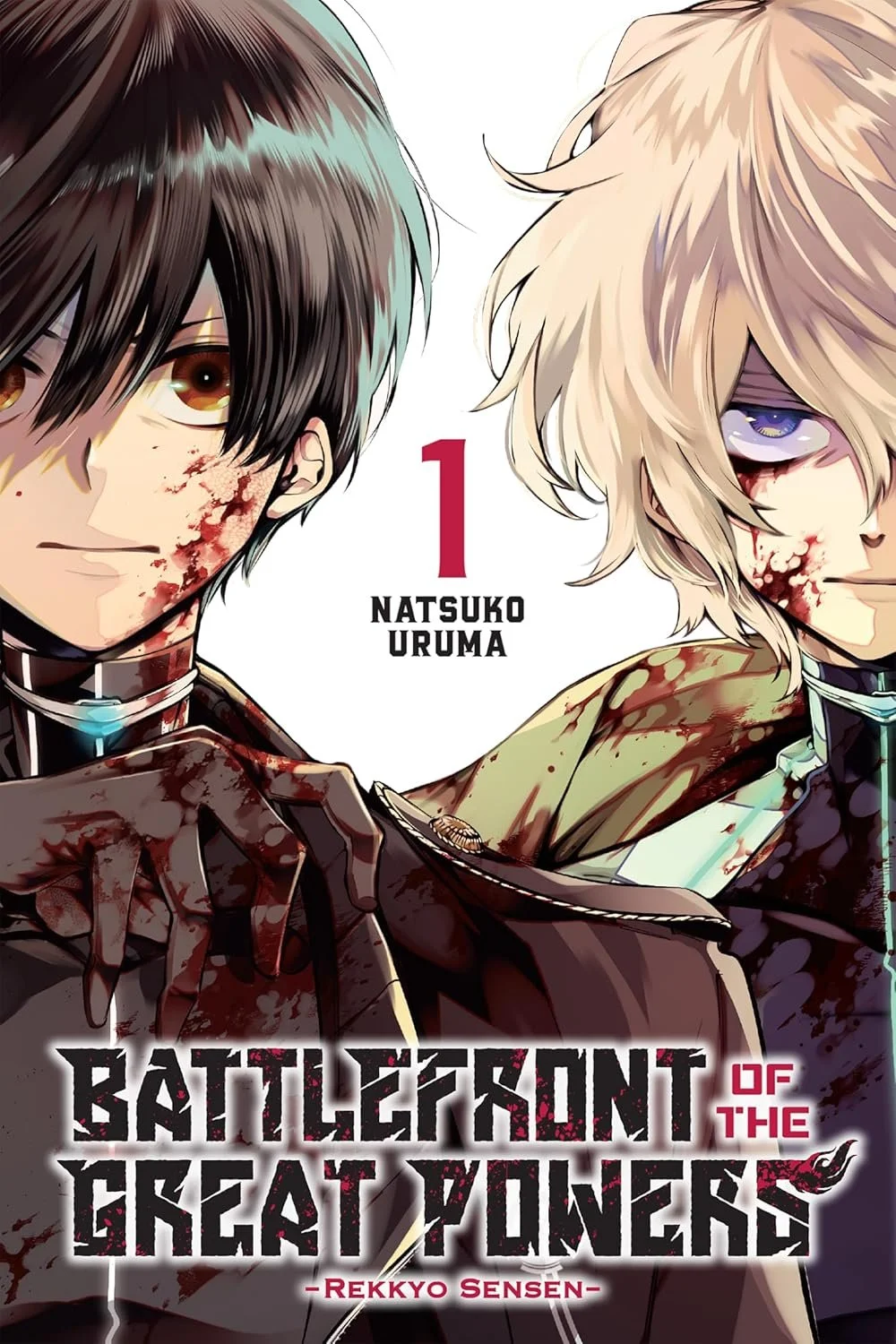
Battlefront of the Great Powers, Vol. 1 opens with the kind of premise that doesn’t politely ramp up. Earth is dying, the timeline is short, and the people in charge choose spectacle as policy. By the time the book puts the words “Nation Extinction Tournament” on the page, you already know the series is aiming for maximum stakes and minimal mercy.
Plot
The year is 2206, and scientists estimate Earth will become uninhabitable within roughly a century due to pollution and resource shortages. The response isn’t reform or restraint. World leaders decide “the herd must be culled,” then formalize it into the Nation Extinction Tournament, where competitors with powers “beyond comprehension” fight for their countries. Win, and you’re a hero. Lose, and your entire homeland is wiped out.
Vol. 1’s biggest strength is how quickly it commits to the chaos baked into that idea. A tournament with national annihilation as the penalty can’t play like a slow-burn. It demands crowd energy, fear, grandstanding, and the constant sense that everyone is either weapon, audience, or collateral. The series doesn’t treat the event as a distant concept, either. It pitches the tournament as a present-tense machine with rules, optics, and a purpose that’s meant to be repeated until it sounds inevitable.
Characters
One immediate challenge of any large-scale tournament manga is cast management. Vol. 1 leans into a big ensemble by design, because the whole premise is geopolitical. You’re not just meeting fighters, you’re meeting representatives, symbols, and walking policy decisions. The series is also explicit that these are boys and girls with extreme abilities gathered in one place, which naturally creates a volatile mix of ego, fear, duty, and resentment—as well as the characters who put them in this situation in the first place.
What makes that work, at least as an opener, is that the tournament isn’t framed as a clean ladder. The consequence of failure is so obscene that it turns every contestant into a loaded character question. Who fights for their country out of love. Who fights because they have no choice. Who wants to win. Who wants to burn the whole idea down.
Though, as of now, the series primarily focuses on one of Japan’s delegate heroes (Hasuichi Nishizono) and includes political pressure at the highest level, including a father figure tied to the tournament’s leadership. If the series continues to develop that thread, it gives the story a useful spine. It keeps the tournament from floating as pure spectacle by anchoring it to the people benefiting from it.
Art
Yen Press categorizes the book as science fiction, action/adventure, dystopian, and that combination generally lives or dies on clarity. A premise with tons of characters and enormous powers needs clean visual language to keep the action readable and the stakes legible. The setting, too, demands scale. When the consequence is national extermination, the art has to sell more than punches. It has to sell page-to-page dread, the feeling that the arena is a stage and a slaughterhouse at the same time.
From a format standpoint, this is a compact opener at 160 pages with a Teen rating, which suggests the intensity is going to come from momentum, concept, and kinetic action rather than lingering on gore. That can be a real advantage for a series like this. A tight page count forces the book to hit its beats cleanly, introduce its world with confidence, and get to the hook without dragging its feet.
Themes
The most obvious theme is scarcity weaponized into ideology. The book doesn’t say “we have limited resources,” it says “we need to cull.” That choice of language tells you exactly what kind of dystopia this is. It’s not simply a damaged planet. It’s a world where leaders are comfortable turning human life into math and then into entertainment.
There’s also a strong undercurrent of nationalism as a trap. The punishment isn’t personal death, it’s collective destruction. That forces the fighters into a role that can feel like heroism from one angle and hostage-taking from another. Finally, the series is clearly built to go big. The tournament functions like a declaration of purpose, a world-scale mechanism designed to justify escalation. It sets the table for betrayals, alliances, ideological breaks, and the possibility of rebellion, because a system this extreme practically begs for someone inside it to refuse the script.
Verdict
Battlefront of the Great Powers, Vol. 1 wastes no time. So, if you want a dystopian battle manga that’s ready to sprint into chaos and aim for “all out” potential from the jump, this is exactly that lane.