
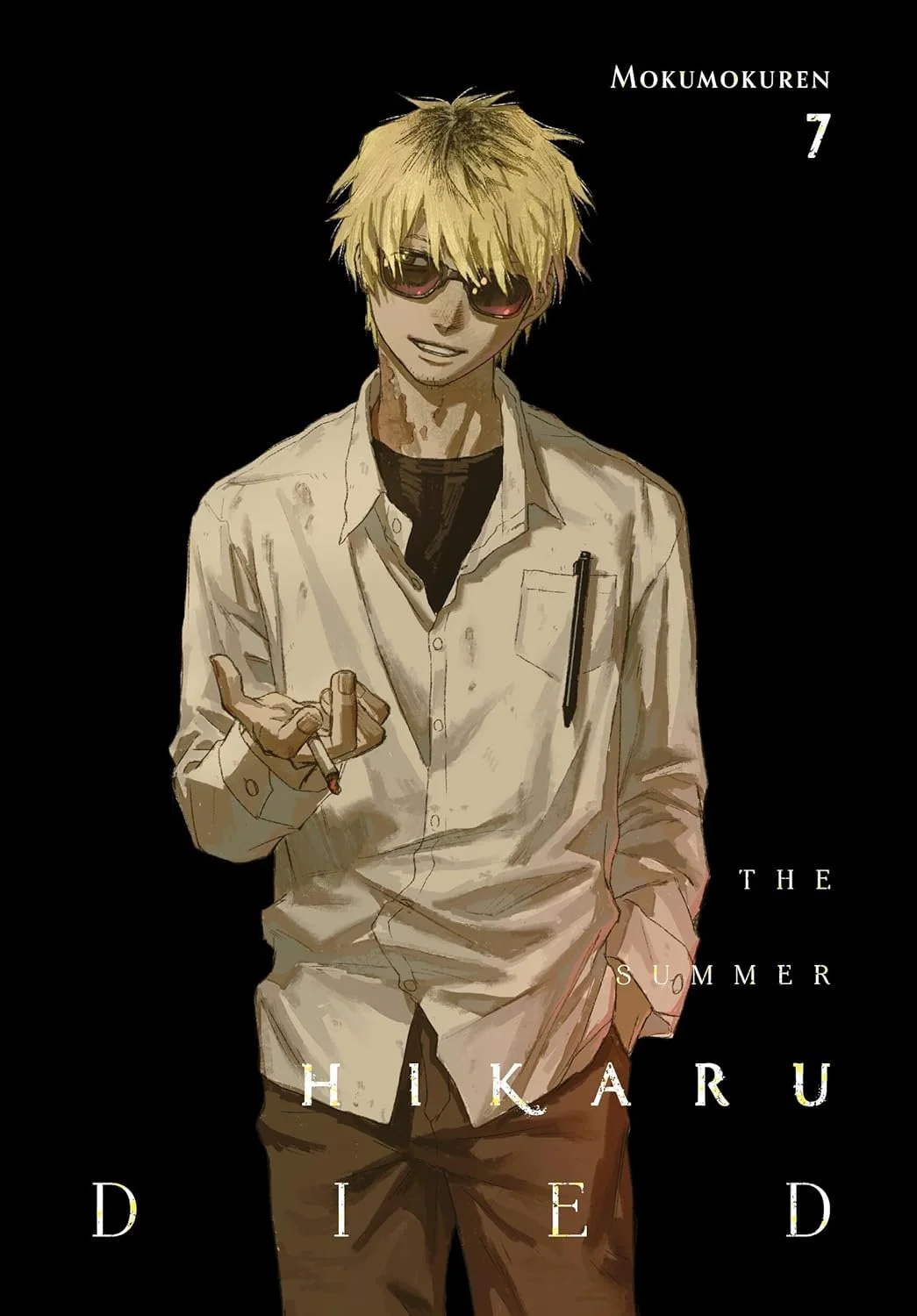
The Summer Hikaru Died: Vol. 7 Review
The Summer Hikaru Died, Vol. 7 feels like the story crossing a line it’s been drawing in the dirt for a while. The mystery is still there, the dread is still thick in the air, but this volume finally turns the series’ rules into action. The question stops being “what is Hikaru” and becomes “what are they willing to do now that they know.”
Plot
Vol. 7 centers on a grim piece of new clarity. The impurities flooding the region are coming through “holes,” and the only way to stop the spread is to close those holes. The catch is brutal and specific. A hole can only be sealed from the other side, and a living human who crosses over can’t return.
That’s where the volume’s big pivot lands. “Hikaru” proposes that he can go in and do it because he isn’t human, and that he can return by using his connection with Yoshiki. It’s an escalation that fits the series’ logic perfectly. It doesn’t arrive as a heroic plan, it arrives as a risky workaround shaped by desperation and intimacy, and it forces Yoshiki to put his trust somewhere he’s never been able to fully place it.
The book also splits its momentum across parallel efforts. While Yoshiki and “Hikaru” move toward the dangerous work of sealing holes, Asako and Tanaka take on their own gamble, negotiating with impurities in order to get a hole closed.
Vol. 7 ends up feeling packed because it’s juggling multiple “front lines” at once, each one testing a different version of courage.
Characters
Yoshiki’s arc continues to be the series’ most painful constant. He has always been the human anchor in a story full of entities, rituals, and rules, and Vol. 7 pushes him into a new kind of fear. It’s no longer only the fear of being harmed. It’s the fear of choosing wrong, of betting everything on “Hikaru’s” promise and being the reason he can’t come back.
“Hikaru,” meanwhile, becomes sharper in this volume, in the way he speaks and in his confidence. His argument is practical, but it also carries something more intimate. He believes Yoshiki won’t look away from him, and he tries to make that bond into a literal lifeline. It’s a revealing beat because it reinforces how much he’s started to treat their connection as real, even when the story keeps insisting that reality is complicated.
Asako and Tanaka also matter more than usual here. Vol. 7 positions them as active participants rather than observers, which makes the world feel wider and more dangerous. Their choices come with a different emotional weight than Yoshiki’s. Where Yoshiki is acting out of love and grief, they’re acting out of responsibility, duty, and the pressure of knowing how many people could be swallowed if they do nothing.
Art
Mokumokuren’s art remains one of the series’ biggest weapons. Vol. 7’s story is heavier on “mission” structure than some earlier volumes, but the visuals keep it from feeling like a clean quest. The environments stay oppressive, the negative space stays loaded, and the impurities retain that wrongness that never becomes routine.
This volume also benefits from how well the art handles scale without turning flashy. The idea of connecting to “the other side” demands imagery that can feel vast and intimate at once, and Vol. 7 leans into that visual tension.
Themes
Vol. 7 is ultimately about consent under impossible conditions. “Close the holes or everything gets worse” is an ultimatum, and the volume asks who gets to volunteer for consequences that don’t leave room for return.
It also presses on the series’ most haunting theme, love as a form of risk. Yoshiki’s connection to “Hikaru” has always been tangled, and this volume turns that tangle into a plan. Using their bond as a tether is romantic in the darkest way, because it treats affection as both comfort and tool.
Finally, there’s the question of what it means to be human in a story where humanity is no longer the default “safe” state. If humans can’t cross and return, but “Hikaru” can, then the line between salvation and loss becomes less about morality and more about nature.
Verdict
The Summer Hikaru Died, Vol. 7 is one of the series’ strongest escalation volumes because it commits. It takes the lore it’s been building and turns it into choices that can’t be undone, all while keeping the relationship at the center of the danger rather than treating it as a side thread.