
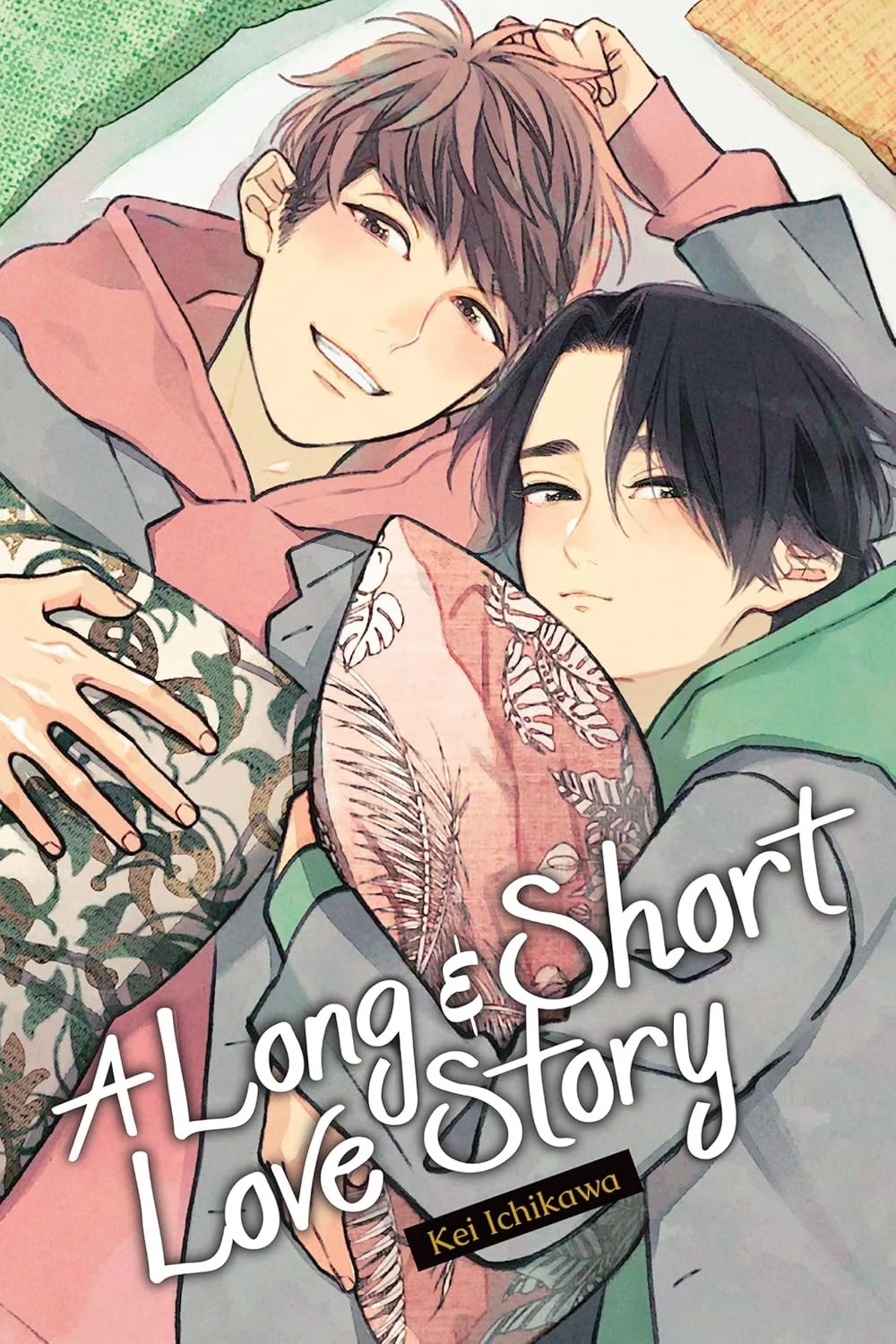
Kei Ichikawa’s A Long & Short Love Story is a soft, intimate boys’ love manga about the complicated moment when a familiar bond begins to turn into something new. And for fans of short, sweet, finite stories—this is definitely one you’ll want to add to your collection.
Plot
At the center of A Long & Short Love Story are Ibuki and Kippei, next-door neighbors who have known each other since childhood. Their lives have been closely intertwined for years: they go to the same school, talk about their favorite music, and watch summer fireworks together every year. That shared history gives the manga its emotional foundation before the story’s central shift arrives. When Ibuki kisses Kippei, the ease of their friendship changes, forcing both boys to face what their closeness has started to mean.
The plot is simple by design, but that simplicity works in the manga’s favor. Rather than relying on heavy conflict or dramatic twists, A Long & Short Love Story is more interested in emotional recognition. The story understands how intimidating it can be when the safest person in your life suddenly becomes the person who makes everything feel uncertain. That transition from friendship to romance gives the volume a gentle but effective sense of movement.
Because the manga is structured around shorter pieces, the story unfolds through moments rather than sweeping arcs. That gives it a delicate rhythm. A shared routine, a smile, a kiss, a memory, and the space between two people all become part of the compelling romance. For readers who enjoy relationship stories with a soft touch, this approach gives the volume a warm and easy charm.
Characters
Ibuki and Kippei work because their relationship begins from a place that already feels established, then slowly moves into territory neither of them fully knows how to navigate. Their bond has history, comfort, and rhythm, but the manga’s real appeal comes from watching that familiarity turn into something more charged, sincere, and emotionally revealing.
Ibuki’s kiss becomes the catalyst, but the story does not treat it as a sudden shortcut into romance. Instead, it changes the way they understand each other. What once felt easy between them now carries a new awareness, giving their interactions a sweet uncertainty without forcing unnecessary conflict. Kippei’s hesitation adds texture, but the romance is not built around angst. It works because of the smaller beats between them: the chemistry, the honest exchanges, the awkward softness, and the sense that both characters are realizing their connection has become something deeper.
The childhood-friends setup can sometimes feel predictable, but A Long & Short Love Story benefits from how specific and sincere its intimacy feels. Their shared school life, music conversations, and annual fireworks give the romance a sense of continuity, making the emotional shift feel earned rather than sudden. They are not strangers falling into attraction. They are two people discovering that something familiar can still surprise them when it finally has to be named. By the final chapter, that warmth carries through beautifully, leaving readers with a sweet, heartwarming tease of the future they might share together.
Art
The art is one of the manga’s biggest strengths, and the volume’s presentation only reinforces that. With 21 delicately crafted color illustrations, revised material, and newly drawn extras, A Long & Short Love Story feels especially visual in its approach to romance. Ichikawa’s style also gives the story a polished, airy quality, allowing small expressions and quiet shifts in body language to carry much of the emotional weight. That definitely matters in a manga where the biggest changes are internal.
The color illustrations also make the book feel like something meant to be lingered over rather than rushed through, adding to the soft, nostalgic atmosphere. There is a brightness to the presentation that suits the story’s tenderness, while the more delicate visual choices give the romance a slightly fragile feeling.
Themes
The manga’s strongest theme is the fear of changing something precious. Ibuki and Kippei’s relationship matters because it has always been steady. Once romance enters the picture, the question becomes whether love will deepen that bond or disturb it. There is also a lovely emphasis on time, as the title itself reflects the strange elasticity of growing up with someone. A relationship can feel long because it has lasted for years, but short because the most important change happens in one sudden moment. That contrast gives the manga more emotional texture than its light premise might suggest.
Verdict
A Long & Short Love Story is a perfectly charming, beautifully presented BL romance that finds its strength in restraint. It does not need a complicated setup to be effective. Instead, Kei Ichikawa focuses on the tenderness, hesitation, and emotional risk of realizing that the person closest to you may also be the person you love.