
Battle Royale Deluxe Edition: Vol. 2 Review
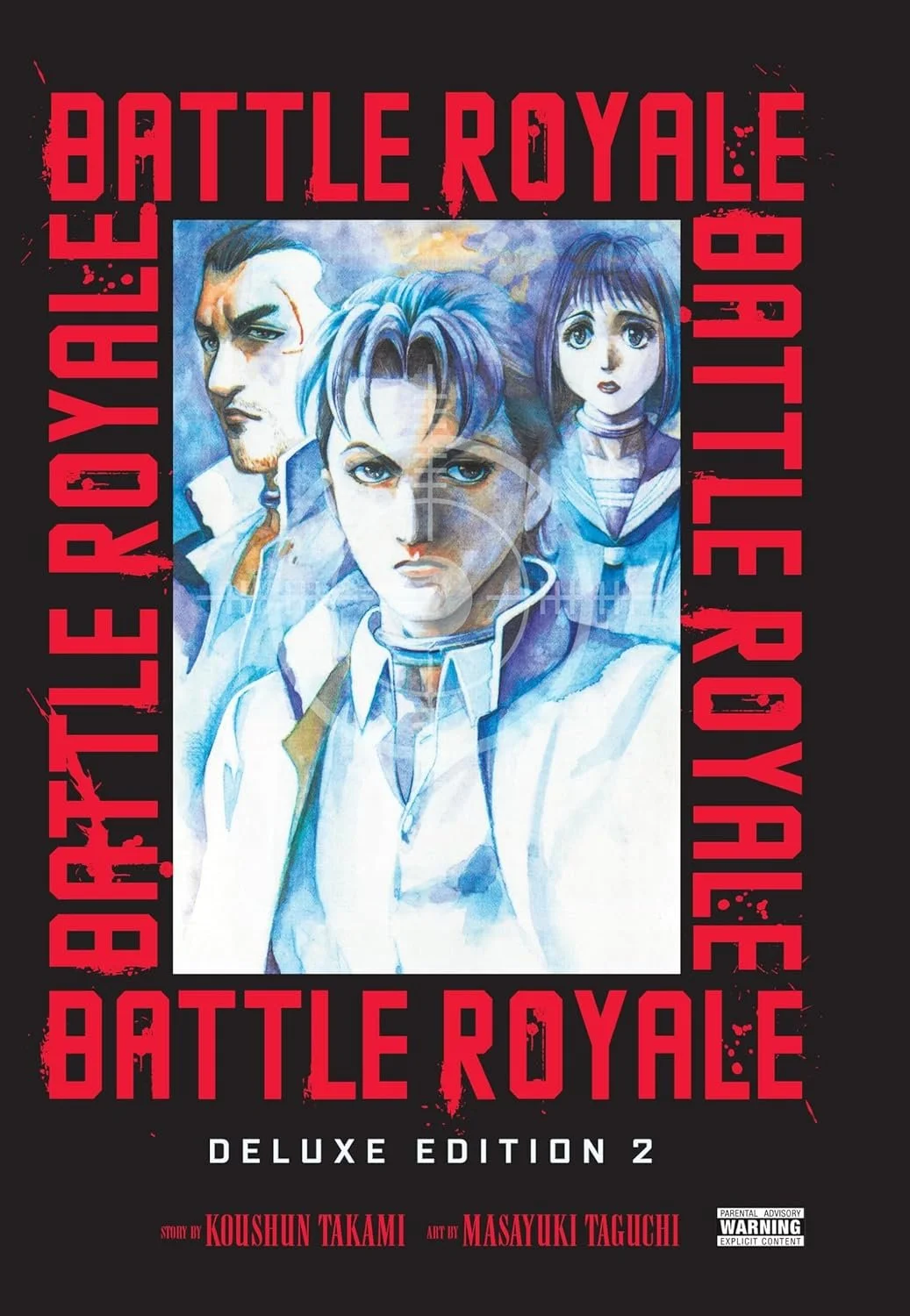
With the rules established and Class 3-B already fractured, Battle Royale Deluxe Edition Vol. 2 has room to dig much deeper into the relationships caught inside the Program. Collecting material originally published across Volumes 4 through 6, this stretch brings love, friendship, grief, and desperation closer to the foreground without sacrificing the escalating violence that defines Koushun Takami and Masayuki Taguchi’s dystopian survival story. So, with that being said, let’s dive right in.
Plot
The volume resumes in the middle of Takako Chigusa’s brutal confrontation with Kazushi Niida before expanding across several groups scattered around the island. Hiroki Sugimura continues searching for the people closest to him, Shinji Mimura and Yutaka Seto work toward a plan that could undermine the Program itself, and Shogo Kawada reveals more about his previous experience in the game. Elsewhere, encounters involving Hirono Shimizu and Sho Tsukioka reinforce how drastically different each student’s survival strategy has become.
This makes Vol. 2 feel broader without becoming directionless. Instead of repeatedly explaining the premise, the manga can move between intimate confrontations and increasingly ambitious attempts to survive or fight back. The closing portion delivers one of the collection’s strongest action stretches when Kazuo Kiriyama collides with Shuuya, Noriko, and Shogo, eventually drawing Hiroki into the conflict as well. Even with several storylines operating at once, the pacing remains remarkably propulsive.
Characters
Takako becomes one of the volume’s immediate standouts. Her history with Hiroki gives greater emotional context to her determination, while their relationship demonstrates how effectively Battle Royale can make characters who previously existed near the edges suddenly feel essential. Shogo benefits from similar attention as pieces of his past with Keiko begin clarifying the experience behind his hardened approach to survival.
Shinji and Yutaka bring another dynamic entirely, pairing Shinji’s intelligence and resistance-minded ambition with a friendship that gives his larger plan personal stakes. On the opposite end, Kiriyama becomes considerably more frightening as his intelligence, preparation, and emotional detachment emerge through action rather than reputation alone. His handling of Sho Tsukioka is especially effective at showing how difficult he is to anticipate, while the later assault on Shuuya’s group turns him into a near-unstoppable physical threat.
Art
Taguchi’s expressive approach remains perfectly suited to material operating at such emotional extremes. Faces contort through rage, panic, grief, and exhaustion, while injuries accumulate visibly across bodies instead of disappearing once a confrontation ends. Takako’s early sequence is particularly effective because physical determination and emotional vulnerability occupy the page at the same time.
The action grows more ambitious as well. Martial-arts combat, gunfire, grenades, rapid movement across uneven terrain, and close-range confrontations are presented with an aggressive sense of momentum. Taguchi frequently pushes anatomy and expression into deliberate exaggeration, but that excess belongs to the manga’s feverish visual identity. Kiriyama’s relative stillness becomes especially unnerving against characters whose faces and bodies are constantly broadcasting fear.
Themes
Where Vol. 1 examined how quickly the Program could destroy the stability of a classroom, Vol. 2 becomes increasingly interested in what relationships can withstand that pressure. Romantic love gives Takako something to fight toward, friendship fuels Shinji and Yutaka’s resistance, and Shuuya’s attachment to Noriko repeatedly overrides the safer, more calculated choices available to him. Affection becomes both a source of strength and another vulnerability the Program can exploit.
Trust consequently becomes more complicated as the number of survivors dwindles. New encounters require characters to decide almost immediately whether another classmate represents potential safety or another threat, while others discover too late what isolation has cost them. The volume repeatedly suggests that survival alone is a limited victory if fear has already stripped away every meaningful connection, giving the escalating body count an emotional dimension beyond shock.
Verdict
Battle Royale Deluxe Edition Vol. 2 builds impressively on the first collection, pairing some of the manga’s strongest action so far with considerably deeper emotional stakes. By giving its expanding cast room to love, grieve, resist, and make increasingly dangerous choices, the series proves that its most powerful weapon remains the relationships the Program was designed to destroy.