
Mortal Kombat II gets one major thing right almost immediately: it understands that this sequel needed to feel closer to the games. Directed by Simon McQuoid and written by Jeremy Slater, the 2026 follow-up finally places the tournament at the center of the story, with Karl Urban joining the cast as Johnny Cage alongside returning players from the 2021 film. The movie opened in theaters on May 8, 2026, and its official setup positions Johnny among Earthrealm’s fighters as they face Shao Kahn in the long-awaited interdimensional tournament.
That shift alone makes this feel like a better Mortal Kombat movie than its predecessor. It is louder, bloodier, more fan-facing, and much more interested in giving audiences the actual structure and iconography they came for. At the same time, it never fully turns that improvement into the best version of itself. There is enough here to make the film fun, but there is also a clear sense of a movie trying to juggle too many duties at once.
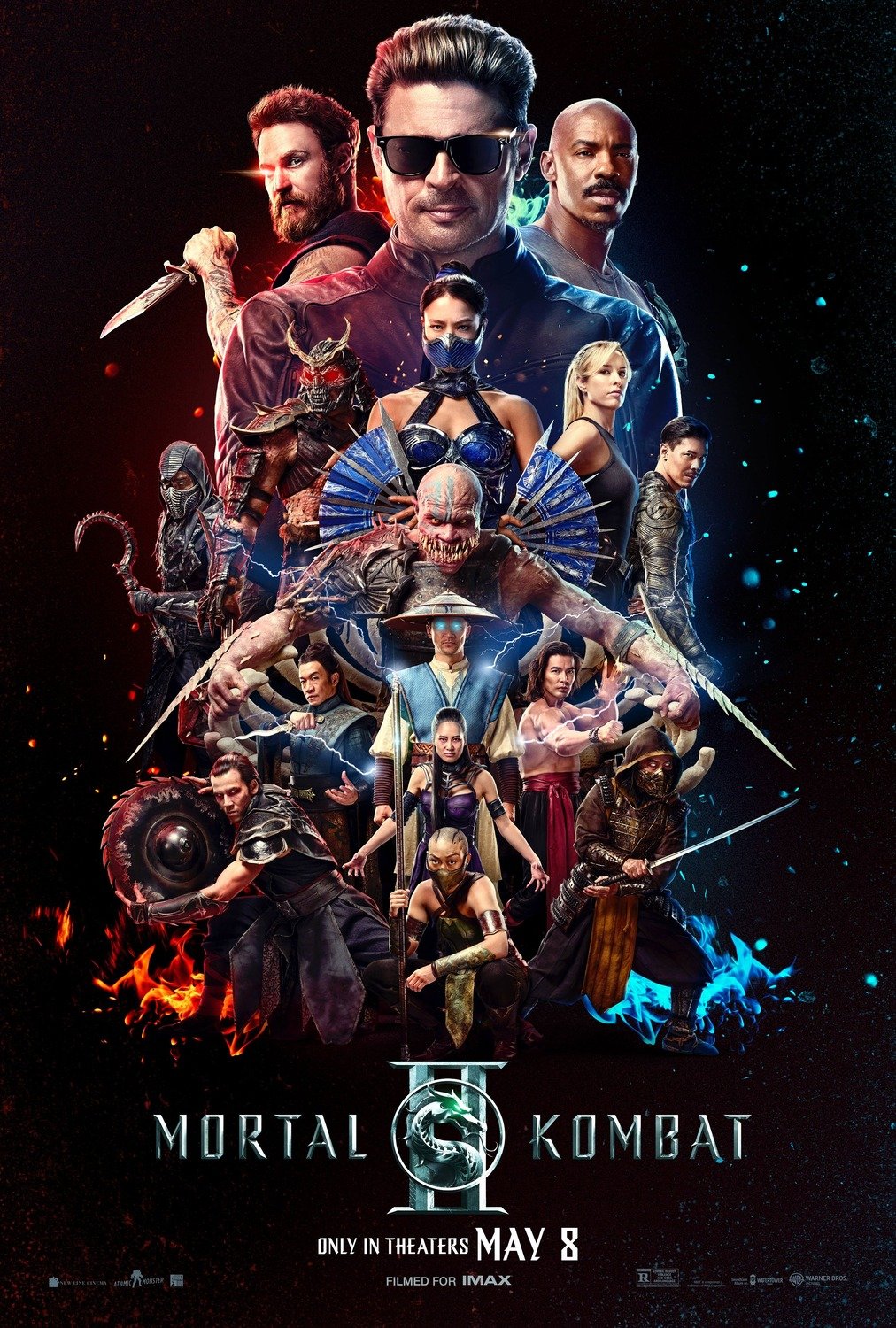
Photo Credit: Warner Bros.
Johnny Cage gives the sequel its best angle
The smartest choice the film makes is building so much of this chapter around Johnny Cage. He is a natural fit for a movie like this, not just because he is a fan favorite, but because his persona brings exactly the kind of energy the sequel needs. He is funny, familiar, cocky without becoming unbearable, and just self-aware enough to cut through some of the film’s heavier lore.
Karl Urban turns out to be a strong asset here. He has the charm, timing, and physical credibility to make Johnny land in a way that feels easy rather than forced. The character gives the movie a looser rhythm whenever it threatens to get bogged down, and Urban understands how to keep him entertaining without reducing him to a constant punchline. That goes a long way in a sequel this packed with mythology, backstory, and setup. Johnny gives the film a cleaner entry point. Even when the narrative gets cluttered, he remains one of the core elements that consistently feels like the movie knows exactly what to do with him.
Outside of Urban, the film also benefits from memorable turns by Adeline Rudolph, Josh Lawson, and Max Huang. Rudolph brings a welcome presence to the ensemble, Lawson slips back into the film’s chaos with ease, and Huang is a fun return, even if the sequel never quite gives him the room he deserves.
The tournament Becomes a Focal Point
One of the clearest improvements is that the tournament is finally a focal point. That should have been a given from the start, but after the first film’s sidestepping, it is satisfying to see the sequel actually lean into the structure that defines the property. The matchups themselves are often fun, and several of them play like direct nods to the games in the way fans would hope.
The problem is not the idea of the tournament. It is everything else the movie tries to pile around it. Mortal Kombat II has a lot on its plate: introducing new fighters, carrying over unfinished material from the first film, building out backstories, escalating a major threat, and delivering a steady stream of action. As a result, the tournament often works more as a framework than as a dramatically rich centerpiece.
That leaves the film feeling oddly split. On one hand, it is absolutely more aligned with what a Mortal Kombat movie should be. On the other, it still does not quite unlock the full cinematic potential of the tournament itself. The scale is there in flashes, but the storytelling around it does not always give those moments the weight or build they need.
The violence delivers, even if the action can feel a little stiff
No one walks into a movie called Mortal Kombat II expecting restraint, and the film is smart enough not to disappoint on that front. The fights are brutal, bloody, and frequently designed to satisfy the franchise’s appetite for broken bodies and fatal blows. This is very much a sequel that knows what kind of carnage its audience showed up for.
Where it is a little less consistent is in the choreography. Some fights have impact, but not always flow. There are stretches where the action feels a bit too mapped out, a little too cleanly assembled, which keeps certain sequences from reaching the slicker, more fluid high points that other Mortal Kombat projects (or other action game-to-film adaptations) have hit. You can sometimes feel the mechanics of the scene instead of getting fully swept into it.
Still, that does not sink the overall effect. There are enough bursts of nastiness and enough standout moments scattered through the movie to keep the action from becoming dull. Even when the movement lacks elegance, the film still knows how to land a kill, a hit, or a reveal in a way that gets the reaction it wants.
Score: 6.5/10
Mortal Kombat II is a rougher, rowdier, and more satisfying sequel than the first film, largely because it finally embraces the tournament and gives a few key characters the spotlight they deserve. Karl Urban is easily one of the movie’s best assets, the violence lands, and the fan-service-heavy setup works more often than not. Even so, the story remains stretched thin, and the action does not always reach the level of cinematic impact it seems to be aiming for.