
Few things are as unsettling as watching something created to comfort children become a source of danger, and director Casper Kelly builds Buddy around that feeling. Set inside a cheerful 1990s television program, the film traps its young characters among colorful sets, friendly objects, and simple lessons that gradually reveal a crueler purpose. That familiarity becomes the foundation of a nightmare in which every song, smile, and hug can carry an unspoken threat.
Familiar Childhood Comforts Become Terrifying
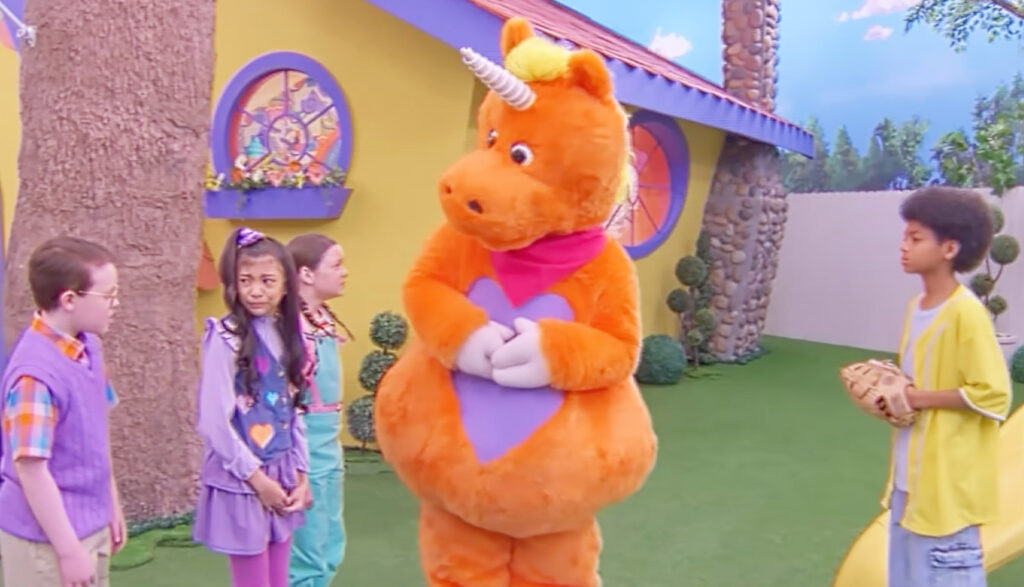
The world of It’s Buddy! will be immediately recognizable to anyone who grew up with programming like Barney & Friends. Buddy is a large orange unicorn who sings, teaches lessons, and expects each day to end with happiness, surrounded by children who understand that keeping the show running means following his rules.
Kelly uses the language of that programming to create a specific and consistently eerie tone. The simple dialogue, repetitive songs, and overly enthusiastic performances begin to feel threatening as Buddy’s patience disappears, especially because everyone continues acting as though the show is unfolding normally. Even after violence breaks through the cheerful surface, its characters remain trapped within the rhythm of children’s television.
A similar discomfort made the Angel episode “Smile Time” so effective, using child-friendly puppets and exaggerated performances to hide something much darker. Buddy takes that idea further by making the show’s structure part of the danger. Songs can reset the day, lessons become demands, and affection is something Buddy expects the children to perform whenever he asks.
Keegan-Michael Key’s voice performance holds those elements together as Buddy shifts between loving, wounded, and furious within the same exchange. His violent reactions still carry the cadence of an educational host addressing a minor problem, giving the horror its strangest edge. Buddy appears unable to understand why the children no longer want to play with him, which makes his increasingly gruesome behavior even more disturbing.
The Young Cast Carries the Story
Moving between playful children’s programming and survival horror places a difficult responsibility on the young cast, who must work convincingly within both sides of the film. Their characters can go from singing and dancing to witnessing something horrific within moments, and the performers handle those changes with impressive control.
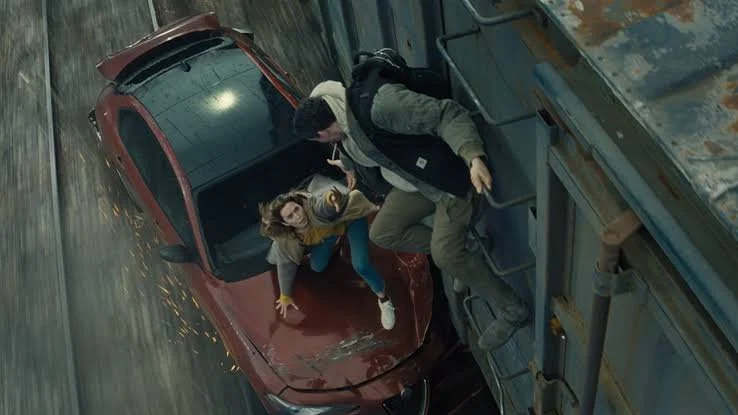
Delaney Quinn is especially strong as Freddy, whose growing awareness places her at the center of the escape. She gives Freddy enough warmth and vulnerability to remain believable as a child while gradually bringing out the courage and quick thinking needed to hold the group together. As Freddy learns how Buddy’s world operates, Quinn becomes more guarded and determined without losing the fear underneath her performance.
The rest of the young cast adds to that investment through the friendships, arguments, and loyalties formed within the group. Each death changes how the remaining children respond to the danger, allowing the losses to register even as the story moves into its next strange situation. Their commitment gives these characters enough heart that the possibility of a grim outcome becomes genuinely upsetting.
Cristin Milioti brings the same emotional weight to the real-world thread, grounding the larger mystery in the damage left behind by Buddy’s show. Her performance deepens the film’s sadness, while the children’s fight to survive remains the heart of the story.
Small Characters Leave a Major Impression
Some of Buddy’s most emotional moments belong to Strappy and Mr. Mailbox, two ordinary objects given enough personality to become important parts of Freddy’s journey. Patton Oswalt voices Strappy with nervous humor and sincere affection, turning the talking backpack into a dependable companion, while Mr. Mailbox offers another friendly presence as Buddy’s world grows more hostile.
Their loyalty to Freddy gives the later parts of the movie an unexpected emotional pull. Characters who could have remained background jokes become sources of comfort, making their eventual fate one of the film’s cruelest details. The attachment they create also shows how much potential exists within this world beyond its central villain.
A late piece of lore strengthens that possibility by revealing two other figures similar to Buddy, suggesting that his show may belong to a larger history. Since Strappy, Mr. Mailbox, and the other supporting creations already bring so much personality to the story, another visit could expand that mythology through a different corner of the same nightmare. And at this point, a return to Buddy’s world just to get a few familiar faces (or in this case, objects) would certainly be welcome.
A Memorable Story With a Relentlessly Grim Ending
The children’s attempt to escape remains gripping because every apparent solution could lead them into another trap. As they move farther from Buddy’s clubhouse, each location introduces a distorted piece of children’s entertainment while revealing more about the limits of their world, pushing the group toward an increasingly desperate outcome.
Over time, however, that dread grows heavier than the story needs. Buddy contains enough death, cruelty, and damaged lives to establish the seriousness of its horror well before the final scenes, yet its conclusion removes nearly every remaining source of comfort. One small glimmer of hope could have preserved the force of those losses while giving the audience something meaningful to hold on to.
That said, the grim ending still fits the world Kelly has created, and its emotional impact shows how successfully the film makes these unusual characters matter. Even so, the closing moments feel a tad more punishing than necessary.
Score: 7/10
Buddy turns the familiar language of 1990s children’s television into a funny, disturbing, and surprisingly emotional nightmare, strengthened by a young cast that handles its sharp changes in tone with impressive skill. Its gripping story and memorable characters make Buddy’s world worth revisiting, even if the ending leaves very little light behind.