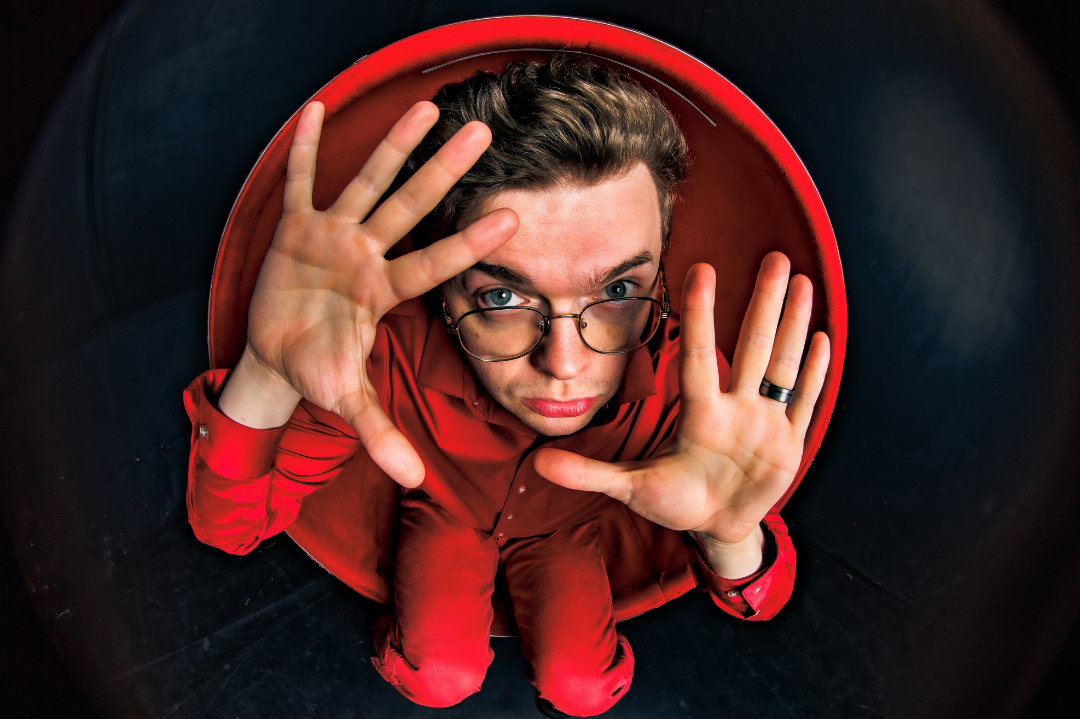

CG5 has spent more than a decade turning the rapidly changing language of the internet into a musical world of his own. Born Charlie Green, the Arizona pop artist began sharing music online as a teenager, finding an audience through songs inspired by games, animation, memes, and the communities surrounding them. And beneath those references was an instinct for melody and storytelling that allowed his work to travel well beyond the source material.
That connection has since grown into more than 10 million YouTube subscribers, over a billion Spotify streams, and multiple headline tours spanning several continents. Yet CG5’s career remains impressively self-directed for an artist working at that scale. He maintains a hands-on role across songwriting, production, content, and the visual identity surrounding each release, preserving the immediacy that first drew listeners into his work.
His new album, GAMER, brings the different sides of that career into the same canvas. Released on October 16, the 13-track project draws from the emotional architecture of video game music while moving through pop, rock, and electronic production. Recent singles “I DON’T LIKE YOU,” “Fanatic,” and the Ironmouse collaboration “GO GO GO” offer different entry points into a record that shifts between competitive energy, humor, vulnerability, and the pressures attached to being constantly visible online.
Ahead of the release of GAMER, Stardust caught up with him about building an album from the sounds that formed him, connecting through internet culture, and sustaining an independent career without surrendering creative control.
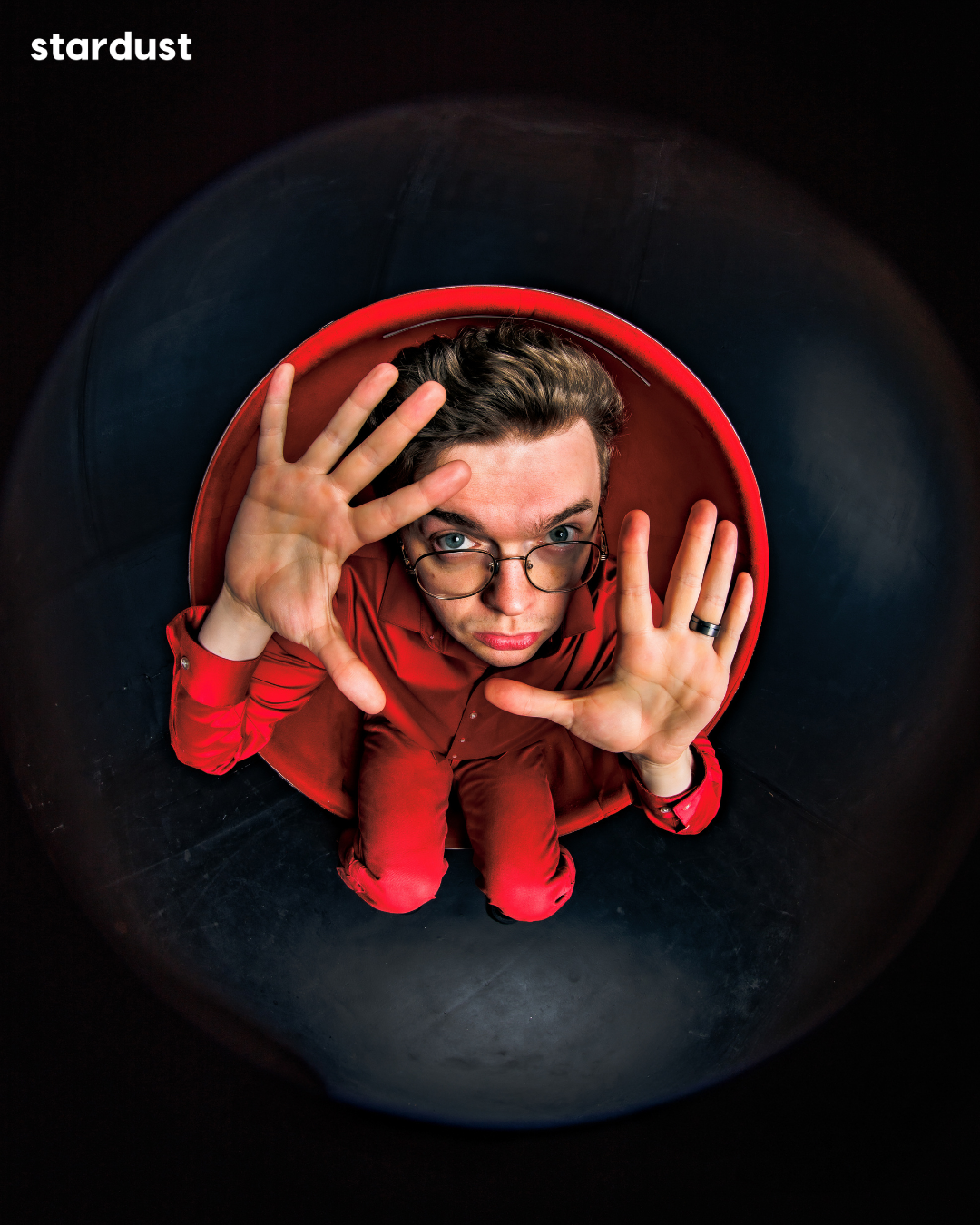

GAMER brings your connection to games into the framework of a full pop album. What did that title come to represent for you, and why did this feel like the right time in your career to build an entire project around it?
CG5: For me, GAMER is a way of describing life experiences in music while still catering to the community I’ve created that’s intensely involved with gaming. Gaming has always been a part of my life, but I loved the idea of taking that language and using it to talk about growth, competition, escapism, nostalgia, and the different versions of myself that exist throughout my journey in life.
It felt like the right time because I’m at a point in my career where I can look back at everything I’ve experienced while still feeling excited about what’s ahead. I wanted to make something that felt immersive and playful, but also personal. Building this album gave me the freedom to create a whole world rather than just a collection of songs—it felt like leveling up into a new chapter.
Video game music often has to establish an emotion or atmosphere before a player fully understands what is happening. How did that kind of storytelling influence the melodies, production, and sequencing of GAMER?
CG5: I think that’s one of the things I really wanted to bring into GAMER—the idea that you can feel something before you fully understand it. In games, the music can completely change the way you experience a scene, sometimes without you even realizing it. I wanted the album to work in a similar way.
With the melodies and production, I focused a lot on creating atmosphere and emotion first. There are moments that feel nostalgic, energetic, dark, or euphoric, and I wanted the production to communicate that before the lyrics necessarily explain what’s happening. I also thought about the sequencing almost like moving through different levels of a game. Each song has its own world, but there’s an emotional progression from one track to the next. By the end, I wanted it to feel like you’d actually gone somewhere—not just listened to a group of songs.
“Fanatic” is packed with bravado and momentum, but there is also a sense of self-awareness beneath it. How did you find the voice of the song, and how much of it reflects your own relationship with ambition?
CG5: “Fanatic” was really about giving myself permission to approach the song differently. I sing on probably 99% of my music, so I didn’t want to force that same approach onto this track. The idea was to keep it simple, rhythmic, and confident, and let the personality come through the delivery. The rapping almost felt like another character or another side of me that I don’t get to show as often.
There’s definitely a lot of my relationship with ambition in it, because I think ambition can be both serious and playful. You can be completely driven while also being self-aware enough to laugh at yourself a little. I wanted “Fanatic” to have that bravado and momentum, but not feel like I was trying to prove something. It’s more about enjoying the pursuit—being obsessed with creating, improving, and seeing how far I can take an idea. That’s what made the song feel authentic to me, even though the way I performed it was very different from what people might expect from me.
“GO GO GO” is an addictive, high-energy track that brings you together with Ironmouse, another artist whose career and community were largely built online. How did the collaboration begin, and what did her voice bring out in the song?
CG5: “GO GO GO” actually came together pretty naturally. I sent the track to Ironmouse, and she immediately connected with it and wanted to be a part of it. That was really exciting for me because the song already had this very specific energy and nostalgia built into it, and I felt like her voice and personality could really take it further.
The track is very much my take on that golden era of EDM from the 2010s. I was pulling inspiration from that big, euphoric dance-pop sound—things I loved from artists like Calvin Harris and the Black Eyed Peas—and trying to make something that felt instantly fun and familiar without just recreating the past.
Ironmouse brought so much character to it. Her voice has this really distinctive energy that worked so well sonically with the track. I also love that she comes from an online-driven community similar to mine, because that connects directly to the world of GAMER. It felt like a really natural meeting of two different creative worlds that share a lot of the same audience and energy.
“I DON’T LIKE YOU” is a personal favorite—the fast-paced production and unapologetically direct delivery make it feel incredibly fun and cathartic. What sparked the song, and how did you preserve that playful energy while tapping into such a blunt emotional release?
CG5: “I DON’T LIKE YOU” was actually a pretty important song for me because it was the first single I released from GAMER. I was definitely a little nervous putting it out because it was the beginning of a completely original story and world, and I didn’t know how quickly people would connect with it or whether fans would immediately understand where I was taking things.
I wanted the song to feel like a video game from the beginning, and Street Fighter was a big reference point for me when I was developing the style. I had a lot of fun with the vocal chops and the arcade sounds. Even though the sentiment is very blunt, I didn’t want it to feel heavy or overly serious. There’s something really fun about being able to say exactly how you feel and turn that emotion into this chaotic, energetic experience.
I think that contrast is what makes the song work for me. It’s basically taking a pretty direct emotional reaction and putting it inside this colorful arcade world. Instead of sitting in the negativity, you get to have fun with it—and that made it feel like the right introduction for the fans to GAMER.
Across the album, confidence and larger-than-life energy can be found alongside uncertainty and vulnerability. What did GAMER allow you to express about yourself that you had not previously explored so directly in your music?
CG5: I think GAMER gave me permission to be more honest about the contrast between how I present myself and how I actually feel. There’s a lot of confidence, humor, and gaming aesthetics on the album, but underneath that is a lot of uncertainty—about growing up, being in relationships, figuring out who I am through all of that, and wondering whether I’m actually where I’m supposed to be. I’ve always used characters, stories, and fictional worlds as a way to express myself, but GAMER let me put more of me directly into those ideas. It’s probably the most I’ve explored the feeling of wanting to be confident and larger than life while simultaneously admitting that I don’t always feel that way. That vulnerability became just as important to the album as the big, exciting moments.
You remain closely involved in nearly every part of your releases, from writing and production to content and visual direction. How do those different roles communicate with one another, and which part of the process usually establishes the direction first?
CG5: For me, the subject matter is usually what establishes the direction first. A lot of my music is very deliberately tied to a specific video game, show, meme, character, or piece of internet culture, so I’ll usually start with the world I’m trying to capture and ask myself, “What does this make me feel, and what can I say about it that’s interesting?” From there, the music, lyrics, production, visuals, and content all become different ways of exploring that same idea.
I’m not necessarily thinking of the song, music video, artwork, and content as separate things—they’re all pieces of the same world. A sound might inspire a visual, a character might influence the way I write a lyric, or a particular visual moment might make me realize what the song needs to sound like. I usually know the core concept first, and then I let each medium help me figure out what that concept can become.
You have now taken your music from online communities into sold-out rooms around the world. What has performing for those audiences taught you about the impact of your songs that views, streams, and comments could never show you?
CG5: I think performing live has taught me that the numbers can only tell you so much. Online, you see views, streams, comments, and likes, but you don’t necessarily get to see the person on the other side of the screen. When I’m onstage, and I see hundreds or thousands of people singing a lyric back to me—especially a lyric from a song that was originally about a specific game, character, meme, or piece of internet culture—it suddenly becomes very real.
What’s been really meaningful is realizing that people can take these songs and make them part of their own lives. A song might have started as me obsessing over a particular piece of media, but years later I’ll have someone tell me that it reminds them of a certain time in their life, or that they grew up listening to it. You can’t really see that in a stream count. There’s something incredibly humbling about realizing that something I made alone in a room can eventually become a shared experience between thousands of people in the same room.