
Returning to beloved characters years after their defining adventure can easily result in a reunion built around recognition alone. Fortunately, Avatar Aang: The Last Airbender arrives with greater purpose. Through breathtaking animation, thoughtfully matured heroes, and a story attentive to the lives they have built, this long-awaited return becomes a meaningful continuation of their journey.
A Breathtaking New Vision for Avatar
From its opening moments, Avatar Aang establishes a visual identity worthy of the world it revisits. The animation preserves the expressive character work and elemental movement associated with the original series, then expands those qualities into something richer, more intricate, and unmistakably cinematic.
Extraordinary care shapes nearly every frame. Landscapes possess the texture of painted worlds while remaining full of movement and life. Wind passes through trees and clothing, distant structures give each civilization a sense of history, and subtle changes in light alter the emotional temperature of a scene.
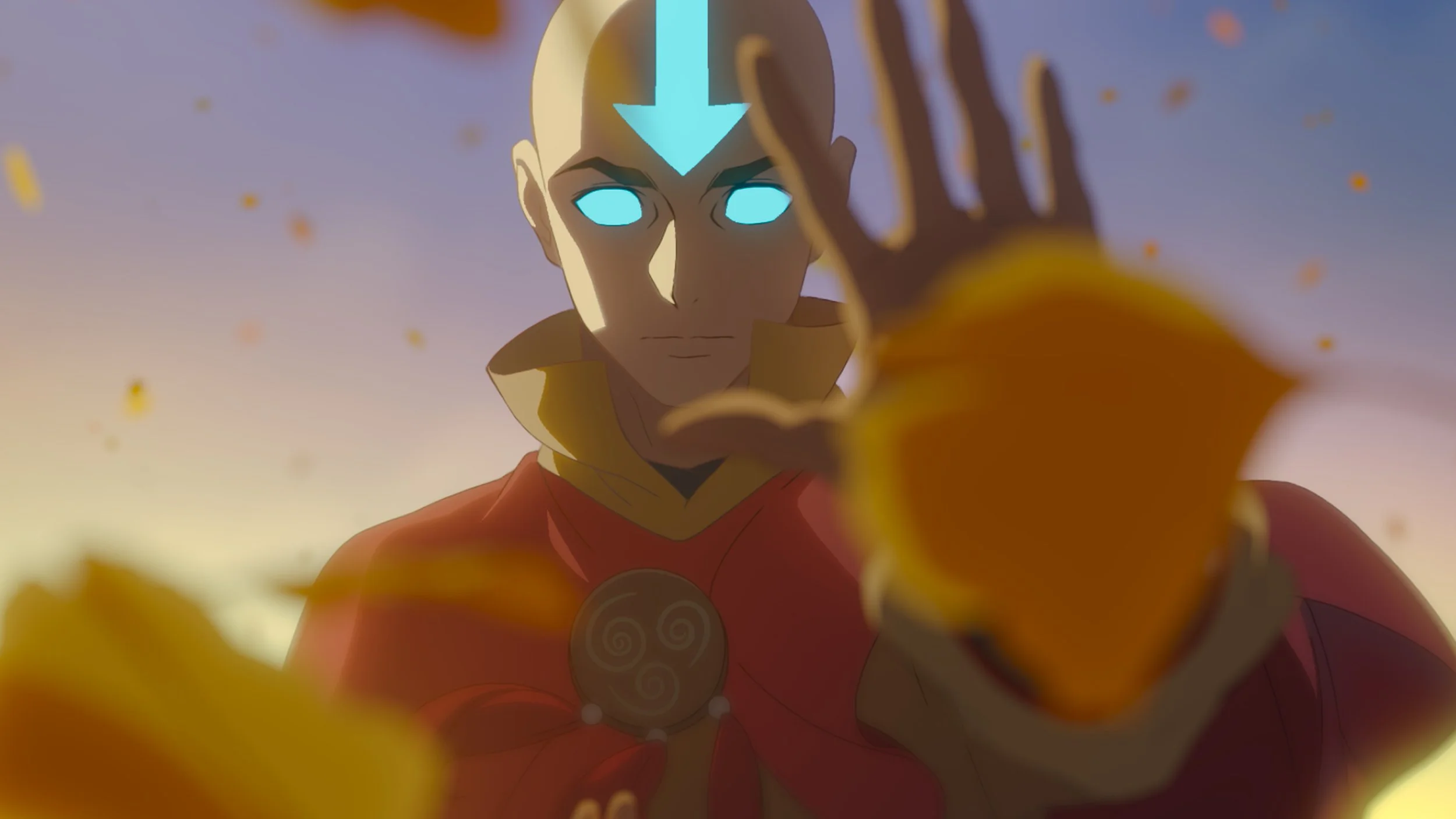
Bending provides some of the film’s greatest visual wonders. Every element retains a distinct physical language, from the sweeping freedom of air to the force and precision of earth, and the expanded animation gives each movement greater weight. Even the most ambitious action remains clear and connected to the person performing it, allowing personality and experience to shape how every ability appears onscreen.
Traditional visual influences and modern techniques come together with a timeless quality, too. The images consistently carry the polish of a contemporary animated blockbuster while maintaining an identity that feels specific to this world. In a medium increasingly defined by daring stylistic experimentation, Avatar Aang distinguishes itself as animation in its highest form.
Team Avatar Has Grown with Its Audience
Years of change are visible across Team Avatar. Their bodies have matured, their movements carry greater confidence, and their responsibilities extend far beyond the mission that originally brought them together. Those developments reach also deeper than redesigned appearances, shaping how each character understands their place in the world.
When we first pick up with these characters, Aang remains compassionate and playful, though experience has complicated the optimism that once guided him so naturally. He now finds himself reconciling his personal instincts with the political, cultural, and spiritual demands placed upon the Avatar, a tension that shapes nearly every decision he makes. Saving the world in his youth required courage; maintaining its balance calls for patience, compromise, and a more complicated understanding of strength. The weight of that responsibility feels credible here, while the warmth that made Aang so immediately lovable remains intact.
Katara, Sokka, Toph, and Zuko receive equally considered evolutions. Their defining qualities are still recognizable, yet no one appears frozen at the point where the original series ended. Humor has changed with experience, former tensions have developed into more layered dynamics, and affection often surfaces through the shorthand of people connected by years of shared history. Combat becomes another expression of their growth. Movements once driven by instinct now carry discipline, while each character’s relationship with power reflects the life they have built.
And for longtime fans, when the core group is finally reunited, the dynamic remains instantly recognizable. Their chemistry survives (and thrives) without recycled exchanges or inflated versions of familiar personality traits. Time has altered how they communicate and depend on one another, sure, but the foundation of those relationships remains strong.
Nostalgia with Something New to Say
Reuniting the original Team Avatar naturally brings enormous nostalgic appeal. Avatar Aang welcomes that affection while giving its characters experiences that move them beyond the story audiences already know.
Familiar places, sounds, relationships, and visual motifs create an immediate connection to the franchise’s past. However, their appearances also serve the present narrative, revealing how the world has developed or prompting characters to reconsider beliefs formed much earlier in their lives.
This gives the reunion genuine power. The movie recognizes how much audiences have missed these heroes, then rewards that attachment with meaningful developments instead of relying on a succession of affectionate callbacks. Adulthood also naturally introduces questions the original series could only begin to explore: what follows after young heroes save the world, how friendship survives diverging responsibilities, and whether fulfilling a destiny leaves room to create an identity beyond it.
In some respects, the approach is reminiscent of the strongest later entries in the Digimon franchise, where affection for familiar characters exists alongside the more difficult realities of growing older. When handled well, shared history can intensify the conflicts unfolding in the present while still allowing the story to remain focused on the lives still ahead. In this way, nostalgia becomes an emotional foundation rather than the sole justification for the story’s existence.
Longtime Avatar viewers still receive a deeply rewarding continuation, though the emotional clarity of the character work prevents it from becoming inaccessible to anyone less attached to every detail of franchise history. The story simply draws its power from growth, change, and the enduring relationships at its center.
The Four Nations Were Made for the Big Screen
The original series always suggested possibilities larger than television could fully contain. Its nations, creatures, spiritual realms, and bending traditions formed a world suited to genuine cinematic spectacle. Avatar Aang finally realizes that potential.
Battles stretch across vast environments with a clear sense of geography, allowing audiences to understand both the physical movement and the emotional stakes of every encounter. Individual decisions continue to shape the action, while new applications of bending emerge from experience, pressure, and personality. The spectacle feels more exciting because it remains grounded in character.
Equal care shapes the film’s intimate passages. Framing, movement, and the space between characters give conversations considerable weight, creating natural transitions from enormous conflicts to personal revelations. Large-scale ambition and emotional detail often operate together here, making the move into theaters feel like a genuine expansion of the franchise’s storytelling possibilities.
Few series-to-film transitions feel this assured. Avatar Aang broadens its world, moves its heroes into a new period of their lives, and delivers action worthy of a theater while preserving the emotional precision that made the original series so enduring.
Score: 9/10
Visually breathtaking and deeply heartfelt, Avatar Aang: The Last Airbender gives Team Avatar a meaningful new chapter—and proves this world was made for the big screen.