
We Still Deserve House of Ninjas Season 2, Netflix’s Dark Horse Genre Blender
House of Ninjas was one of Netflix’s most distinctive surprises of 2024, delivering a series that felt fresh, emotionally layered, and fully confident in its voice. And with its strong ensemble, sharp action, and a finale that left several compelling character arcs unresolved, the dark horse hit has more than earned another season.
House of Ninjas | Photo Credit: Netflix
A rare series with its own pulse
Some shows arrive with a massive campaign behind them, practically declaring their importance before audiences have the chance to decide for themselves. House of Ninjas found its audience in a far more satisfying way. Premiering on Netflix on February 15, 2024, the eight-episode series pulled in more than four million viewers right away and introduced the Tawara family, a retired shinobi clan drawn back into danger when a new threat begins to emerge in modern Japan.
What made the show resonate, both with new viewers and the following it quickly built, was how fully it committed to its own identity. Directed and co-created by Dave Boyle from a story developed with star Kento Kaku, Yoshiaki Murao, and Takafumi Imai, House of Ninjas is rooted in a distinct action-thriller sensibility while still moving with the ease of a broadly appealing Netflix drama. Family tension, espionage, action, romance, political intrigue, and dry humor all exist within the same world, giving the series a texture that feels consistent yet surprising from scene to scene. Few streaming originals arrive with this much personality already in place.
The cast gives the show range
Another season would be worth wanting for the cast alone. Kento Kaku anchors the series as Haru Tawara, the second-born son carrying guilt, restraint, and a stubborn moral streak. Around him, the ensemble is packed with performers who bring different nuances to the family dynamic: Yosuke Eguchi as Soichi, Tae Kimura as Yoko, Aju Makita as Nagi, Tenta Banka as Riku, Nobuko Miyamoto as Taki, Kengo Kora as Gaku, and Riho Yoshioka as Karen Ito. The strength of the show comes from how distinct those personalities feel on screen. No one is there to fill space. Each family member enters with their own rhythm, frustrations, and secrets, which gives the series a deeper bench than most action dramas manage.
That variety makes a difference from other action titles with similar ambitions because House of Ninjas asks its cast to move through a lot of tones. Haru carries romantic tension with Karen, buried shame around Gaku, and the emotional drag of living in a family where everybody is grieving in a different register. Soichi is trying to hold the line as a father and husband. Yoko is restless and magnetic in ways that keep domestic scenes from ever feeling static. Nagi has her own rebellious energy. Taki brings authority, mystery, and wit. Riku gives the series a younger point of view without turning into dead weight. Even the supporting Bureau of Ninja Management figures have enough personality to keep the world from feeling like backdrop.
A second season would not need to invent new emotional engines from scratch. They are already there.
The character work leaves plenty of room to grow
One of the best things season one does is build storylines across generations, giving each member of the Tawara family a distinct place within the larger emotional structure. Early on, Haru is adrift, Soichi and Yoko are carrying the weight of an old loss in different ways, Nagi is pushing against limits, Riku is still coming into focus, and Taki remains the family’s most enigmatic guide. The show gives each of them a clear starting point, then lets those tensions evolve instead of leaving everyone frozen there.
That is part of what makes the finale so satisfying. The family is not stuck in the same emotional place where the season began. They have reentered ninja life, regained a sense of purpose, and by the end they feel stronger as a unit than they did when we first met them. Even the grief around Gaku changes shape. What begins as loss gives way to reunion, only for that reunion to come with its own cost as the family is forced to confront the person he has become. That shift gives the series something richer to build on going forward. Season two would not be about repeating old pain beat for beat. It would be about watching a more confident, more unified Tawara family face the consequences of everything season one set in motion.
That is also why the remaining threads feel so compelling. Gaku’s future opens the door to a much larger conflict now that he is positioned to lead the Fuma. Haru and Karen are left with feelings that still have nowhere to settle. Riku’s role within the family is only becoming more interesting, especially with Taki poised to shape him further. Soichi and Yoko also feel newly worth following, not because their marriage is trapped in the exact same place as before (we love that for them), but because the family’s return to this life places fresh pressure on a relationship that has already been tested. The opportunities are endless.
The action is already set up to go bigger
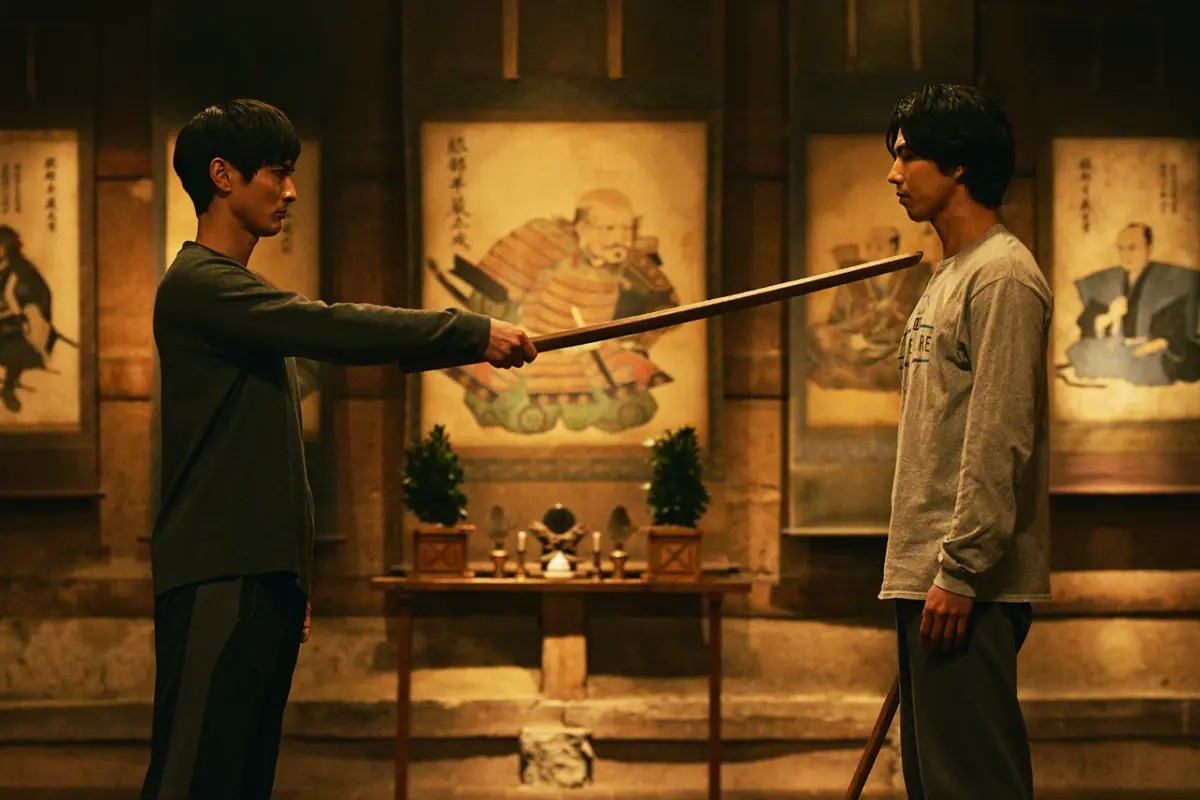
That same forward momentum runs through the action. House of Ninjas already proved in its first season that it knows how to make combat feel exciting, character-driven, and genuinely fun to watch. The choreography is sharp, inventive, and varied enough to keep the series from slipping into repetition, and one of the best choices the show makes is letting the whole family take part. The action never feels limited to one standout fighter either, which gives the series more energy every time the Tawaras move as a unit.
More importantly, the fight scenes reveal something about the people inside them. These sequences show fear, skill, hesitation, arrogance, loyalty, and chemistry all at once, giving them far more weight than standard spectacle. Season one already delivered several clever set pieces that hinted at how much further the series could go. Now that the Tawaras have fully stepped back into this world, and with Gaku set up on the other side, a second season would have every reason to deliver bigger threats, sharper choreography, and an even more confident version of the show.
Netflix should let this story keep moving
Streaming is crowded with series that feel designed to hit familiar beats as efficiently as possible, but House of Ninjas feels authored. It has style, heart, personality, and a world broad enough to hold family drama, espionage, romance, and action without losing its identity.
More importantly, season one ends at exactly the point where the show feels ready to become even stronger. The family is more united, more capable, and more deeply entrenched in this life than it was at the beginning, and Haru, Karen, Gaku, Taki, Riku, Soichi, Yoko, and Nagi all still have meaningful places to go next.
That universal sense of momentum is the clearest reason we deserve another season. The series has already done the hard work of building its foundation. Now it just deserves the opportunity to build on it.