

The DC Universe has spent its opening stretch showing how much tonal range can exist under one banner, and Lanterns may be its most gripping example yet. Two episodes in, HBO’s Green Lantern series takes one of DC’s most expansive mythologies and reshapes it as a tense, character-driven mystery, sending Hal Jordan and John Stewart into a small-town investigation that grows stranger, darker, and more ominous with every new clue.
More impressively, Lanterns works far beyond the usual boundaries of superhero television. Its sharp performances, simmering tension, and carefully layered mystery give it the texture of top-tier HBO drama, while alien threats and hints of a much larger mythology keep widening the possibilities. Already, it feels capable of standing alongside the best genre mysteries on television while making an equally strong case as one of the most exciting superhero series in years.


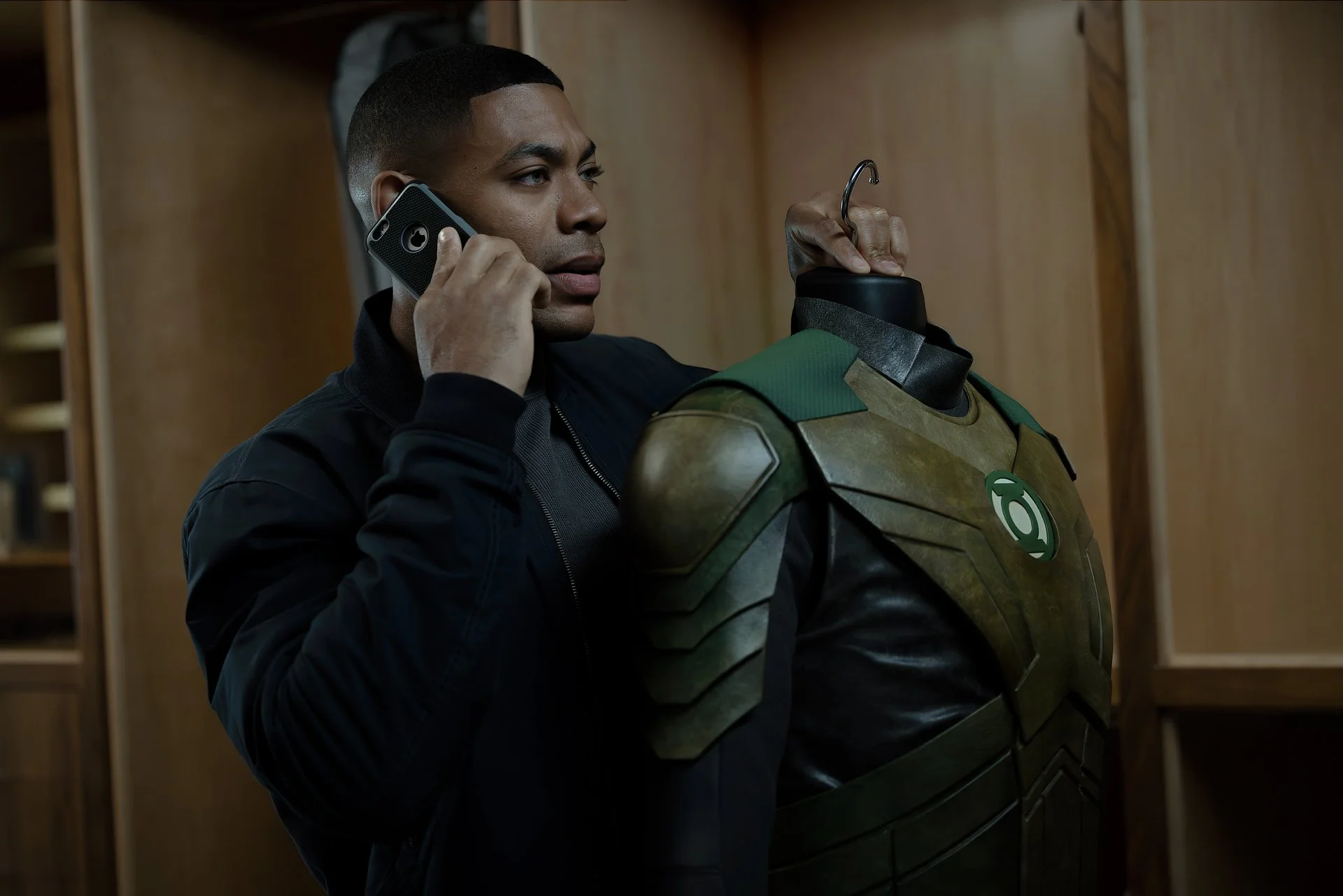

Photo Credit: Warner Bros. DiscoveryIt Opens a Completely Different Corner of the DCU
One of the most exciting qualities of the current DC Universe is how little its projects resemble one another. Superman and Supergirl embrace brighter, larger-than-life adventure while still giving their respective Super characters distinct identities; Creature Commandos leans into gleefully strange chaos. Lanterns heads somewhere darker: dusty roads, uneasy locals, crime scenes, and secrets buried in a small Nebraska town.
The result carries the texture of a prestige crime series with a galactic edge. Glimpses of other worlds and the larger Green Lantern mythology steadily widen the scope, while the investigation itself stays tactile and grounded. So far, that combination gives Lanterns perhaps the clearest and most effective genre identity in the DCU. The galaxy feels bigger because the story knows when to stay small.
Hal Jordan and John Stewart Make a Perfect Pair
Kyle Chandler’s Hal Jordan and Aaron Pierre’s John Stewart arrive with radically different instincts. Hal is seasoned, blunt, and willing to carelessly muscle his way through a problem. John is more methodical and observant, with flashes of spontaneity and creativity that reveal how differently he approaches becoming a Lantern.
The familiar veteran-and-rookie framework is there, though the writing gives their friction enough specificity to sharpen it. Hal’s experience can become arrogance—something the series readily acknowledges—while John’s discipline can harden into resistance. Each possesses qualities the other lacks, making their partnership increasingly necessary even when neither seems particularly thrilled about it.
Chandler and Pierre also understand the rhythm of the pairing. Their exchanges can be funny, combative, or unexpectedly revealing without rushing them toward friendship. Only two episodes in, their chemistry is already one of Lanterns’ strongest assets.
Every Answer Makes the Mystery Bigger
Lanterns builds its central mystery so that nearly every answer exposes a larger question. Alien bodies, hidden identities, and increasingly strange connections to Green Lantern history keep expanding the boundaries of what initially appears to be an isolated investigation.
For longtime readers, some of those developments immediately carry extra weight. The series is already reaching into foundational corners of Green Lantern lore, including elements tied to the Guardians’ earliest attempts at policing the universe, while Sinestro and other emerging threads make the potential ramifications increasingly difficult to predict. With every discovery, Lanterns seems perfectly capable of changing the very shape of the story unfolding around Hal and John.
The Series Makes Its Bigger World Feel Convincing
Green Lantern has always demanded visual ambition. The rings can create nearly anything their bearers can imagine, while the wider mythology stretches across alien worlds, enormous constructs, and conflicts capable of engulfing entire sectors of space.
So far, Lanterns has the visual confidence to suggest that breadth without losing sight of its characters. John’s relationship with the ring is still developing, but even moments connecting him to it from a distance hint at something far greater. His desire to become a Lantern also gives that power an emotional foundation before the series fully reveals what he can do.
Television becomes a massive advantage here. The effects can open the door to worlds far beyond Nebraska, while the episodic format gives Hal and John room to evolve between the larger moments. The power may be immense, but Lanterns gives it a personal reason to matter.
It Has Enough Confidence to Let the Mystery Breathe
For all the mythology waiting in the wings, Lanterns rarely seems impatient to reach its next major reveal. Its opening episodes linger over uneasy conversations, suspicious encounters, and seemingly ordinary details that gradually take on greater significance. Much of the tension comes from wondering what somebody knows, what they are hiding, or why something about the investigation feels slightly off.
That patience serves the mystery especially well. Discoveries are given enough room to register before another complication arrives, allowing suspicion to build rather than simply piling twists on top of one another. It also makes Lanterns particularly well suited to weekly television, where questions surrounding Sinestro, the wider Corps, and the increasingly strange forces caught up in Hal and John’s investigation can linger between episodes. That lingering uncertainty gives the weekly format real bite, with each new layer making the next episode harder to resist.
Lanterns airs Sundays on HBO with episodes streaming on HBO Max.