
Scream 7 Review: Fun, Flawed, and Carried by Sidney Prescott
Spoiler warning: this Scream 7 review discusses major plot points, including late-film reveals and motives.
Scream 7 is an uneven but sometimes entertaining mix of confidence, blood, and frustrating self-sabotage. When it centers on Sidney Prescott, it absolutely works, and Neve Campbell remains the franchise’s biggest draw, giving the film real emotional weight and a reason for Sidney to fight that feels fresh instead of recycled. And even when the movie around her gets tangled in continuity hiccups, nostalgia overload, or a few AI-heavy detours that play distractingly cheesy, fragments of the core appeal of Scream still generally holds: sharp momentum, a powerful final girl, and that specific brand of meta tension that makes the series feel like it’s always talking back.
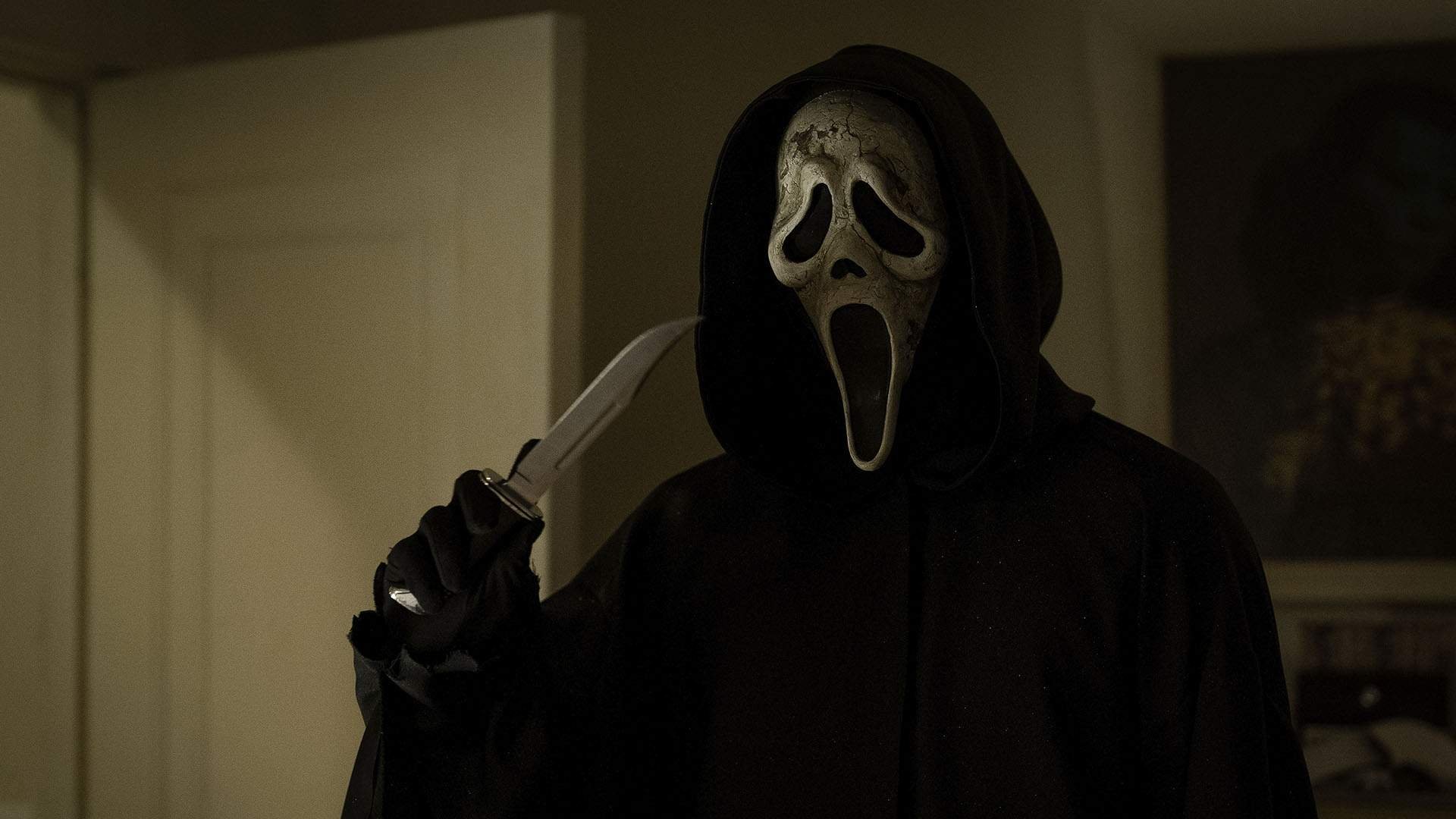
Paramount Pictures and Spyglass Media Group | Scream 7
Sidney’s Arc Works, and Neve Campbell Shines
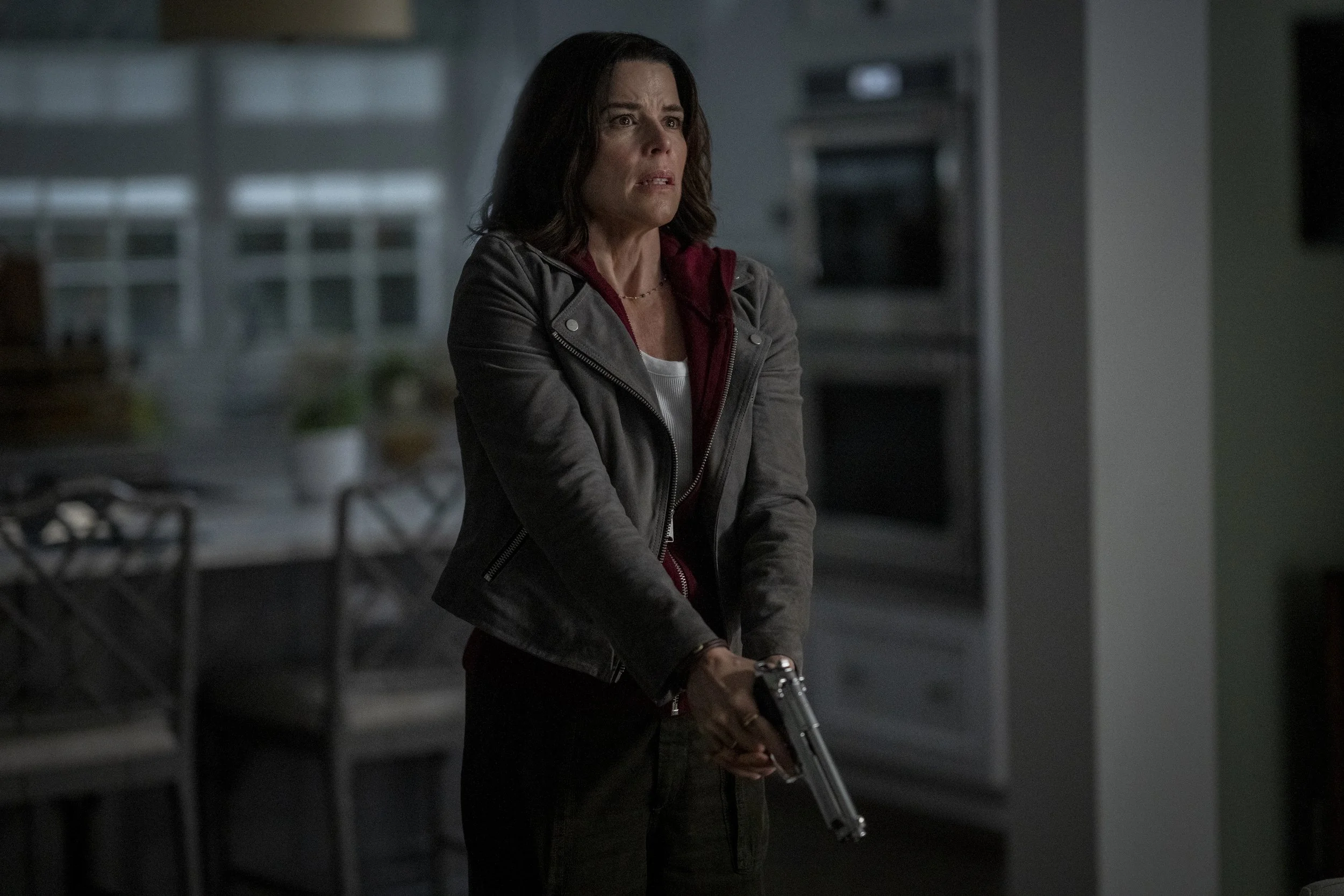
Let’s start with a positive. The best parts of Scream 7 come from treating Sidney as a person first, icon second. The film finally reframes what she’s fighting for, and that shift makes her arc click in a way it hasn’t in a while. The family life angle specifically raises the stakes without diminishing her, and it makes her distance from the chaos feel practical, which is exactly what Sidney has earned.
Over the trajectory of her story so far, Sidney’s strength has never been that she enjoys the fight. It’s that she refuses to let it define her. Scream 7 understands that, and Campbell sells the evolution with ease. She feels dynamic without feeling rewritten, and the movie is at its strongest whenever it lets her perspective steer the tone. If the franchise’s future is going to keep orbiting legacy, this is the blueprint that works—not just bringing Sidney back, but pushing her forward.
Continuity Becomes a Strength and Weakness
Scream is one of the few horror franchises where continuity is part of the sport and events aren’t scrapped for other sequels. Scream 7 clearly wants to keep that tradition alive, and fortunately, some of its continuity checkpoints are genuinely satisfying. It’s often fun to watch a sequel that cares enough to reach backward and try to stitch everything together.
The problem is that the film’s canon obsession also exposes its blind spots. It drops “facts” with absolute confidence that don’t always line up. It talks like Casey and Steve were the first victims just to line up with the location of the film’s final showdown. It positions Tatum as the last friend Sidney could trust. It requires timeline revision with Sidney being a mother by Scream 4. Even if the problem is more about loose delivery than actually breaking its own canon, the film still muddies certain timeline details in a way that feels less like intentional reframing and more like someone behind the scenes simply got them wrong. In that sense, it almost plays like the kind of messy franchise logic Scream once nailed so well through Stab as a genre spoof.
When a movie spends this much time insisting it knows the franchise history, those slips become hard to ignore. They don’t entirely ruin the experience, but they do create a weird push-pull where you’re appreciating the effort while also noticing the lack of precision. The best Scream meta writing lands because it’s exact. Here, the intention is right, the execution is uneven.
The Nostalgia is Still Fun, but Occasionally Too Loud
I’m the nostalgia crowd. I like legacy returns, iconic echoes, the franchise winks. Scream 7 delivers that in bulk, and in the moment it can be a blast. The film is loaded with direct pull-quotes from the original, recreated shots, and set pieces designed to light up the part of your brain that remembers where you were the first time you heard Ghostface on a landline.
But in doing so, it does push boundaries and lean into dependence. Several beats feel less like homage and more like reenactment: the boyfriend sneaking through the window, the town lockdown rhythms, direct line echoes that are framed as “legendary” rather than allowed to work naturally in the scene. It starts to feel like the movie is constantly proving it’s Scream instead of trusting that it already is.
What complicates that is the franchise has already done this move well, and recently. Scream 4 used the original as a skeleton for its reboot satire and made it sting through bloodline envy and legacy theft. Scream (2022) returned to familiar ground with a modern legacy-sequel blueprint that balanced respect with a clean new thrust. Scream 7 can feel like the fourth version of the first film in a different font, which is a little deflating even if you’re enjoying the ride.
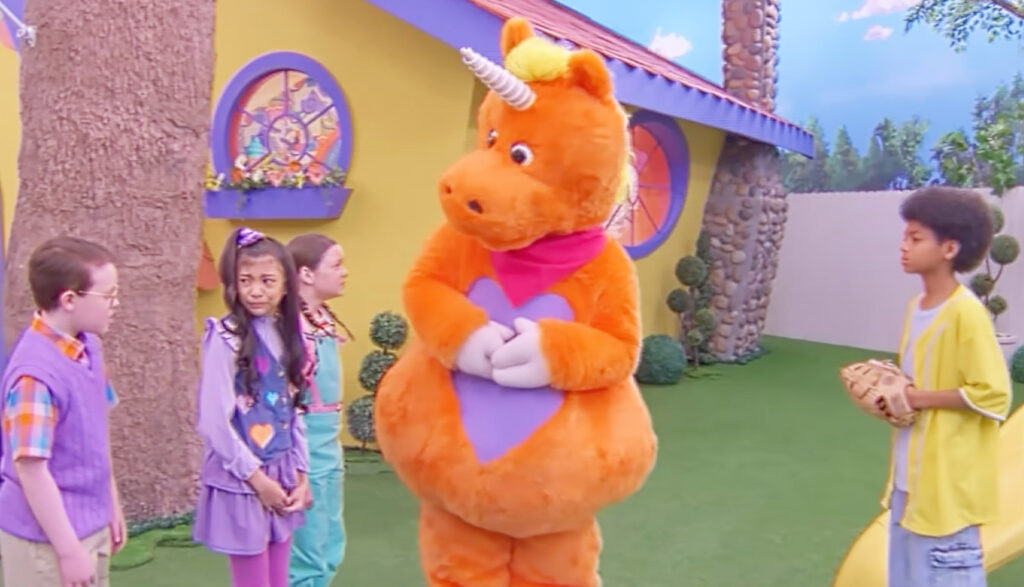
Still, the AI material is where the film and its nostalgia approach gets wobbliest. The AI-themed scenes often look (and are delivered) extremely rough, in a way that reads more like Stab production value bleeding into the “real” franchise than an intentional aesthetic. Some of it even plays like a cameo-style attention grab rather than a story necessity, and that’s where the film flirts with becoming the thing it usually mocks. Still, when Scream 7 uses the meta angle to generate tension rather than just applause, it snaps back into place quickly. It’s just not exactly consistent.
When the Movie Stops Making Sense, the Fun Has to Carry It
Paramount Pictures and Spyglass Media Group | Scream 7
As a slasher, Scream has always allowed a little heightened logic. People panic. They make dumb choices. Ghostface gets unnaturally lucky. The better entries still maintain internal rules that make the danger feel trackable. Scream 7 loosens that structure more than usual, and whether it bothers you will depend on how much you’re willing to let the genre thrills do the heavy lifting.
The lockdown material is the clearest example. The town becomes oddly barren for long stretches, even after police are informed, and the curfew angle starts functioning like a blanket excuse to erase the idea of anyone else existing. Sidney’s husband being an officer adds extra strain when he can go missing for hours (after a lot of blood loss) without the film convincing you that a functioning department is actually looking into his whereabouts.
The geography gets slightly slippery too. Sidney ditches a car, runs down what feels like an endless road for an unreasonable amount of time, and still arrives exactly where the plot needs her before anyone else. Or there’s even Ghostface who sometimes behaves more like a Michael Myers presence than a tangible human threat this time around, dropping into frame and disappearing on command (where earlier Scream films played with tracking and positioning more effectively).
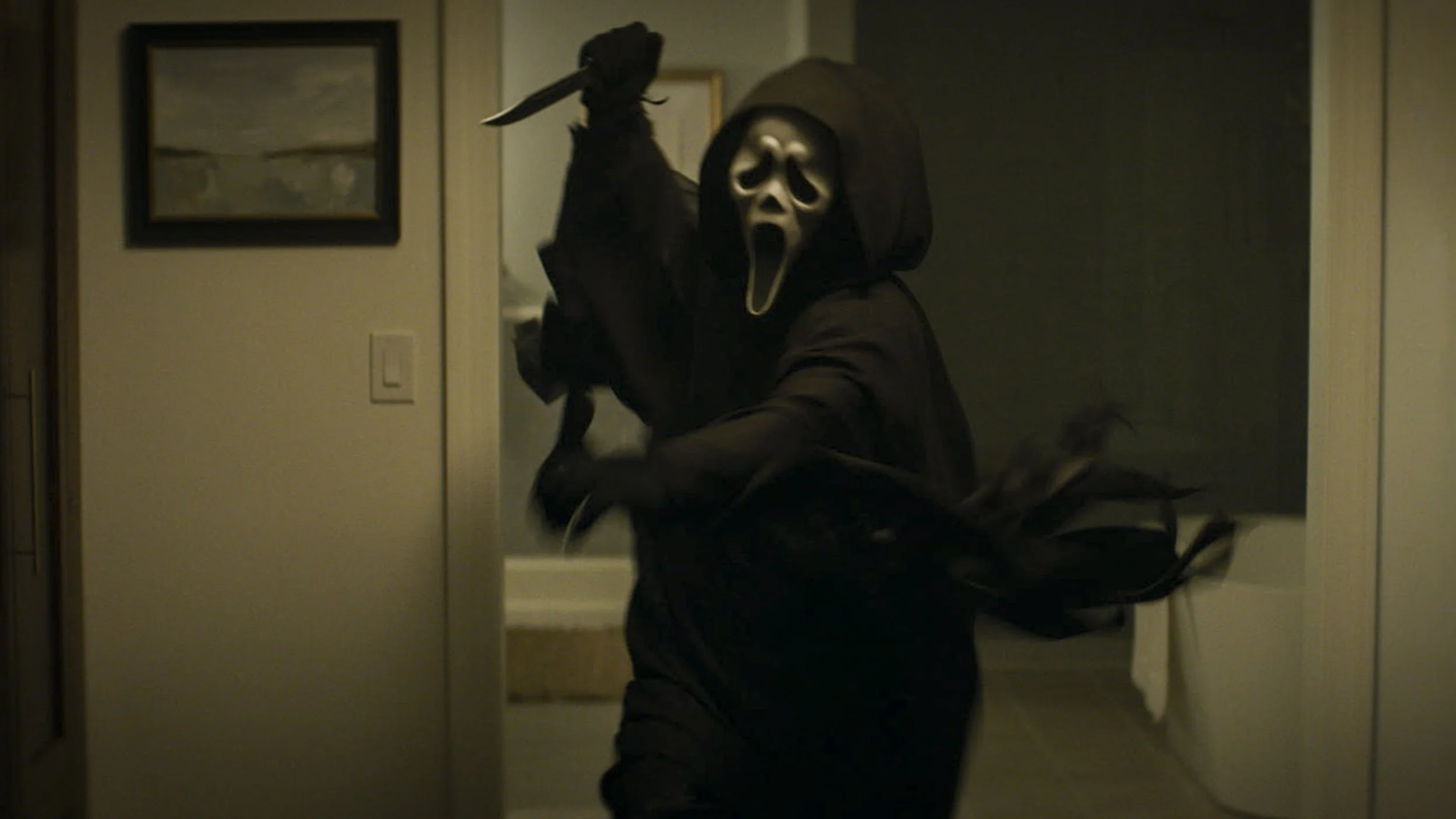
Even so, the movie’s momentum still finds ways to power through the nonsense. The attack choreography is particularly strong (especially the attack sequence at Sidney’s home before the first killer reveal), the tension spikes are mostly well-timed, and the franchise’s basic rhythm still hits. It’s not always logical, but it’s frequently effective.
Characters and Killers: A Mixed Bag With Some Real Highlights
The characters are a little uneven, but it’s not a complete hit to the film. Sidney’s daughter forms the emotional center outside of Sidney herself, and that portion of the story feels like it’s building toward something worthwhile. At the same time, a few newcomers feel slightly underused. For example, Celeste O’Connor seems positioned to become one of the film’s more compelling new presences, especially with the built-in Tatum connection there to explore. The movie barely does anything with that, though, and instead reduces them to a temporary suspect before dispatching them in a way you can see coming well in advance.
On the other hand, the legacy characters truly help keep the classic Scream tone intact. Mindy and Chad bring unexpected humor, while Gale adds the kind of energy that instantly raises the temperature of every scene she’s in. Their inclusion can feel a little more convenient than other entries, but the payoff is that the movie rarely goes flat when they’re on-screen. It’s genuinely fun watching these personalities bounce off each other again, even when the story has to bend a bit to make the reunion happen.
The killer setup is where the film gets most divisive, and it’s easily the franchise’s weakest endgame. At its simplest, the motive is framed around Sidney “going soft” for not showing up, paired with a desire to pass the trauma down to her daughter. In theory, there’s something thematically sharp in that, especially for a franchise that keeps asking what survival turns you into over time. In practice, the “you are past your prime” framing lands softer after Scream 4 already delivered a nastier, more memorable version through Jill, and Jill’s motive cut deeper because it was fused to bloodline envy.
Part of what makes Scream reveals sting is that the killer is usually inside the circle. Here, the identity sits outside the core group, even with Tatum used as motivation, and that distance dulls the obsession. The timing of the first unmasking, though, is a smart subversion that genuinely catches you off guard. The issue is what comes with it: the reveal and motive aren’t compelling enough to justify how bold that choice wants to feel. A simpler, crueller idea, like killing everyone around Sidney to “refuel” her final girl energy and force her back into the role, would have landed harder through clarity alone, while also giving the peripheral characters and legacy returns a more organic reason to be in the crosshairs.
Instead, with minimal screen time and thin integration into the ensemble, the ending loses bite, arriving as a thinner, less satisfying finish than the setup promises.
Score: 6/10
Scream 7 is a campy, blood-soaked ride, and Sidney is what keeps it standing. It definitely has the franchise’s weakest script so far, but there’s still enough here to reward some longtime fans, even with the nostalgia overload and an unsteady motive dragging it down.