
Exit 8 Review: A Taut, Thoughtful, and Atmospheric Genre Standout
Exit 8 is one of the rare video game adaptations that understands exactly what needed to be preserved and what could be expanded. Based on Kotake Create’s indie horror hit, the film follows an unnamed commuter trapped in a looping subway corridor where every missed anomaly sends him back to the beginning. What follows is a tense, atmospheric film that keeps the game’s stripped-back dread intact while building something more emotionally resonant underneath it.
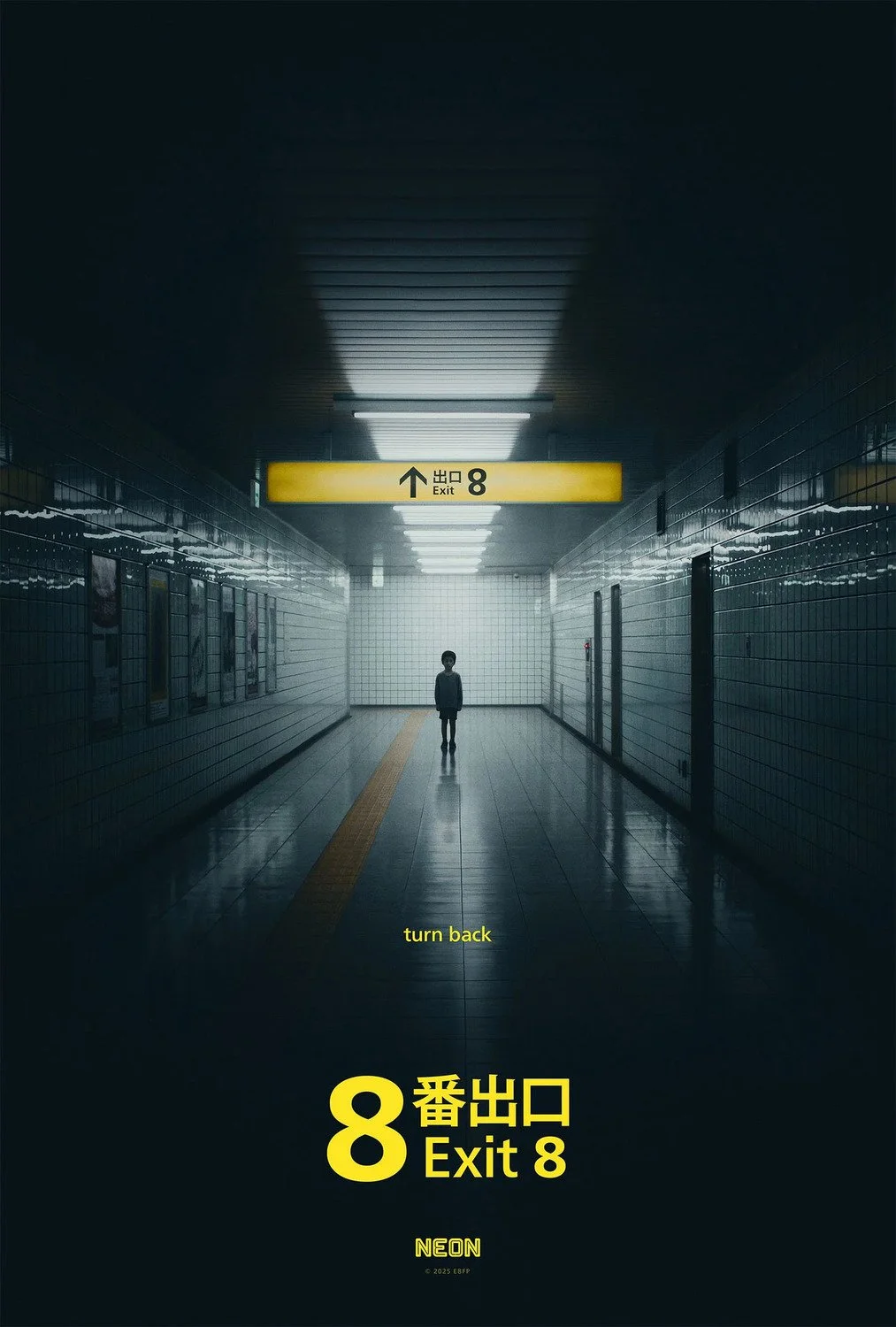
Photo Credit: Toho and NEON
The character work is quiet, careful, and unexpectedly affecting
One of the smartest things the script does is refuse to show its full emotional hand too early. The character arcs are breadcrumbed out with real patience, giving viewers just enough at a time to understand who this man is and why the moments unfolding inside the corridor begin to carry more and more personal weight. As the film’s reveals and emotional pacing deepen that connection, the experience becomes more than a genre exercise. That restraint gives Exit 8 a genuine human center without softening its unease.
Kazunari Ninomiya is terrific in the lead role. He becomes a powerful focal point not through big theatrical gestures, but through control, subtly tightening and loosening the character as the story unfolds. His performance carries guilt, fear, hesitation, and mounting resolve in a way that makes the film’s emotional turns feel earned. Nana Komatsu, Yamato Kochi, and Naru Asanuma deepen that human dimension from different angles, helping the story feel emotionally layered without ever pulling focus from its center.
That is ultimately one of the clearest reasons Exit 8 works so well. The film is after more than tension alone. Beneath its looping structure and mounting dread, it asks viewers to sit with passivity, regret, responsibility, and the fear of becoming the kind of person who keeps moving when he should have stepped in.
The atmosphere is where the movie really gets under your skin
This is an exceptionally controlled film on a sensory level. The corridor is sterile and plain, but Kawamura and cinematographer Keisuke Imamura turn that simplicity into a trap. Every tile, shadow, poster, reflection, and movement begins to feel suspect. The film never needs to overstuff the frame because it understands how oppressive repetition becomes when every tiny variation might mean danger.
Its sound design is especially superb. Kawamura has spoken about taking inspiration from The Shining and about carefully crafting different footstep sounds for each character, even holding a “shoe audition” to find the right emotional texture. That attention pays off. The clicking of shoes, the rhythm of movement in the corridor, and the subtle shifts in ambient noise all become part of the film’s tension system. The sound is not just there to punctuate scares. It is there to mentally corner the viewer, and it does.
That same precision extends to the larger visual beats too. Kawamura has discussed using practical set work for the film’s flood sequence, submerging the tunnel set to create a tsunami-like effect. It is one of several moments where the movie expands its scale without abandoning the intimate dread that defines it.
Beneath the loop, there is a real struggle about parenthood and inaction
Part of what gives Exit 8 its staying power is the way it threads two anxieties through the corridor’s nightmare: looming parenthood and the burden of failing to act when it mattered. The film lets both ideas develop with care, using the structure of the loop to return to them from different angles until they begin to carry real emotional weight.
The parenthood thread gives the story one of its most intimate fears, shaping the protagonist’s uncertainty around the future and the kind of person he is capable of becoming. The question of inaction cuts differently. That tension lingers around shame, passivity, and the damage left behind when someone keeps moving instead of stepping in. They intersect in meaningful ways, especially through the sequence that frames the film, but Exit 8 gives each enough room to resonate on its own terms.
The supporting cast strengthens that emotional undercurrent. Nana Komatsu brings real pressure and tenderness to the fragments of the protagonist’s life outside the corridor, while Yamato Kochi’s Walking Man carries an eerie sense of what avoidance can become. Naru Asanuma adds a steady vulnerability that keeps the material grounded, and even the young actor’s performance feels calibrated. Everyone is working at the same delicate register, which helps the film’s emotional undercurrent land with real force.
The direction and script keep each other in balance
More than anything, Exit 8 feels like a film where direction and writing are in genuine conversation with each other. The script gives just enough emotional scaffolding to support the concept, while the direction knows when to stay sparse, when to push the nightmare further, and when to let a small human beat do the work. It is a difficult balance, especially for a premise this thin on paper, but the film handles it with unusual confidence.
That does not mean every viewer will fully connect with its methodical design. Its repetition is deliberate, and its minimalism asks for patience. But when it clicks (which is the majority of the time), it really clicks. The corridor becomes a psychological maze, the scares stay sharp without turning blunt, and the emotional undercurrent lands with more force than you might expect from a film born from such a stripped-down game concept.
Score: 8/10
Exit 8 is one of the rare game-to-film adaptations that expands across mediums without losing its distinct identity. Preserving the original’s unease while deepening it through sound, repetition, and precise character work, the film turns a simple loop into something soulful and subtly heartbreaking.