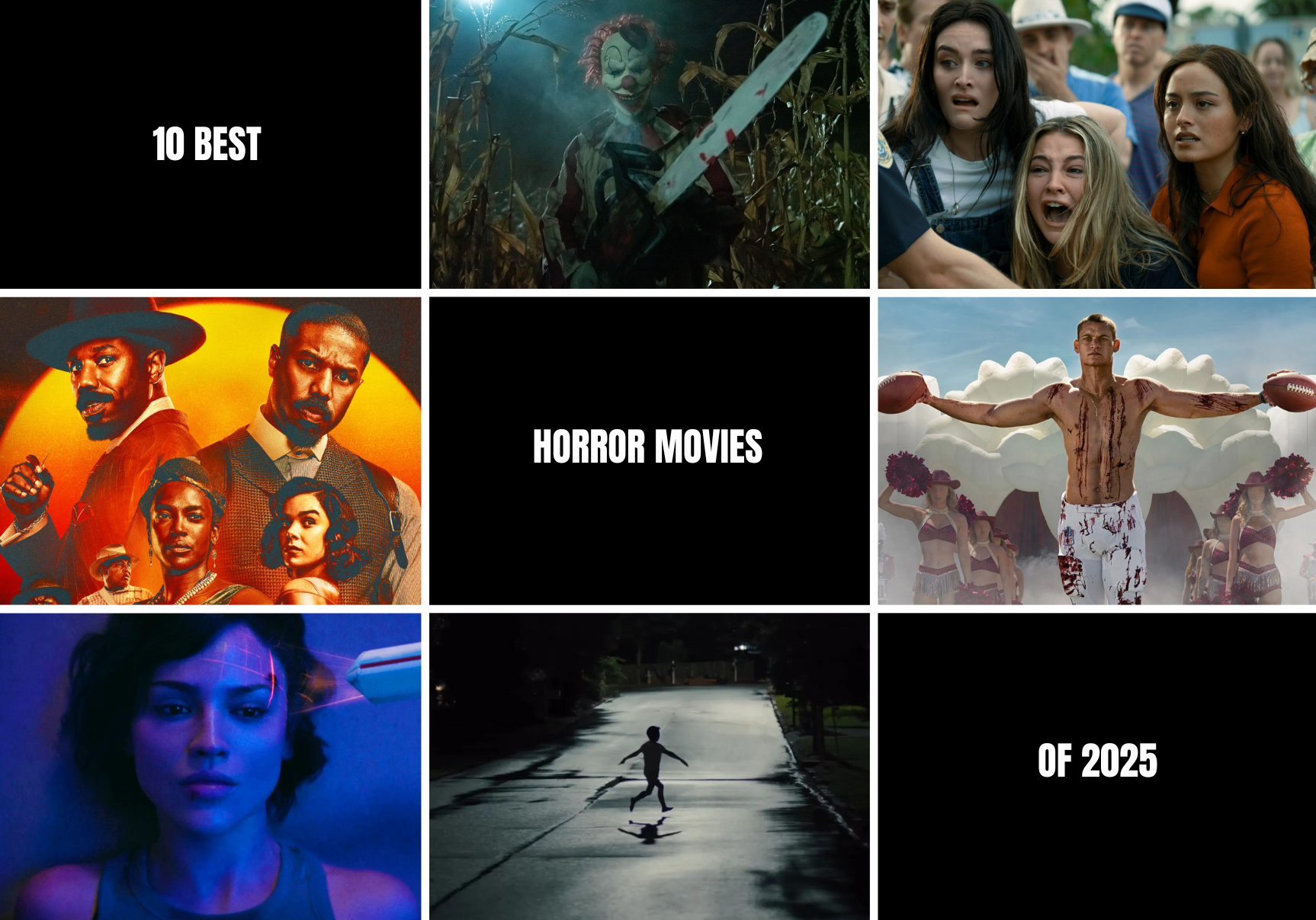
10 Best Horror Movies of 2025
2025 has quietly turned into a horror victory lap. Franchise fare is thriving, originals are actually breaking through, and even the quirky little indies are finding an audience in between superhero sequels and live-action remakes. Though for Stardust, these 10 are the ones that stuck: the studio behemoths, the scrappy festival breakouts, and the films that made our horror-obsessed hearts light up. Let’s dive in.
Clown in a Cornfield
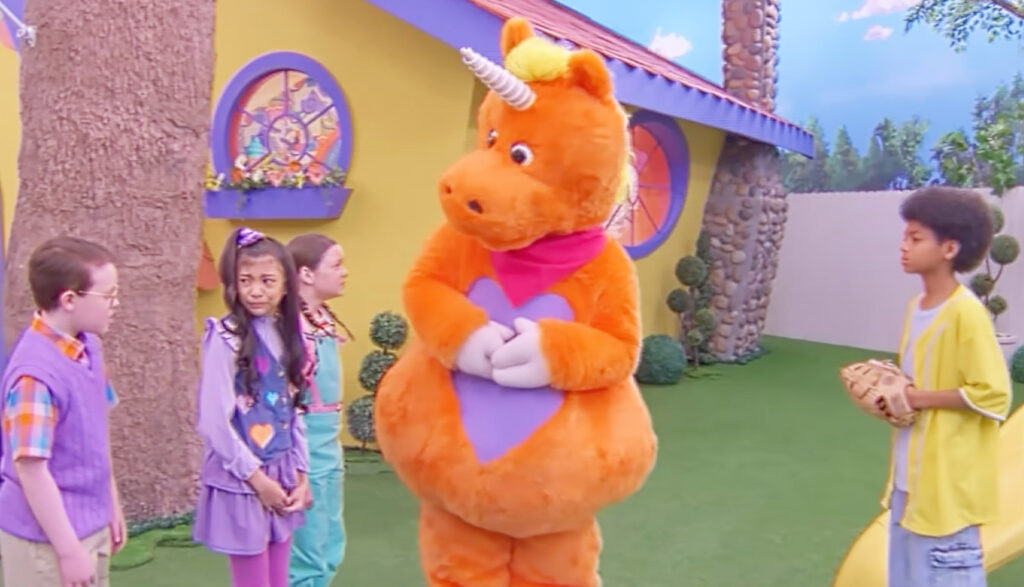
Eli Craig’s adaptation of Adam Cesare’s novel drops you into Kettle Springs, Missouri, a town gutted by the loss of its corn syrup factory and clinging to a creepy mascot named Frendo. And when Quinn and her dad move in, looking for a reset, they walk into a community war between bitter adults and restless teens that erupts into a full-on slasher bloodbath once Frendo steps out of the corn.
What makes Clown in a Cornfield feel like a proper year-of-horror player is that it confidently leans into being a crowd-pleasing, chainsaw-waving meta-slasher throwback. It’s mean, it’s loud, it’s witty, it’s just self-aware enough, and it gave IFC and Shudder one of their strongest theatrical performers to date, setting a company record on opening weekend before heading to digital and, eventually, streaming. Plus, we’re all for the film’s eccentric group of survivors (played by Katie Douglas, Vincent Muller, and Carson MacCormac), so we’ll take at least one more, please!
Sinners
Ryan Coogler’s first original blockbuster since Black Panther might also be his boldest. Set in 1932 Mississippi, Sinners follows twin brothers played by Michael B. Jordan who return to their Delta hometown and find a juke joint sitting on top of something ancient and hungry. The film folds Southern Gothic, vampire siege horror, and musical sequences into one feverish story, with Autumn Durald Arkapaw’s dusky cinematography and Ludwig Göransson’s score doing as much storytelling as the dialogue.
The result is the rare studio horror that actually feels “big”: big emotions, big set-pieces, and naturally, a big box office turnout. In fact, Sinners cleared more than $350 million worldwide and landed near-perfect scores due to its ability to bring something familiar yet still original to the table. This one is definitely a must-watch for all genre fans.
I Know What You Did Last Summer
The 2025 I Know What You Did Last Summer could have coasted on IP and wet rain slickers. Instead, Jennifer Kaytin Robinson’s sequel takes the bones of the 1997 film and grafts on a sharper, nastier teen thriller about guilt, class, and the way small towns rewrite their own history.
More importantly, it isn’t chasing prestige horror status, which is part of the charm. It’s a clean ninety-something minutes of escalating paranoia, gnarly kills, and legacy roles from Jennifer Love Hewitt and Freddie Prinze Jr that actually matter to the plot instead of feeling like glorified walk-ons. And more importantly, this one takes a big swing with its reveal—and it surprisingly works.
Ash
Flying Lotus returns to features with Ash, a trippy space horror film that feels like someone fed Alien, Event Horizon, and a stack of PS2 survival horror games into a blender. In the film, Eiza González stars as Riya, an astronaut who wakes up on a research station above a distant planet to find her crew brutally killed and her memory shattered. When a man from her past, played by Aaron Paul, arrives in response to a distress call, the film spirals into a paranoid two-hander about trust, identity, and the possibility that the real contamination is already inside the room.
In all sincerity, this movie dazzles with audiovisual overload: pulsing score, nightmare cut-ins, and imagery that feels inspired by different decades of iconic sci-fi/horror lore. Ash wasn’t the blockbuster smash-hit of the year, but it definitely has “future cult classic” written all over it.
Bring Her Back
The Philippou brothers follow Talk to Me with something meaner, sadder, and even more spiritually toxic. At its center is a brother and sister placed with a new foster mother in an isolated home, only to realize she’s involved in a ritual that claims it can “bring back” someone you’ve lost. The story moves with the slow, grinding inevitability of a curse: what starts out as a family drama about grief and abuse gradually rots into occult horror so bleak that “trauma story” barely touches it.
A24’s marketing leans hard on the shock factor, but the film hits hardest when it stops trying to scare you and just sits with the emotional wreckage of people who will do anything not to be left behind again. The violence is vicious enough to make even seasoned horror fans squirm, yet the real sting is how reasonable every awful choice feels in the moment. You leave feeling drained instead of amped up, which is exactly why it earns its place on a year-end list.
Good Boy
If Bring Her Back is this year’s most soul-crushing horror film, Good Boy might be its most unexpectedly tender. Shot for about the cost of a mid-tier studio reshoot, Ben Leonberg’s supernatural chiller is told largely from the perspective of Indy, a Nova Scotia Duck Tolling Retriever trying to protect his chronically ill owner in a haunted farmhouse. Shadows move, something increasingly ominous lurks in the walls, and the dog understands the danger long before the humans do.
Premiering at SXSW before landing with IFC and Shudder, Good Boy went from tiny curiosity to viral sensation when its trailer passed one million views in a few days, prompting an expanded theatrical run. It’s the sort of small, specific horror story that sneaks into your top ten because you cannot stop thinking about that dog and the way he looks at the dark.
Weapons
After Barbarian, expectations for Zach Cregger’s Weapons were pretty high. The film meets that pressure with a jagged, multi-perspective, witchy horror mystery about a Florida town rattled when seventeen kids from the same classroom vanish on the same night. The disappearance ripples out through grieving parents, conspiracy-obsessed teens, and a community already walking on the edge, with an ensemble that includes standout performances from Josh Brolin, Julia Garner, and Alden Ehrenreich.
Tonally, Weapons is colder and a little more controlled than the curveball twist within Barbarian, but it still has that mid-movie gear shift Cregger clearly loves. And beneath the puzzle-box structure sits a blunt look at American violence and the way adults outsource responsibility to kids until something breaks.
The Conjuring: Last Rites
Sold as the final mainline chapter of The Conjuring universe, The Conjuring: Last Rites arrives with plenty to prove and, at least on a character level, largely pulls it off. For the big sendoff, Michael Chaves drops Ed and Lorraine Warren into the infamous Smurl haunting, a case that forces them to confront the first demon they ever faced and the long-term cost that decades of possession cases have taken on their family. The movie plays like a mix of farewell tour and greatest-hits compilation, packed with slow-burn dread, heightened Catholic anguish, and set pieces designed to make audiences physically recoil.
As an ending, it works because it finally allows the Warrens to be as haunted as the homes they step into—and because it never forgets that the franchise’s real power has always been Vera Farmiga and Patrick Wilson playing a full-hearted love story in the middle of a demon circus.
Him
Produced by Jordan Peele and directed by Justin Tipping, Him is a supernatural sports horror film about an up-and-coming quarterback invited to train at a desert compound owned by a legendary, aging star. What starts as a dream opportunity slowly turns into a Faustian bargain, as Cameron Cade is pushed to decide how much of his body, mind, and soul he’s willing to sacrifice to become “him” in the eyes of American football culture.
The response has been mixed, and you can feel the weight of everything the movie wants to tackle—brain trauma, toxic masculinity, religious imagery, and the commodification of Black athletes. But even when it fumbles, Him stays compelling. Marlon Wayans and Tyriq Withers commit fully, the visuals swing between lurid and sharply satirical, and the film leaves you chewing on the cost of glory long after the final play. In a year full of polished horror, it stands out for being messy, angry, and pointedly specific.
28 Years Later
It is impossible to talk about 2025 drops without acknowledging how Danny Boyle and Alex Garland’s return to this universe recontextualizes 28 Days and 28 Weeks as one long, infected scream. Set on a quarantined Holy Island nearly three decades after the second outbreak, the film follows a young boy named Spike who ventures with his father to the mainland in search of medicine, only to encounter mutated infected and the remnants of a world that never really healed.
Rather than trying to top the original’s chaos, 28 Years Later leans into mood and moral rot—turning the rage virus into a background condition for a story about inheritance and fear. It also reignited moviegoers’ appetite for politically sharp zombie cinema just in time for the already-announced sequel, The Bone Temple. For a generation that grew up watching the first two films on DVD, this feels like a long-deferred chapter that actually sticks.