
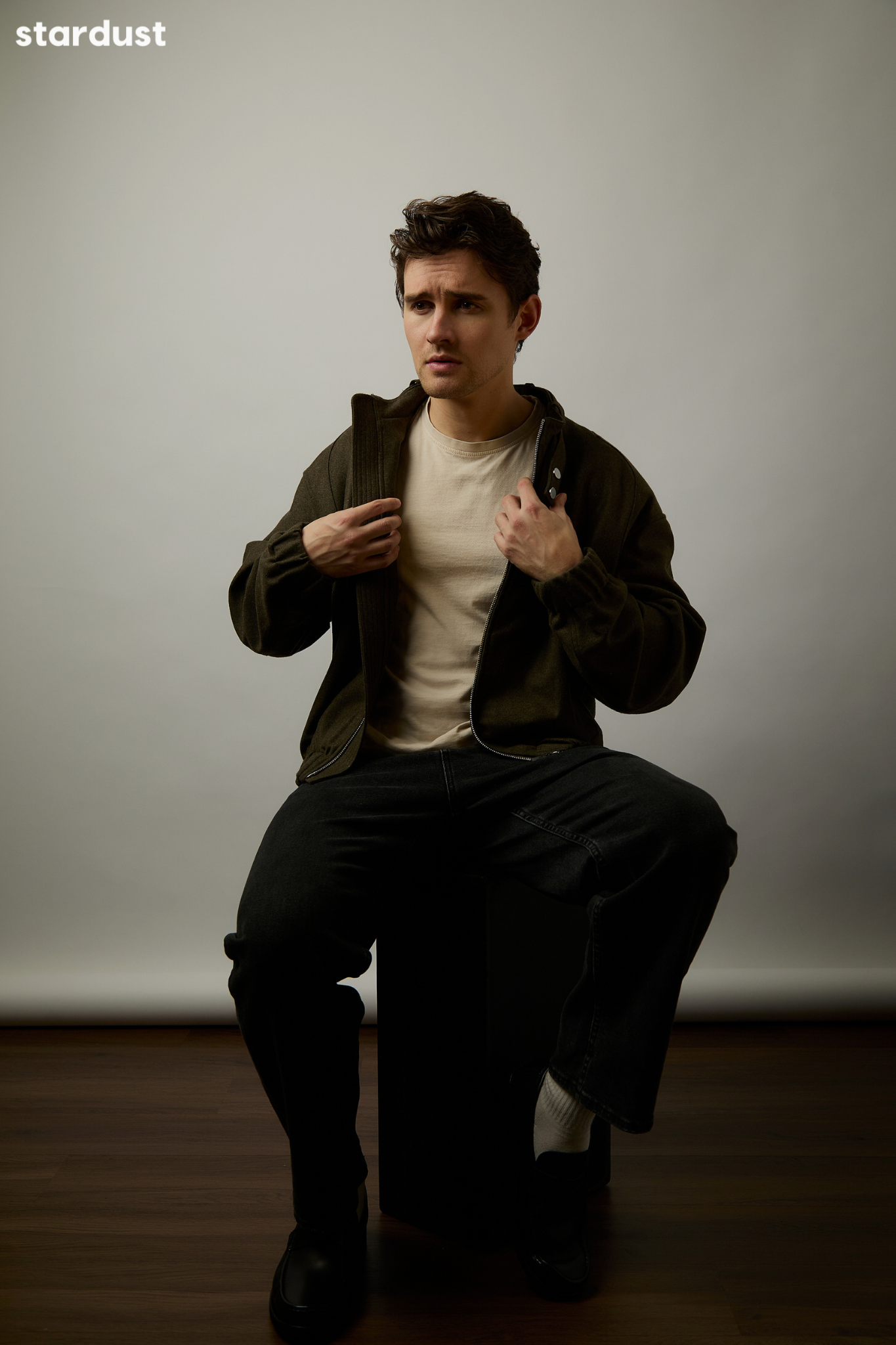
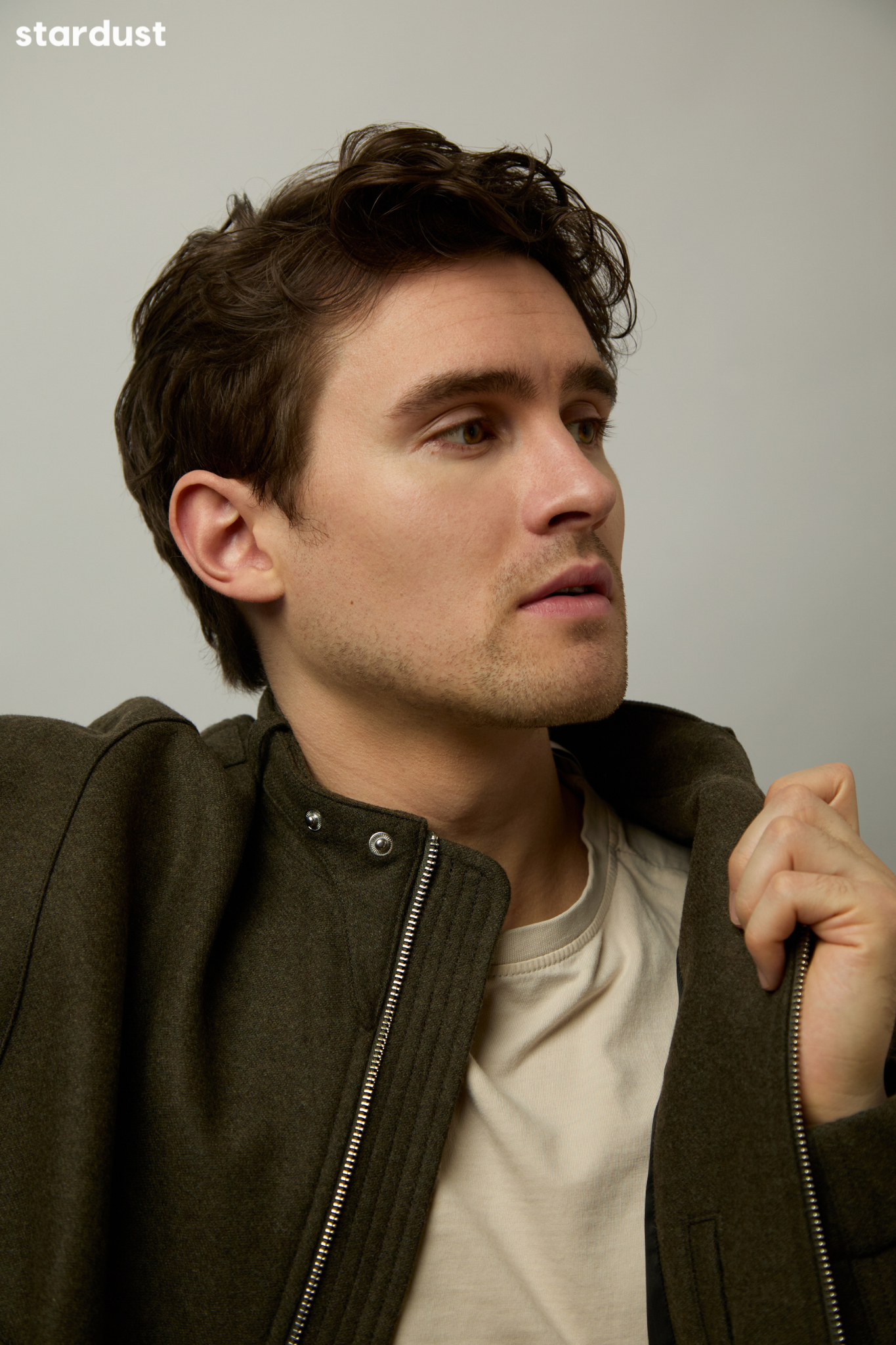
Michael Johnston knows the value of being trusted by an audience. There is an openness to him, an emotional accessibility that registers quickly, and for years, that quality has made him easy to root for. Whether audiences first found him as Corey Bryant on MTV’s Teen Wolf, through his voice work in anime, or through his performances in video games, Johnston has often carried his characters with a sincerity that makes viewers lean in before they realize how much faith they have placed in him. With Obsession, Curry Barker’s new supernatural horror film from Focus Features, that familiarity becomes part of the threat.
Obsession stars Johnston opposite Inde Navarrette in a story about fantasy, fixation, and the dangerous places desire can lead. For Bear, the lovesick character Johnston plays, that danger begins with a wish to be with the girl he can’t stop thinking about. What follows initially looks like a fantasy, rooted in something painfully recognizable: awkward hope, embarrassed longing, and the desperate need to be chosen. But as the film presses on that vulnerability, something far more diabolical begins to surface.
The role gives Johnston a particularly revealing showcase, built less around a sudden transformation than careful calibration. Bear only works if the audience does not sense the danger too soon. And Johnston never plays him like an overt villain waiting for the camera to catch up. He plays him as someone who believes completely in his own hurt, even when that hurt begins to justify real harm.
“I’m a big horror fan, especially psychological horror, so I couldn’t wait to dive in,” Johnston tells us. “I tend to hyper-focus on my character’s perspective when I read a script for the first time. The usual ‘assignment’ for us actors is to give a great audition and move on, but I’ll admit—letting this one go was harder than usual.”
Johnston’s attachment came from more than the chance to lead a horror film. Barker’s script used genre to examine something uncomfortable without flattening it into a lesson. “I was struck by the script’s exploration of limerence and consent,” he says. “The themes didn’t feel heavy-handed. The story was provocative and smart, and an absolute blast to read. And gnarly! I knew I wanted to be a part of it right away.”
That tension gives Obsession its unsettling pull. The film begins with a feeling most people understand, then follows it into territory where sympathy becomes unstable. Wanting someone to want you back can feel private, humiliating, even harmless when kept at a distance. In Bear’s case, that pain becomes the emotional door the movie keeps pushing open. His yearning gives the story its entry point. His choices make it dangerous.
Johnston was drawn to that dangerous uncertainty from the beginning. “I was instantly intrigued by how much of a moral question mark my character Bear is,” he shares. “He starts as this innocent guy with a massive crush. He tries to be vulnerable, but falls flat on his face. You really feel for him, even root for him. But as the stakes rise, his choices become increasingly questionable and impulsive.”
Bear’s descent is disturbing because it happens by degrees. For some, one moment can be rationalized. For others, a misstep or two can almost be forgiven. Eventually, the audience has to confront how much undeserving patience it has been willing to extend to him. “The point of no return is not glaringly obvious,” Johnston says, “but eventually you realize, well... the parable of the boiling frog comes to mind.”
For Johnston, Bear’s unassuming nature became one of the character’s most important tools. “In my mind, Bear was initially unaware he was in possession of a magical artifact,” he explains. “That—combined with his meekness—makes it easier for the audience to excuse his selfish behavior. We’re all familiar with the pain of a one-sided crush. If Bear was a player, I don’t think the tragedy of his choices would have carried the same weight.”
That is where Obsession finds one of its sharpest tensions. Bear can be pitiable and still responsible. He can be wounded without being absolved. Johnston and Barker spent a lot of time working through that balance.
“The challenge for me was subverting the ‘nice guy’ archetype without losing his vulnerability,” Johnston tells us. “Curry Barker and I had many discussions about this. That unassuming presence is exactly what buys Bear grace until the mask finally slips. Even then, I wanted people to wonder: if he somehow finds a way out of this nightmare, could we ever really forgive him for what he’s done?”
Johnston brings that question into the performance, keeping Bear’s emotional logic visible even as the story grows more volatile. The film’s most unnerving tension comes from more than the supernatural consequences of his wish. It comes from watching him convince himself, again and again, that his feelings deserve to take up more space than anyone else’s. Even if it strips someone of their autonomy.
Playing that kind of self-deception required Johnston to stretch beyond the character’s darker turns. “[Bear] was a stretch [for me] in every sense,” the actor admits. “Since the story is anchored in Bear’s POV, the moral weight of the film rested on my shoulders. Much of the movie is just me and [Navarrette], who is uniquely gifted. Her character, Nikki, is the ‘horror’ on screen, and reacting to her while staying anchored in Bear’s state of denial was a compelling challenge.”
Denial was something he had to manage off-camera as well. Portraying Bear meant spending long stretches in a complicated emotional state, one shaped by want, fear, and a constant refusal to see things clearly. “Living in that headspace was demanding, so I had to pace myself,” he says. “I tend to commit 110% to every take, but I had to find ways to preserve my energy for the moments that mattered most. That usually meant going straight home after filming, shutting off my phone, and taking a bath. I should probably do that more often.”
In recent years, Johnston has become more invested in the work that happens before the camera rolls, a shift that proved essential for a film so dependent on tonal control. “My relationship to acting has become a lot more about the homework lately,” he says. “If I know the material inside out, I’m free to listen, respond, have fun, and take risks once the cameras roll. For a film like Obsession, that level of preparation was essential.”
It is a more deliberate way of working than the one Johnston remembers from the period when many viewers first came to know him. His run as Corey on Teen Wolf remains a defining chapter for fans, especially because the series gave him a character whose gentleness and emotional openness stood out inside a world of supernatural chaos. At the time, though, Johnston was not mapping out the exact shape of a long career. He was stepping into a beloved series and absorbing the experience as it happened.
“At that point in my life, I wasn’t thinking too much about the kind of career I wanted to build,” he admits. “I was just thrilled to be a part of such a beloved series. I joined in Season 5 and had no idea I’d be sticking around for the rest of the show. Working with that ensemble gave me a solid foundation for my craft and opened countless doors for me. I’m so grateful to Jeff Davis for that journey. My Beacon Hills family will always hold a special place in my heart.”
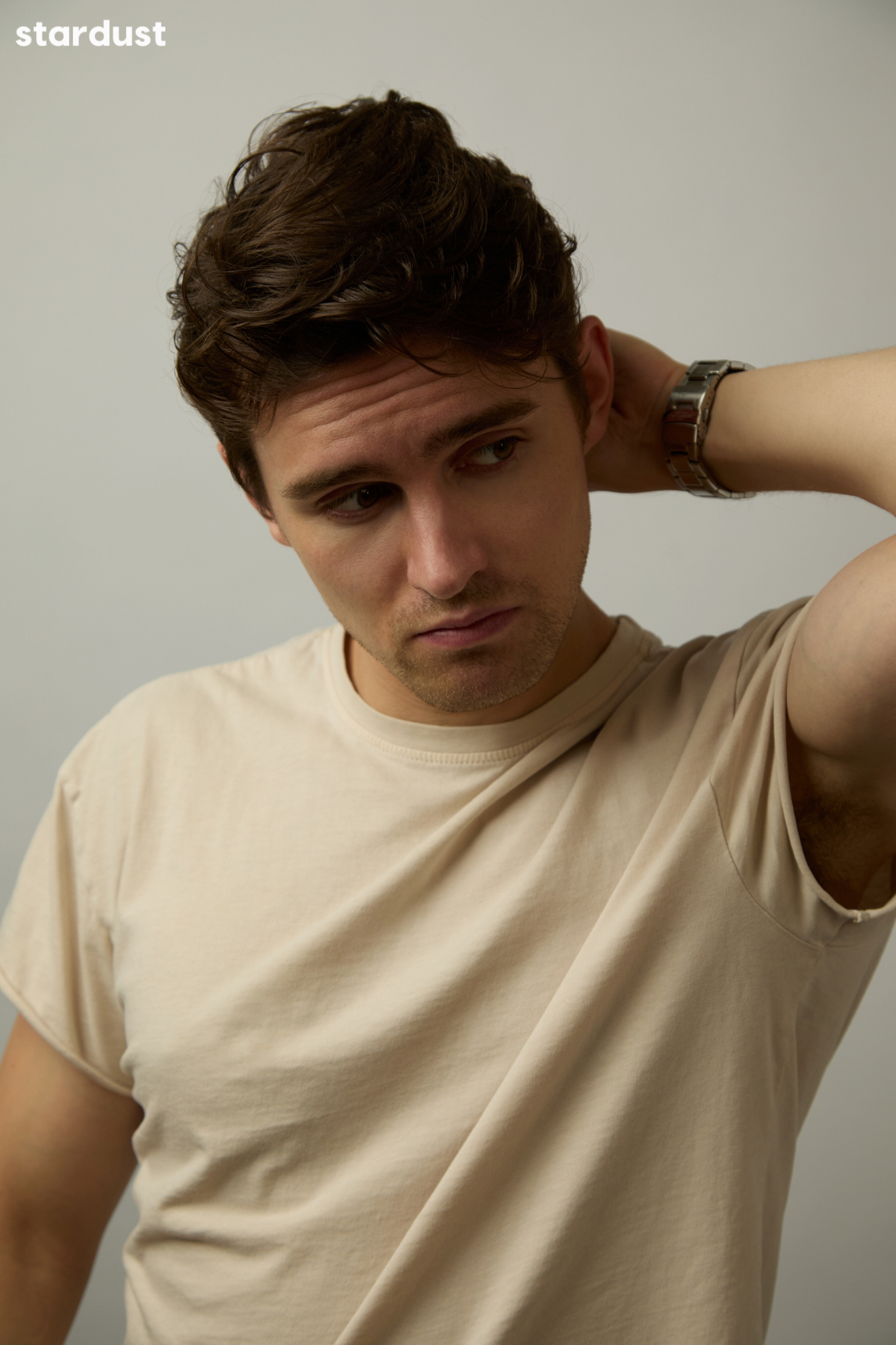
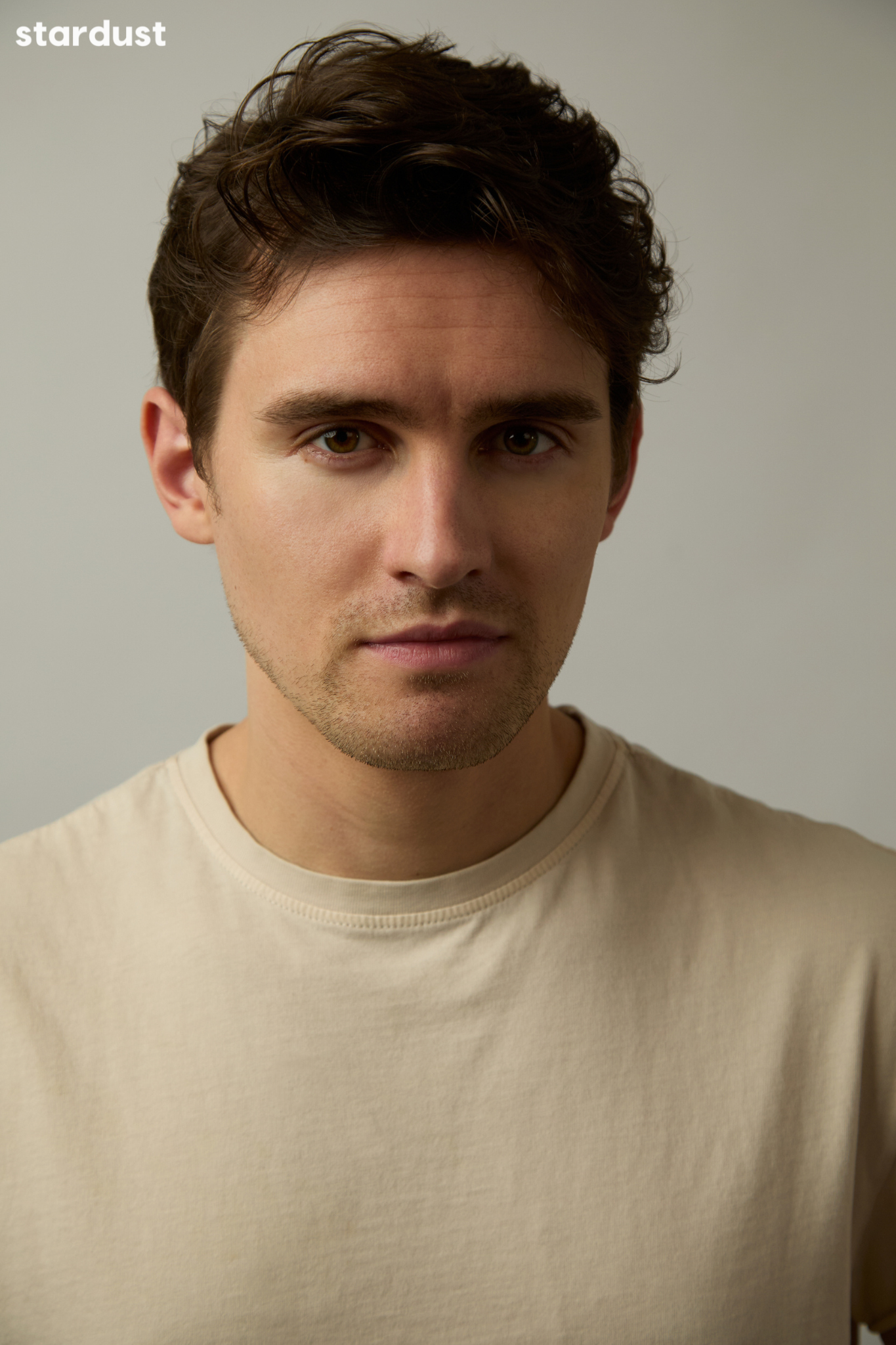
What ultimately makes Obsession so compelling is that it does not discard the qualities Johnston built his career on. It twists them. Bear draws from the same emotional accessibility that made Johnston compelling in more sincere roles, then lets it warp under pressure. The film understands the power of casting someone audiences are prepared to trust. Johnston understands how to honor that trust long enough to make the rupture count.
So by the time Obsession pushes Bear into more alarming territory, Johnston has already done the careful work of keeping him human. Bear is no longer just a guy with a crush, but enough of that earlier vulnerability remains to make the chaos more unsettling. We are watching someone cause real harm while still recognizing the pain and insecurity that brought him there. It’s a difficult line to hold, and Johnston seems energized by what it opens up.
“I’m a genuinely nice guy, but I think Obsession shows I’m capable of using that persona as a mask for something darker,” he shares. “Playing the character responsible for the chaos in this film was so satisfying, and it’s given me a hunger for more complex, villainous roles in the future.”
That appetite for darker material feels earned. In Obsession, Johnston moves between funny, wounded, unsettling, and morally slippery with impressive control, turning Bear’s charm into something increasingly difficult to trust. And by the end, the film’s visceral horror hook is only part of the impact; Johnston leaves the lasting mark by twisting a familiar kind of likability into something dangerous.
Obsession is in theaters now.
-
Photographer: Jared Treviño
Photography Assistant: Lorena Puentes
Words/Editor-in-Chief: Aedan Juvet
Cover Designs: Laramie Cheyenne