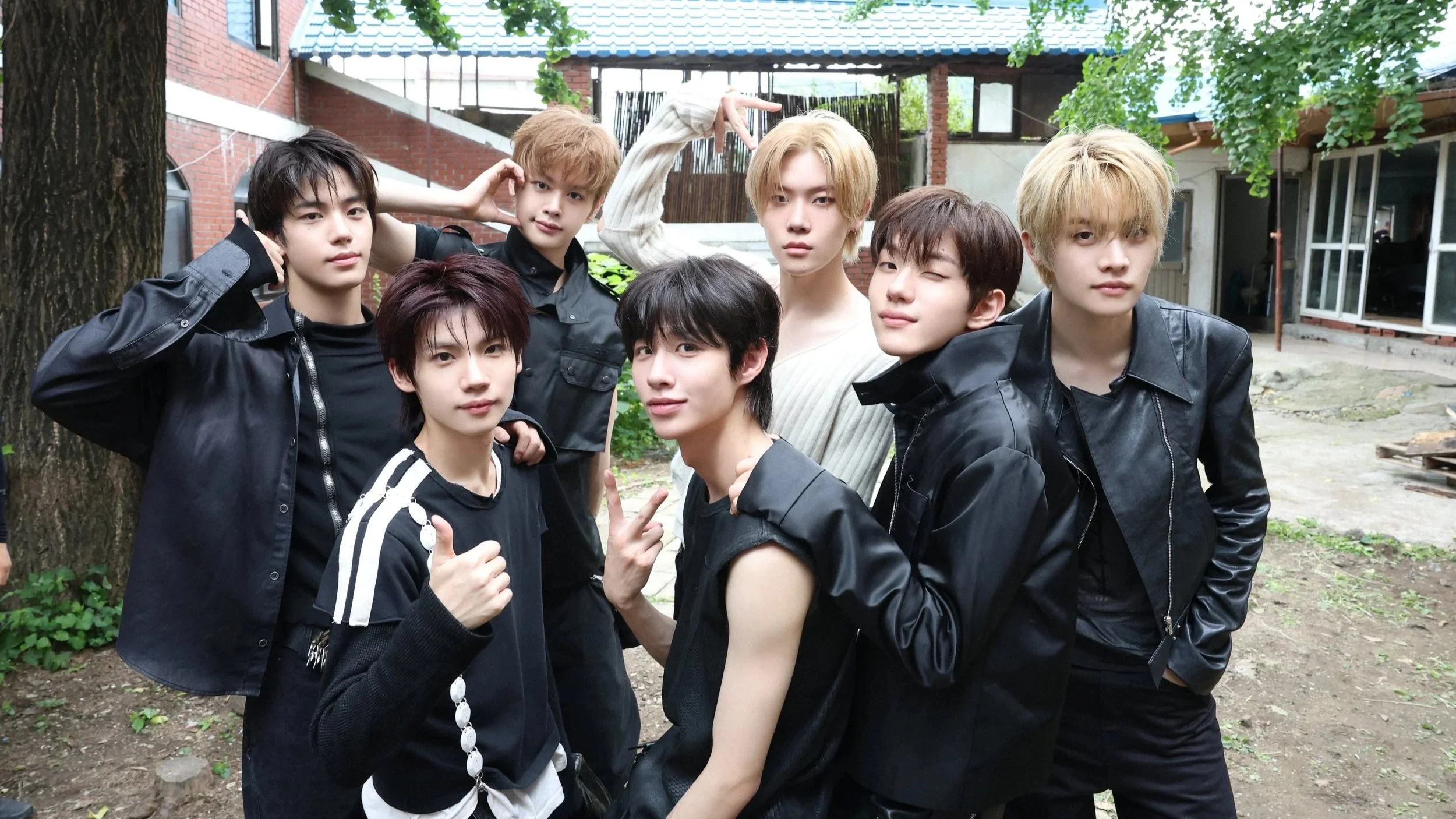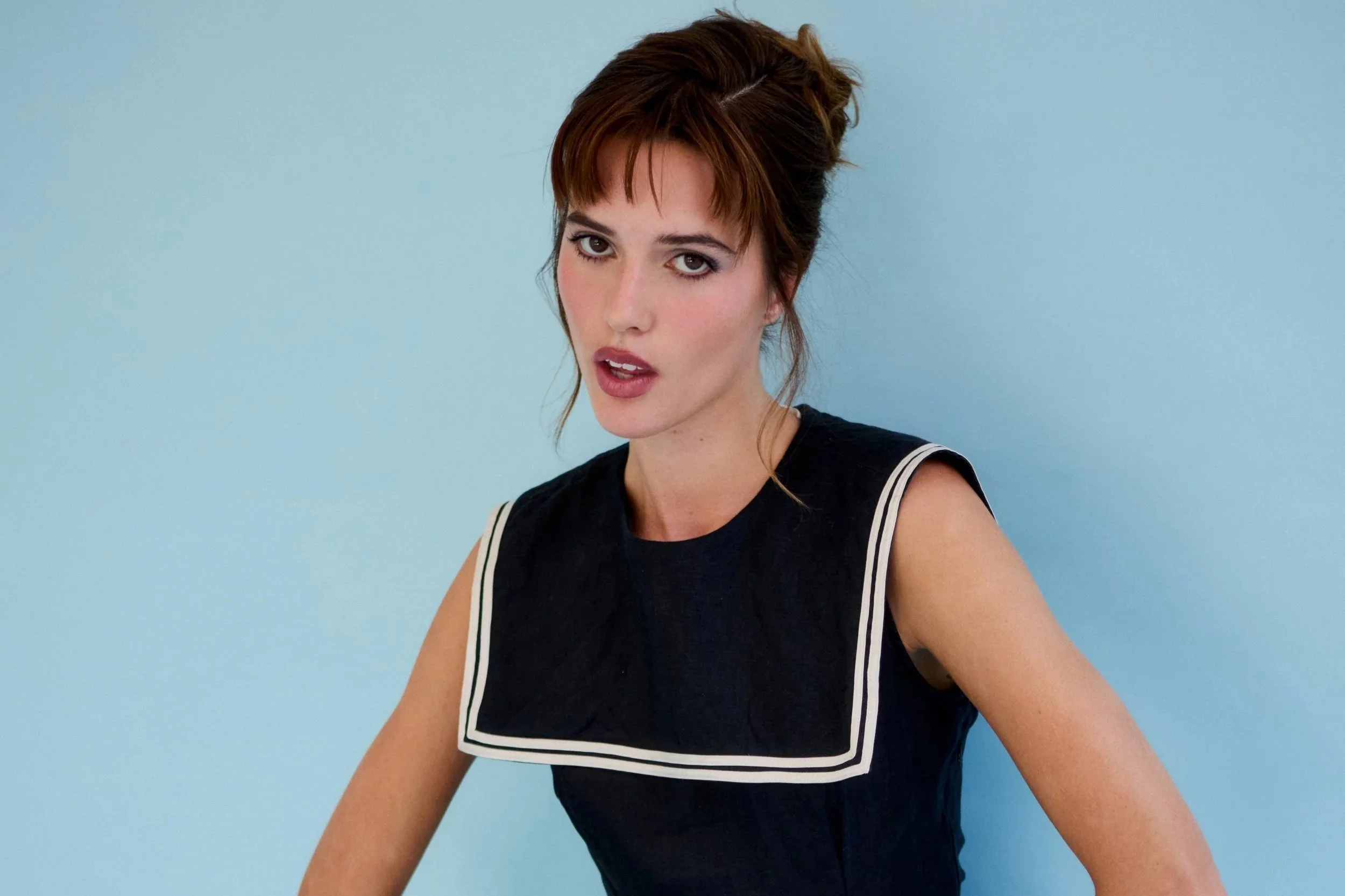

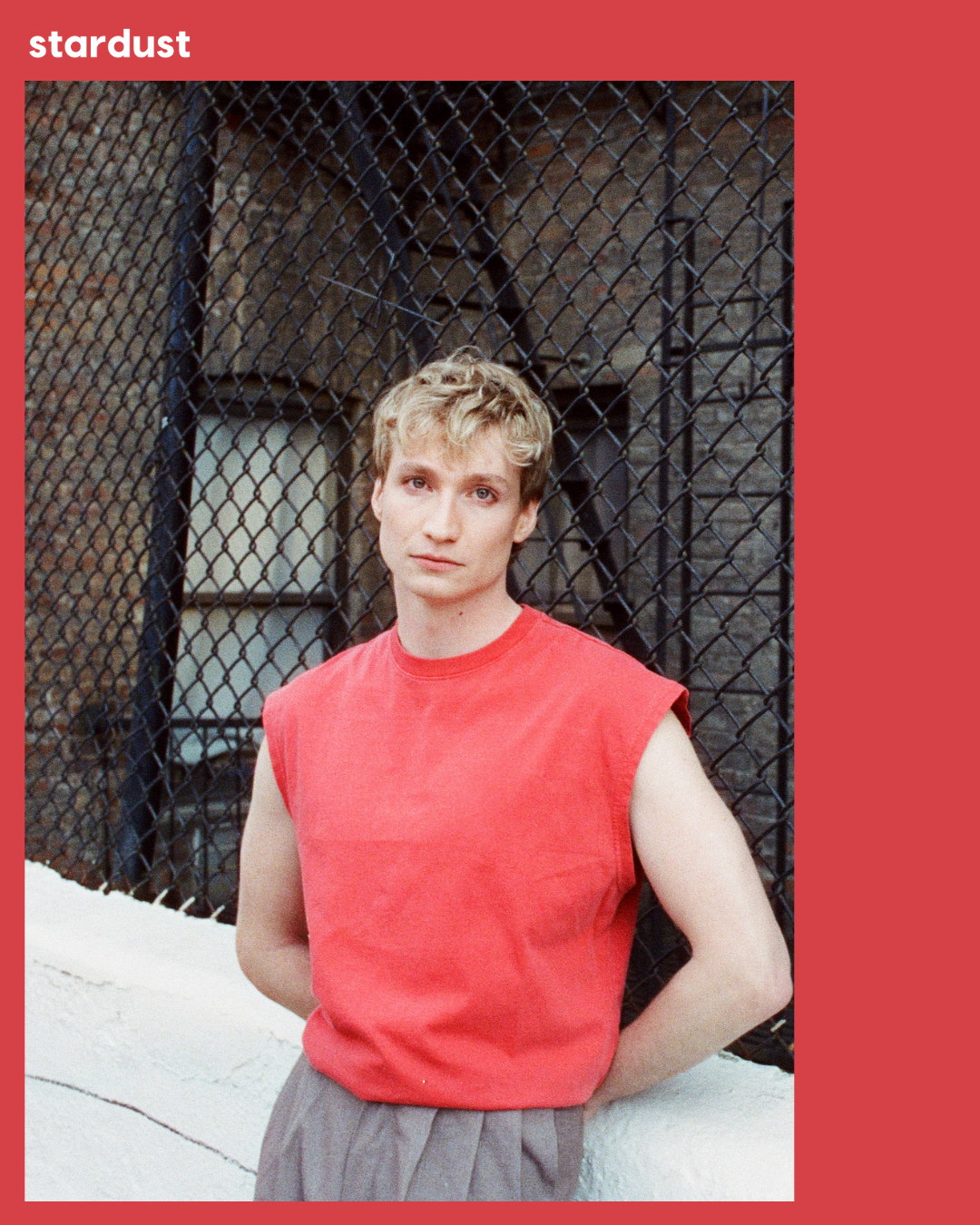
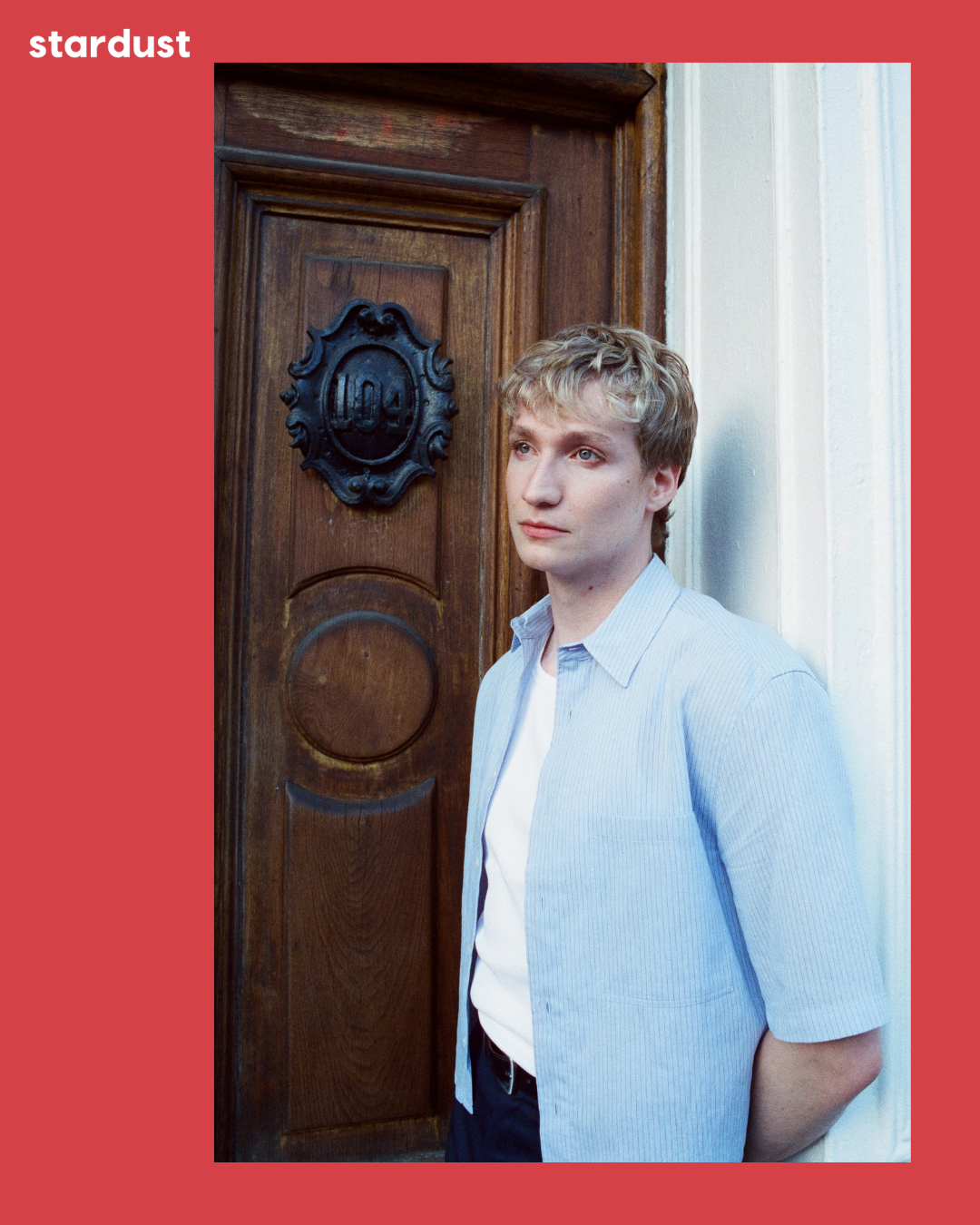
Kevin Atwater’s songs often begin in the kind of emotional situations people usually try to laugh off, overthink, or keep to themselves. The New York City-based singer-songwriter has built a growing audience by turning those exact uncomfortable moments into writing that feels candid, sharply observed, and vulnerable without losing its sense of humor. On tracks like “why did you invite me to your wedding?” and “star tripping,” that perspective specifically comes through in the details: the embarrassment that lingers after longing, the private thoughts that feel too specific to admit, and the way his queer experience gives those feelings another layer of recognition.
That depth of experience runs through Blush Red, Atwater’s sophomore album, which dropped on July 10. Following 2025’s Achilles, the record continues to explore the emotional aftermath of intimacy, self-recognition, and looking back with a little more clarity than you had in the moment. It’s also a space that suits Atwater’s writing especially well, allowing him to stay close to the smaller moments while tracing the larger feelings they leave behind.
The visual side of Atwater’s work has become part of that storytelling, too. From “why did you invite me to your wedding?” to the more recent “but they were kissing,” he has used select music videos to give certain songs another layer of context beyond the recording itself. So, with Blush Red, that visual language feels organically tied to a broader creative step forward, extending the album’s interest in desire, vulnerability, memory, and the complicated ways people come to understand themselves. Now, with the Blush Red tour set to take him across North America, the United Kingdom, and Europe this fall, Atwater is preparing to bring the album into its next setting.
While recently catching up with Stardust, the singer-songwriter reflects on the making of Blush Red, the experiences that informed it, and the details that helped shape this exciting new era.
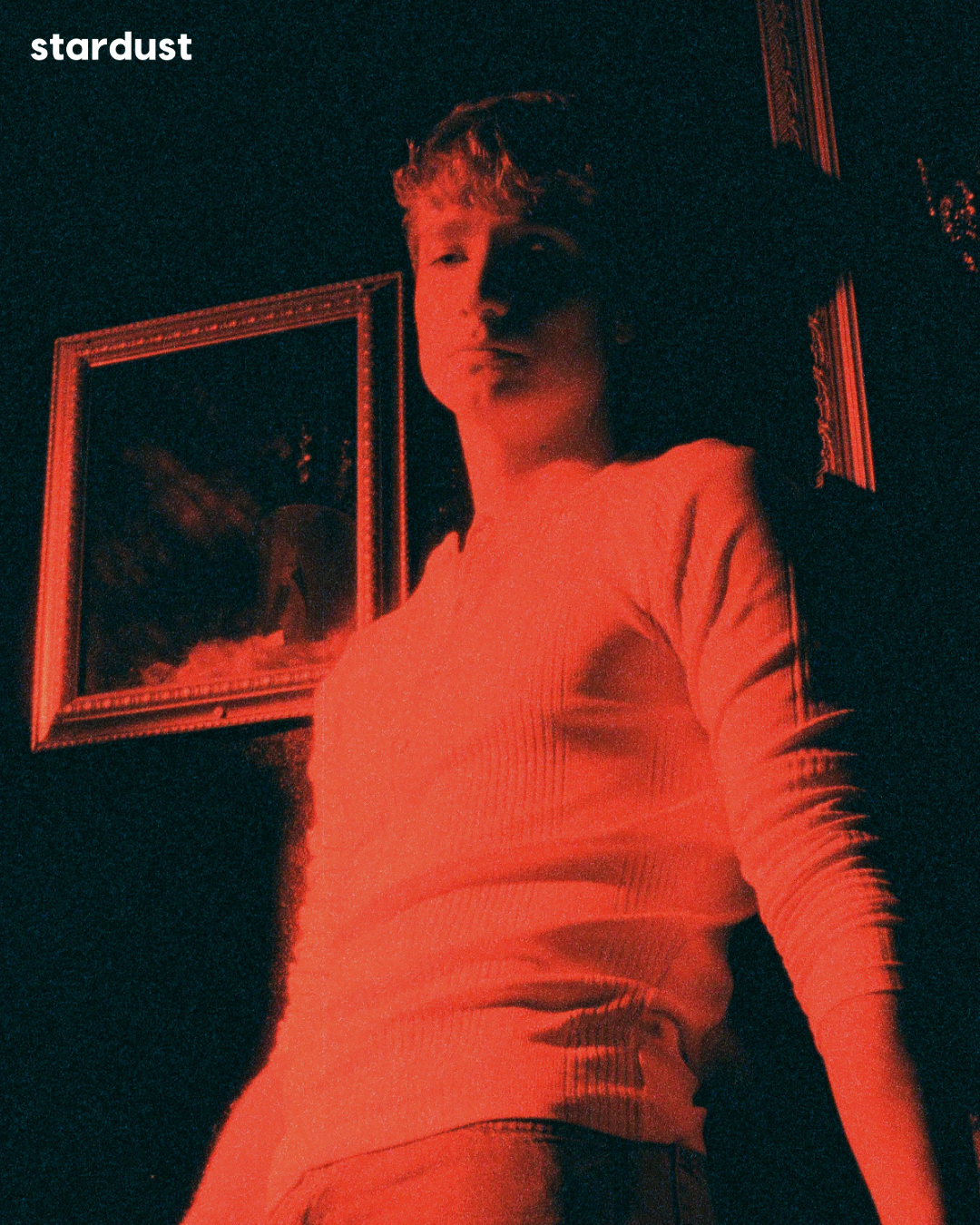
Blush Red is such an immediate, evocative title. What did that phrase mean to you when you first landed on it, and did its meaning change as the album came together?
Kevin Atwater: Blushing is such a universally felt expression of emotion. I like that it’s almost exclusively an involuntary reaction, something we can’t control. We blush because we’re embarrassed, angry, elated, frustrated, turned on…all themes on the album!
After making Achilles, what felt most exciting or freeing about approaching a second full-length album?
Kevin Atwater: I was really determined to make a record that was sonically different from Achilles, and it was that determination that guided the whole process. I gave myself permission to be more experimental, to follow my impulses more specifically. There are songs on this record that have almost no specific musical structure, that ebb and flow and change meter, which I would’ve been scared to do on my first record. It was exciting to step out of my comfort zone with this one!
You have been building a strong visual world around this era. Were there particular visual elements—films, locations, photographs, or even your own memories—that kept finding their way into the project?
Kevin Atwater: Me and my director, Patrick Linehan, really wanted to use the short films to build on the themes of the songs in Blush Red. Not to tell the same specific story, but to give an adjacent feeling to the same sentiment. This album to me is very much a New York City album—it’s the city where I live and where the story of the album takes place— and so visually there are so many specific references there. The bars, the subways, the city streets, the parks. The film Past Lives by Celine Song. A book of poetry called Crush by Richard Siken. And places/neighborhoods where I used to live and have loved/lost.
Your songs often begin with a very specific situation and grow into something bigger. What tells you that a memory or passing moment has enough life in it to become a song?
Kevin Atwater: I usually need a lot of time away from it in order to write about and process it clearly. I like to start with the literal story and look for ways to branch out into more universally felt emotions. I like trusting the audience to connect with the story even in its specificity. I personally am drawn to music that is specific regardless of whether it’s technically outside of my experience. There’s so much to take away from the details.
Is there a song on Blush Red that changed the most from its earliest version to the version people will hear on the album?
Kevin Atwater: “God in my Head” has lived so many lives. I wrote it originally as a quieter song on acoustic guitar, but I’d always heard it as something more. It exploded into a full rock anthem and then a quiet backing away. It feels like it erupts and breaks apart and shatters. We did a lot of experimentation on this song (vocoder, electric guitar distortion, drum solos, screaming), and it was a slow but gratifying process putting the pieces together.
“why did you invite me to your wedding?” and “but they were kissing” both feel especially cinematic in different ways. What does visual storytelling allow you to express that a song alone might leave unsaid?
Kevin Atwater: I like fleshing out the world of the songs. I feel like there’s optimism and kindness in my music that is occasionally buried or lost to the overall tragedy of the situation. Telling a story visually gives us the opportunity to present an alternate perspective on the songs. One that gives way to more subtle and graceful takeaways. Happy endings are possible!
Was there a production choice, vocal moment, or small musical detail on this record that you were especially excited to include?
Kevin Atwater: The entire musical landscape of “stripper” is one of my personal favorite combinations. Piano, trumpet, cello, guitar, and voice all coming together. There’s a lot of brass and strings in this album, which feels so romantic and true to the heart of Blush Red.