
The Band Solstice Reflect on Friendship, Change, and Their Debut LP
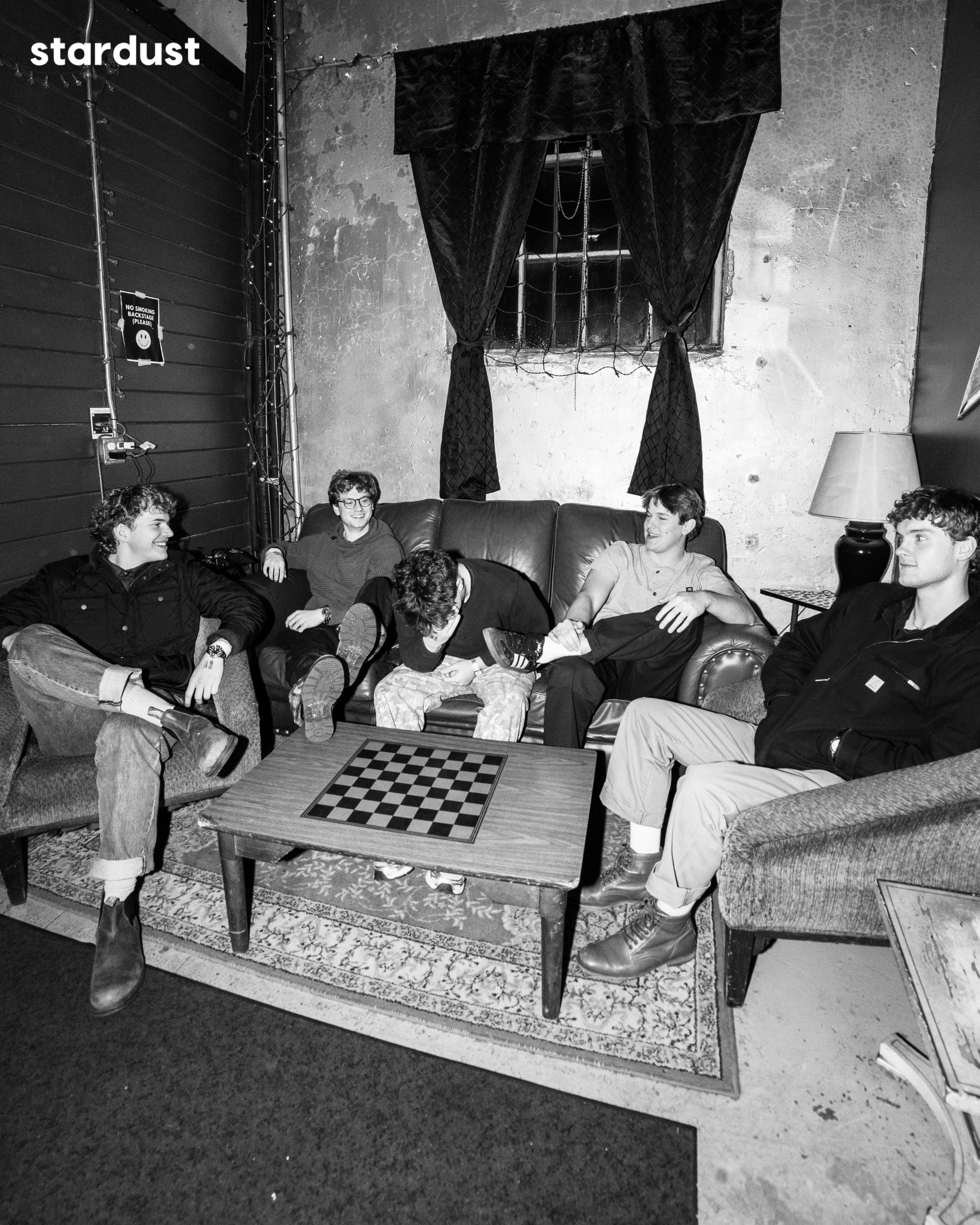
There is something especially compelling about a debut album that knows exactly what it wants to preserve. On their self-titled first LP, The Band Solstice turns the uncertainty of early adulthood into something warm, lived-in, and easy to recognize. Released via Too Fine Records, the record arrives with duality as both a time capsule and a turning point, shaped by the years the band spent growing alongside each other while navigating college life, relationships, change, and the moments in between.
Written across dorm rooms, basements, and the kinds of in-between spaces where some of life’s biggest realizations tend to happen, The Band Solstice also feels rooted in memory without getting stuck in it. The album traces the emotional shifts that come with growing older and figuring out who you are when everything around you still feels in motion.
That balance gives the band’s music its appeal. The feelings are personal, but the framing is broad enough to land with anyone who has ever looked back on a formative stretch of life and realized how much changed all at once. It also feels like a natural next step for a group that has steadily built momentum through writing, touring, and connecting with audiences across the East Coast. And after sharing stages with acts like Quinn XCII, Sun Room, Illiterate Light, and Your Neighbors, and earning attention with tracks like “Mile Dive,” The Band Solstice now steps into a bigger moment with a debut that captures where they have been while opening the door to what comes next.

Your debut album feels very tied to a specific period of life. At what point did you realize these songs were starting to document that chapter in a bigger way?
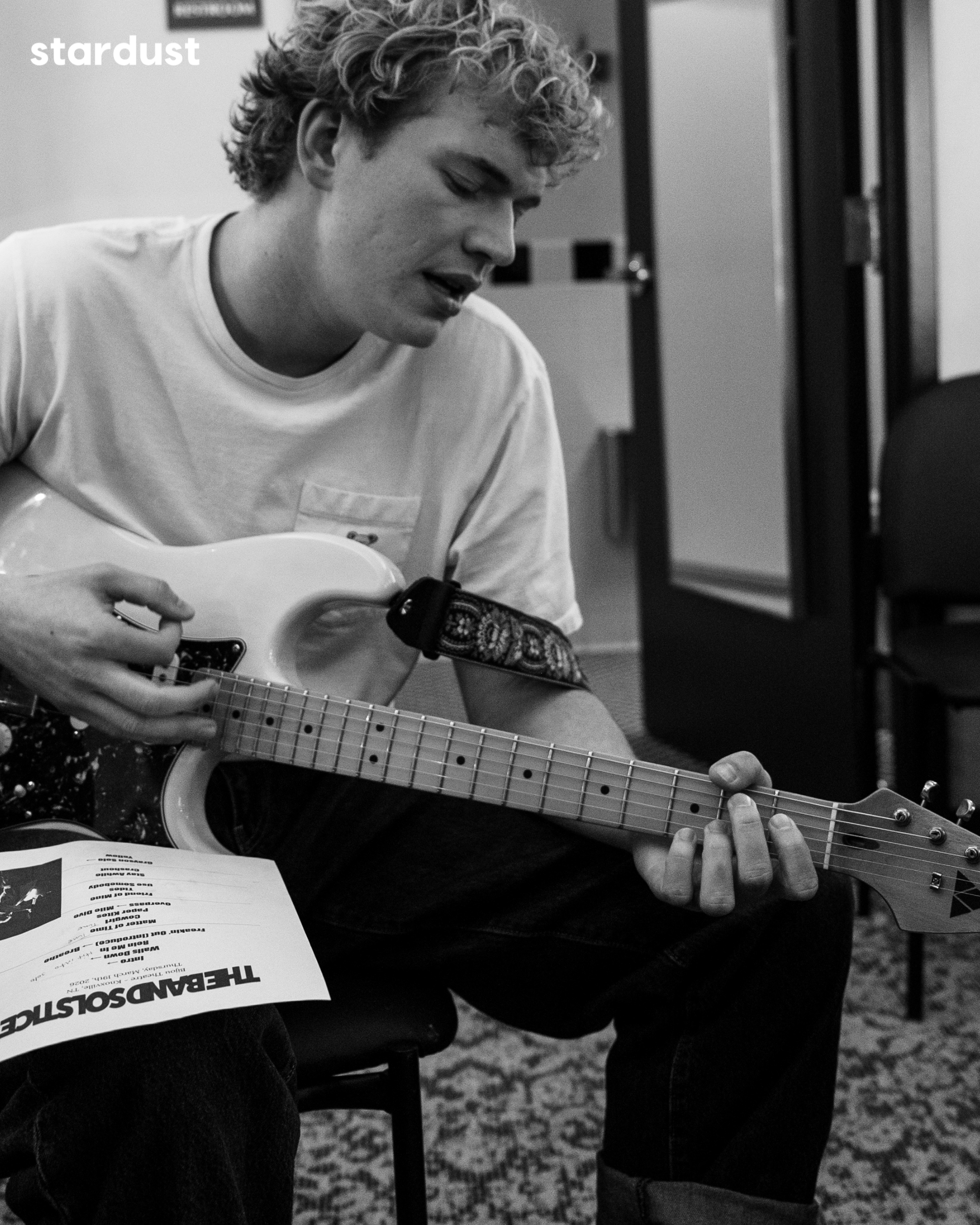
Marty Gee (Lead Vocals): We definitely went into it wanting to make an album, so these were not just older songs we threw together into one project. A lot of the writing came from what we and our friends were actually feeling and going through during college, and I think at some point we realized the songs were starting to capture that whole season of life in a bigger way. It all felt really current to us while we were making it, and that is probably why the album feels so personal. We just hoped that if it felt honest to us, other people would hear it and connect to it too.
A lot of this record seems to sit in the space between looking back and still being in the middle of change. How did you find the right balance between reflection and immediacy while writing it?
Marty Gee: I think that balance came pretty naturally because we were living or hearing about a lot of it in real time while also starting to feel how fast everything was moving. Some songs were written right in the middle of things, and others came from looking back after we had a little more perspective. I think that mix is what gave the record its feel. It is reflective in some moments, but it still feels present because a lot of those emotions were still unfolding while we were writing.
Since many of the songs came together during your college years, did revisiting that material later change how you understood those experiences?
Marty Gee: Yeah, definitely. Going back to those songs now, some of them start to mean something different to me than they did when we first wrote them. At the time, they were tied to really specific moments or feelings, but with some distance and a little growth, I’ve found myself relating to them in new ways. Some lyrics take on a completely different meaning now, and things I didn’t fully understand then make more sense looking back. It’s been cool to see how the songs kind of grow with you instead of staying stuck in the moment they were written.
The album touches on friendship, relationships, distance, and reconciliation in a way that feels very natural. Were there certain themes that kept resurfacing no matter where a song began?
Marty Gee: No matter where a song started, it felt like it usually came back to connection in some way. Whether it was friendship, relationships, growing apart, coming back together, or just trying to understand people better, those themes kept showing up. I think that is just because those were the things shaping our lives the most during that time. We were all experiencing change in different ways, but a lot of the emotional center of the album came from how we were relating to the people around us.
You’ve been steadily touring and building a fanbase for a while now. How has playing live shaped the way you write or think about your songs at this stage?
Marty Gee: Playing live has definitely changed the way we think about songs. Once you have played enough shows, you start to understand what moments really connect with people and what feels the most alive in a room. But that doesn’t mean we write only with the live show in mind, but it has made us more aware of energy, dynamics, and the emotional payoff of a song. Then there is the opposite side of that spectrum where we might write something without an intent of playing it live, but it’s something we need to say rather. Touring has also made us more confident in trusting our instincts, because you get immediate feedback when something really lands.
“Mile Dive” helped introduce your music to a wider audience a few years ago. Looking at this album now, does that song feel like an early sign of where the band was headed?
Marty Gee: Yeah, I think it does. “Mile Dive” still feels really special to us, and looking back on it now, it definitely feels like an early step toward what this album became. It had a lot of the emotion and atmosphere that we ended up leaning into more over time.
As you take this album to Treefort, Summerfest, and your headline run, what do the songs become in a live setting that they can’t fully be on record?
Marty Gee: On the record, everything is more contained and personal, but live, it becomes something shared between us and the crowd. Songs can hit harder or even take on a new emotion depending on the room and the moment. That is probably the coolest part of it. Once the songs leave the studio and get in front of people, they start to belong to more than just us.
-
Photographer: Xander Johnson
Words/Editor-in-Chief: Aedan Juvet