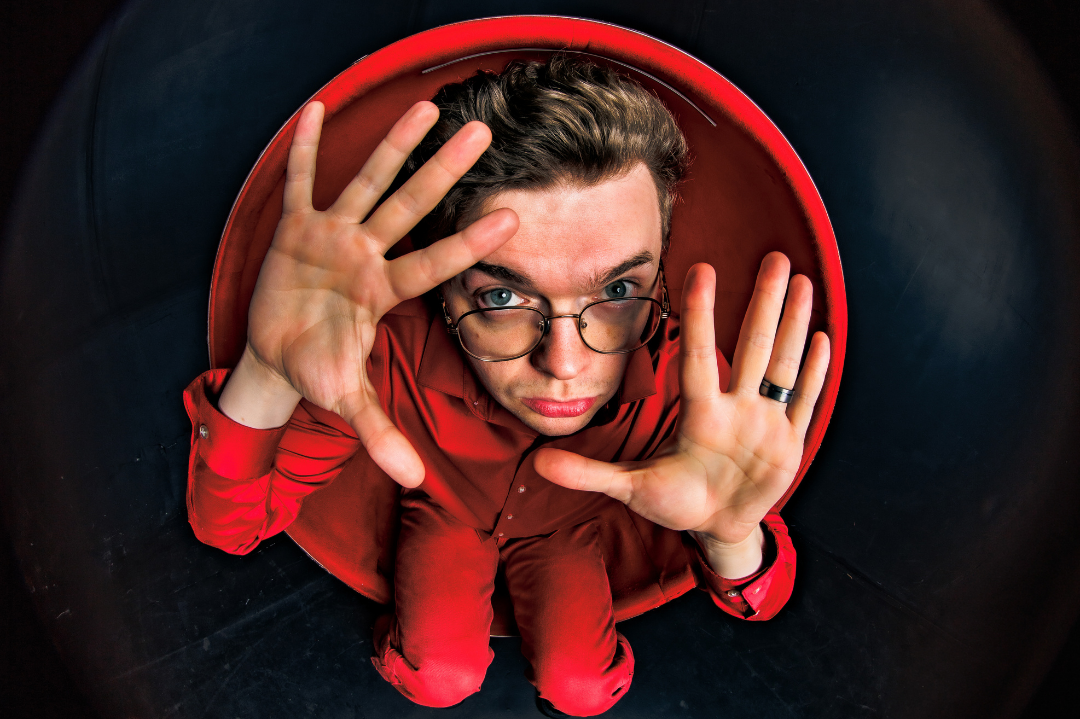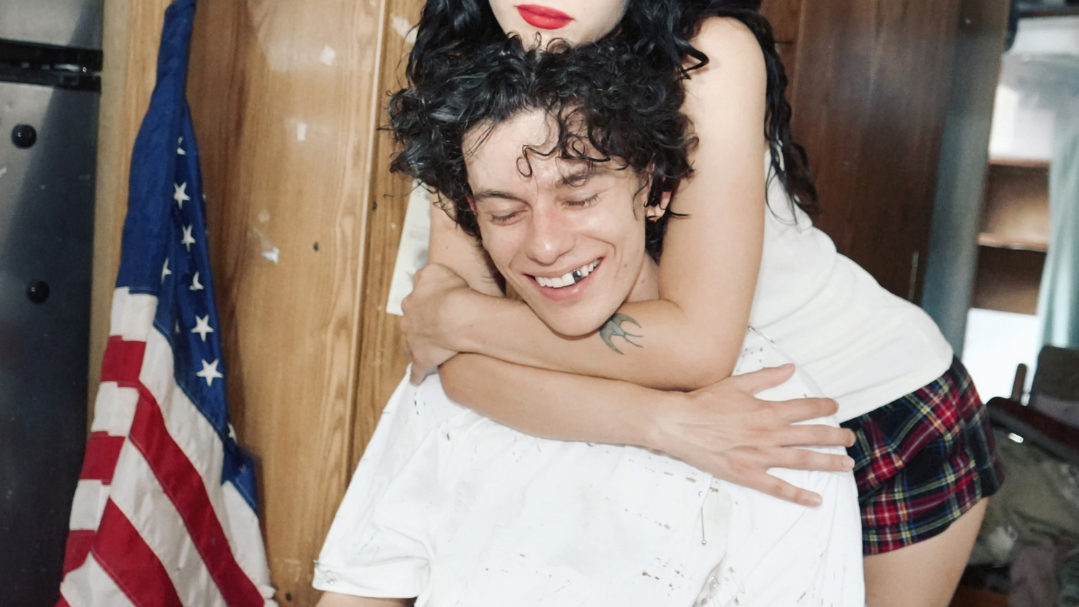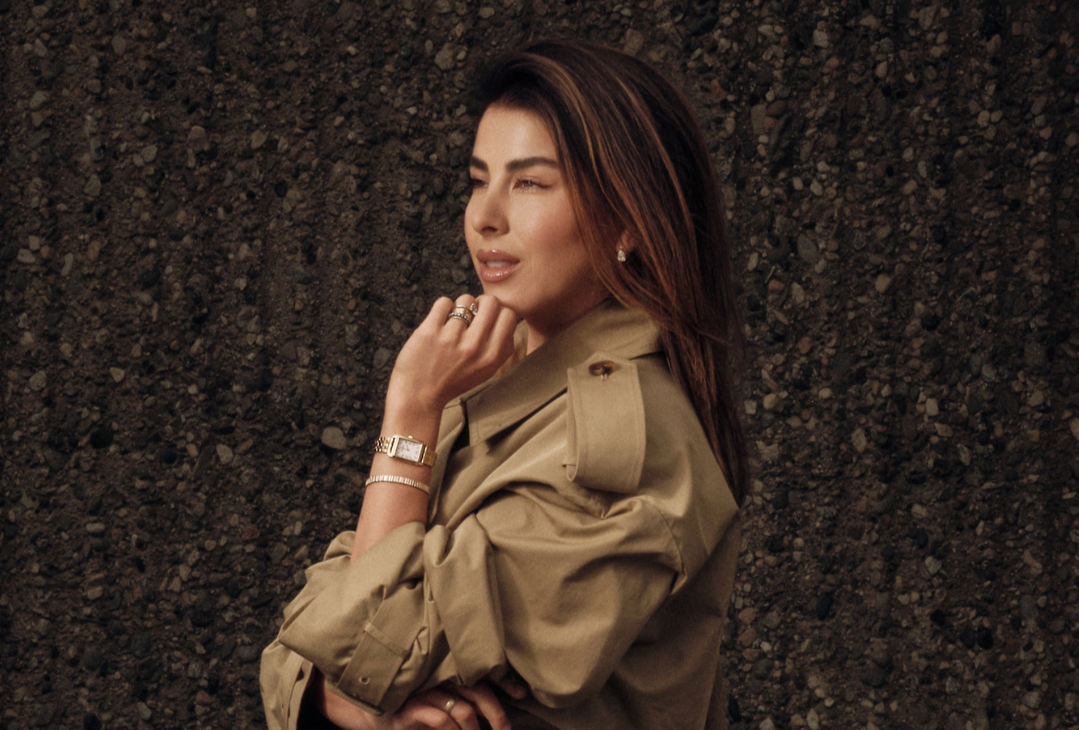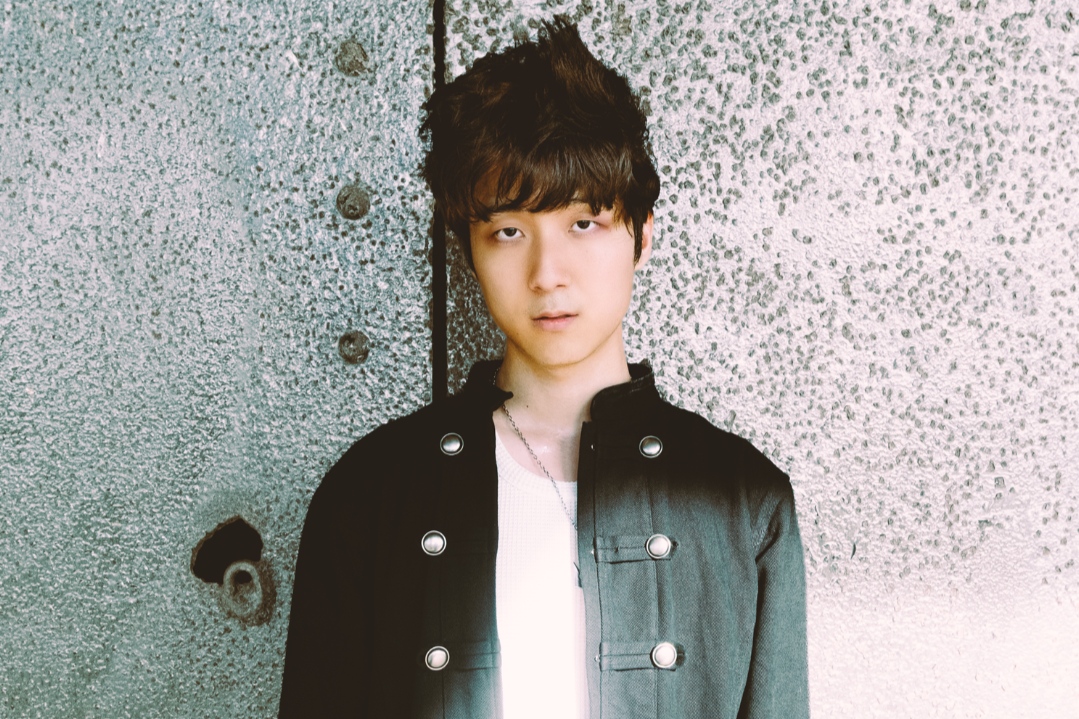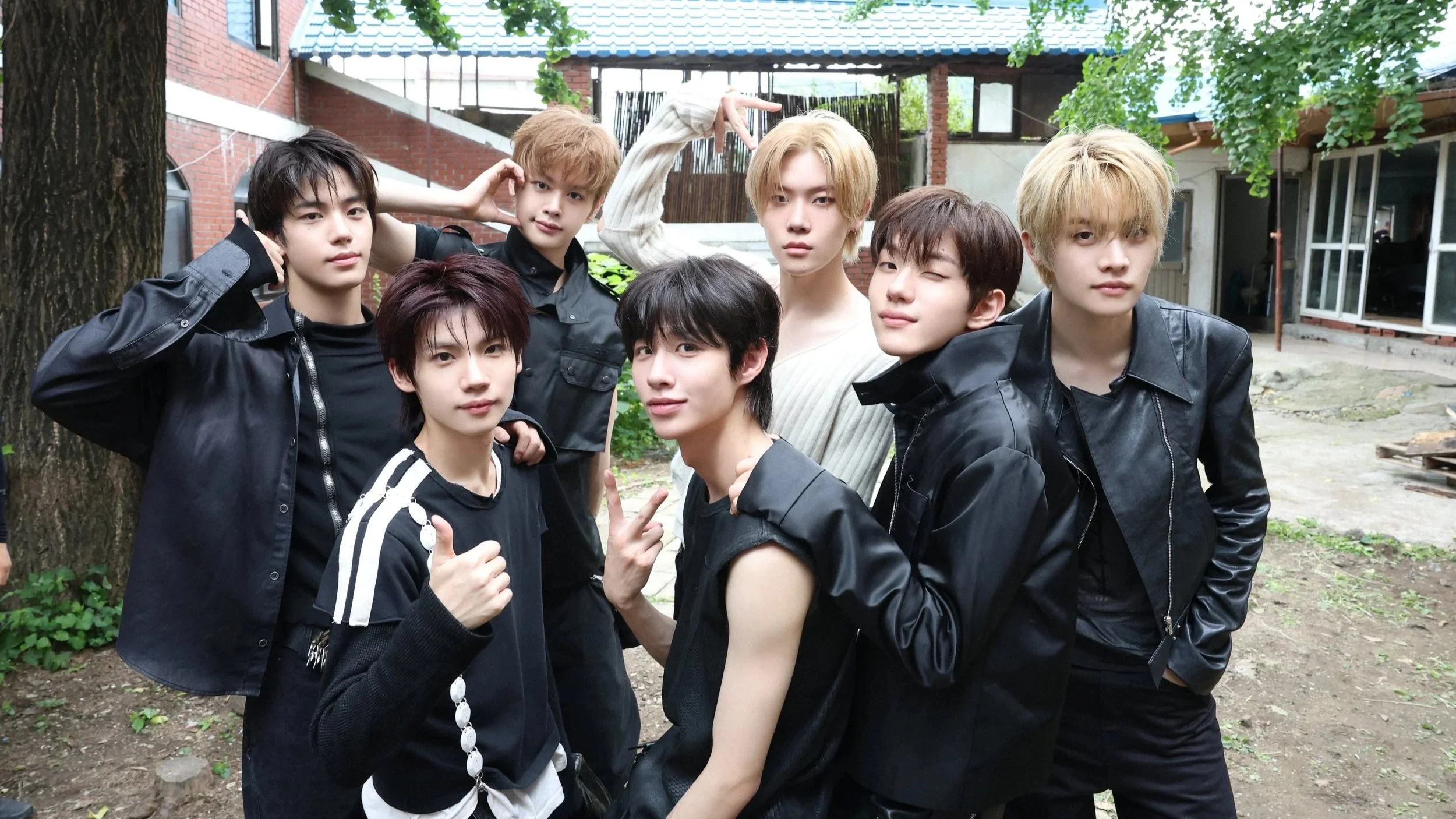

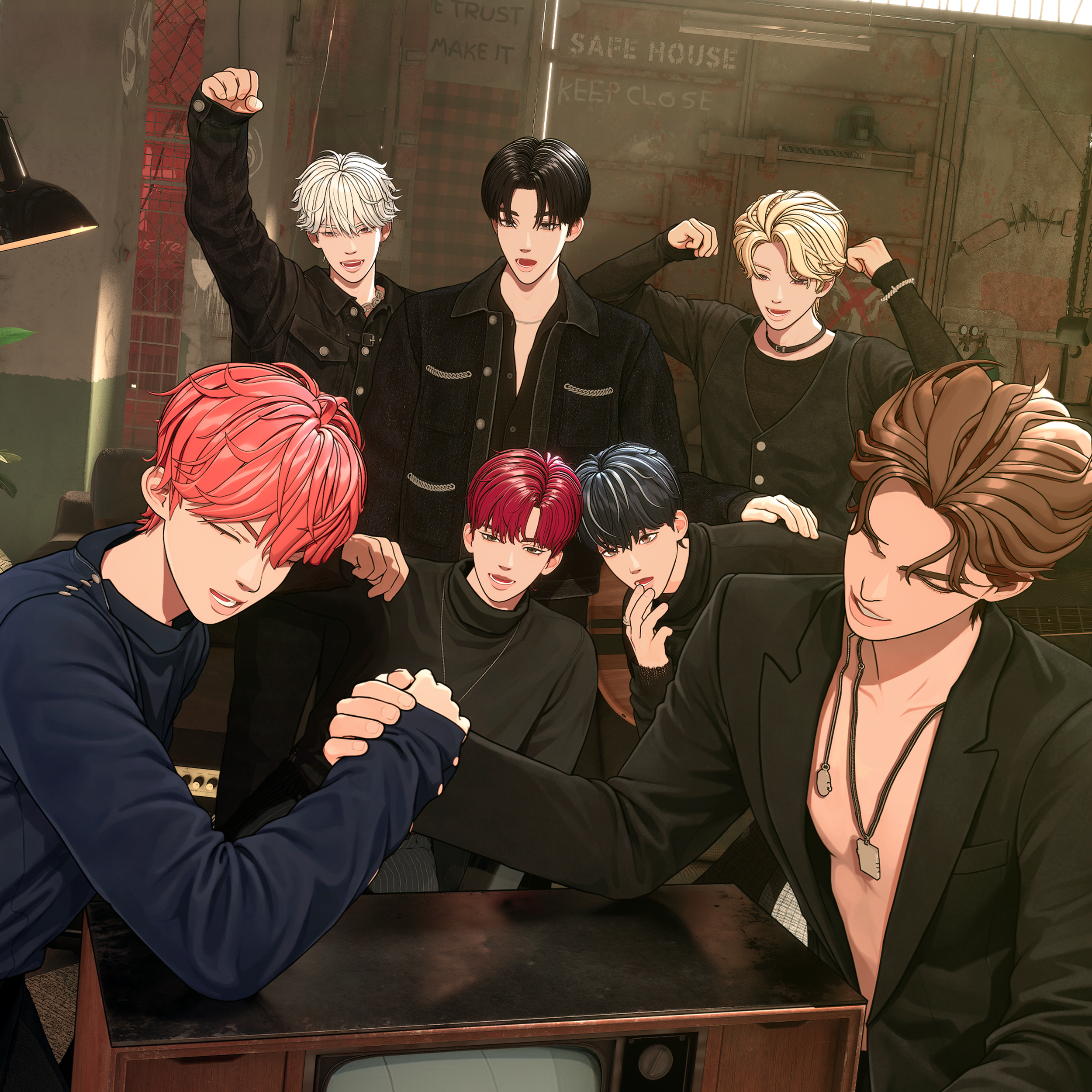
SKINZ arrived with a premise that’s still rare in K-pop: a seven-member boy group built as a virtual idol act, but powered by the same stakes as any new act trying to break through, songs that land hard, and a point of view that feels real.
That intent came through right away with their 2025 debut under Bridge Entertainment, “Young & Loud,” a distortion-charged pop-rock rush that threads funk and hip-hop into its spine and makes their talents immediately clear.
That debut also established something important about how SKINZ wants to be perceived. Even at the starting line, the members were credited on the creative side alongside producer EL CAPITXN, signaling that the project’s “virtual” element is a format, not a substitute for authorship. Their name spells out their ethos too, a future-facing acronym that still points back to something human, motion, ambition, and a sense of becoming.
Now they are expanding that identity with their first mini album, SKINZ IS SKINZ, led by double focus tracks “Poison Ivy” and “WHY U MAD.” The tracklist runs five songs total, anchored by “Young & Loud” and rounded out with new titles that lean into pressure-cooker emotion, including “Glitch: 99 Degrees” and “25.14.” Just as notable, SKINZ are credited on lyrics and composition across every track, including the pre-release “WHY U MAD,” which landed in early February.
Pulled together, this era molds SKINZ into a group using digital form to tell a lived-in story of confidence and volatility, devotion and doubt, and the messy work of figuring out who you are when the outside world never stops talking.
The title SKINZ IS SKINZ feels like it’s rooted in identity. What were you trying to lock in about your identity with that name, and how does the music align with that vision?
Theo: “SKINZ IS SKINZ” is probably the most direct way to describe who we are. Rather than adding labels or explanations, we felt that our current selves already represent what SKINZ is about. This album reflects that idea and it captures our energy and emotions in the most honest way possible.
Finn: “SKINZ IS SKINZ” almost feels like a statement we made to ourselves. Instead of waiting for someone else to define us, we wanted to show people who we are on our own terms. That’s why, for this album, we didn’t set our own boundaries for the genre or concept. We focused on the attitude and energy we carry. There are rock elements and hip-hop influences, but what matters most is how we express ourselves through the music. That’s the identity of SKINZ we wanted to show.
Jaon: The title “SKINZ IS SKINZ” means defining who we are as a team. Rather than trying to fit into other’s standards, we wanted to show our true color. This song carries that confidence and energy, and we think it presents the most honest beginning of SKINZ.
In a space where people debate what’s “real,” how do you define authenticity for SKINZ— and what helps you convey it?
Jaon: For us, being “real” is about being honest with ourselves. Through our music and performances, we want to express the emotions, struggles, and energy that come with youth, and share our own stories just as they are.
Dovin: Sometimes things that are virtual can feel very real, and things that are real can almost feel like an illusion. In the end, I think it depends on where you choose to place your perspective. For us, the way we express sincerity is through music. That’s why every member takes part in creating our albums.
Dael: I think authenticity comes from the way we approach our music and everything that grows out of it. We always think carefully about what message we want to put into the music and how we want to express it on stage. When all of those efforts come together, I think that’s when our sincerity really shows.
Your sound moves between punk-leaning rock energy and hip-hop-forward attitude. What is the emotional through-line that makes those shifts feel like one group, not different concepts?
Theo: “Youth” is the theme that ties all of our music together. It’s about pushing through challenges with intense passion, but also showing the moments when we feel fragile and uncertain. We try to capture all of those sides of youth honestly in our music.
Finn: We don’t really see rock and hip-hop as completely different worlds. To us, both are genres that express emotion very directly. So even when the sound changes, the core emotion stays the same, whether it’s questioning the world around us, responding to how people see us, or simply expressing what we genuinely feel. I think that attitude and energy are what connect all of SKINZ’s music as one.
You have writing and composition credits across the project. What does collaboration look like in SKINZ day-to-day, and how do you decide whose instincts lead a track?
Theo: It might sound a little funny, but most of the time we actually decide things through internal voting among the members.
Dovin: When it comes to music, there isn’t really a single correct answer. So everyone brings different ideas and perspectives, and we talk them through together until we find the direction that feels the best.
Ilang Kwon: I think we’re constantly exploring and experimenting. A lot of the time, we gather together and work on music as a group, sharing ideas and building the songs together.
Dael: We usually work on music with all seven members involved. Since there are seven of us, our opinions don’t always match at first. But we respect each other’s perspectives, and because we ultimately share the same goal, we tend to find common ground pretty quickly.
“WHY U MAD” feels like a confident response to outside opinions. When you hear noise around a release, how do you decide what feedback is worth taking in?
Jaon: Like our song “WHY U MAD” suggests, there will always be outside opinions and reactions. We try to take in feedback that helps us grow, but instead of getting shaken by negativity or noise, we focus on the music and the message we truly want to deliver.
Dael: I think outside opinions and reactions naturally come after we’ve already made our own decisions about what we want to do. It might come across as stubborn sometimes, but we trust ourselves and what we believe in. Because of that, I think we’re able to stay grounded and not be easily shaken.
“Poison Ivy” centers a relationship you know is bad for you, but you still can’t cut it loose. What did you want the listener to feel first: attraction, dread, or the moment you realize you’re stuck?
Dovin: There are many things in the world that can feel restrictive or overwhelming for us. Love just happened to be the most intuitive way to express that feeling in this song. But what we really wanted to say is that even in those situations, you can still find a way to overcome them. And of course, we also hope listeners feel the addictive quality of the song first.
Ilang Kwon: At first, we imagined the feeling of simple attraction. But as the song progresses, that feeling slowly turns into anxiety, realizing that the relationship is dangerous, yet still being unable to stop. In the end, we wanted listeners to feel that almost addictive moment when you realize you’re already too deep to escape.
Dael: In “Poison Ivy,” love is used as the main metaphor to deliver the message, but we think this feeling can exist in many situations in life, not just in love. Sometimes we chase our emotions even when we already know the outcome might not be good. I think everyone has experienced or struggled with something like that at least once. So we wanted listeners to connect with that feeling and find a sense of relatability in the song.
The title “Glitch: 99 Degrees,” suggests something slipping out of control. From your perspective, what’s “glitching” in the song—your thoughts, your relationship, your confidence, your identity?
Taeo: In this song, “Glitch” represents inner anxiety and negative thoughts. I think everyone has experienced moments when they start to doubt themselves or feel like their own existence is being questioned. When writing the lyrics, we hoped that listeners could find the courage to face and overcome those feelings while listening to the song.
Finn: In this song, “glitch” isn’t really just one specific thing, it's more like a state of mind. It could be your thoughts, your emotions, or even a moment when your confidence rises so much that things start to feel a little out of control. The number “99 degrees” carries a similar meaning. It’s not a complete explosion yet, but the system is already starting to shake. I think that sense of tension is what really shapes the mood of the song.
“25.14” is framed as a direct line to fans. What do you want your fandom relationship to look like long-term, especially as the line between digital presence and real connection keeps shifting?
Jaon: “25.14” is a song we made for our fans. Just like the title suggests, our fans are incredibly special to us, almost like the one and only person in the world. No matter how things change, we hope to keep communicating through music and build a relationship that can last for a long time.
Finn: Just like the lyrics of “25.14,” we hope to build a relationship where we can continue to care for each other deeply. A relationship where simply knowing that the other exists can give strength and support.
Taeo: More than anything, we hope to have a relationship where communication truly goes both ways. That kind of mutual connection is what we value the most with our fans.
Dovin: We hope to be someone our fans can always lean on and feel supported by. In the same way, we want to be able to rely on them too; becoming a meaningful presence in each other’s lives.
Ilang Kwon: I hope we can become people who are truly necessary to one another. Like interlocking gears, if one stops moving, everything else stops too. That’s the kind of connection I imagine between us and our fans.
Yull: Even as time passes, I hope we can remain a source of strength for each other and continue to grow together. We want to be a team that stays with our fans for a long time, consistently and sincerely.
Dael: When I hear the phrase “long-term relationship with fans,” honestly, just the idea of long-term already makes me happy. We hope to always stay beside Kindy, and that Kindy will stay beside us too.
If this mini album is chapter one, what is the next risk you want to take: heavier rock, deeper rap, more vulnerability, or a completely new lane?
Jaon: If this mini album is Chapter 1, I’d love for the next chapter to explore new directions. Stronger sounds or more honest emotions would be exciting, but more than anything, I don’t want to limit ourselves to one genre or style. I hope we can expand SKINZ’s world through many different kinds of music.
Finn: We’re still discussing it as a group, but personally I’d love to keep exploring music where the bass really drives the track, the drums have a strong rhythm, and there are a lot of R&B elements. Something with a vibe similar to The Weeknd’s style would be really exciting to try.
Taeo: This is just my personal opinion, but I’d love to try something completely different. For example... maybe country music.
Dovin: More than anything, I want to keep expressing honest emotions. We won’t lose our identity as SKINZ, but I think the genre can change depending on the feelings we want to tell through our music.
Ilang Kwon: There are so many things we want to challenge ourselves with, both musically and conceptually. But if Chapter 2 comes next, I think it might show a slightly more refined version of youth compared to our first album. I hope people will continue to watch how SKINZ grows.
Yull: If this album is Chapter 1, I’m also curious about what kind of direction we’ll take next as a team. For the next album, I hope we can try even more diverse ideas and show a different kind of synergy that only SKINZ can create. By pushing ourselves musically and experimenting more, I think we’ll discover new sides of ourselves that we can share with our fans.
Dael: We talk about this a lot as a group, and there are honestly so many genres we want to try R&B, house, hyperpop, and more. But in the end, I think it will come down to the message we want to deliver, and we’ll build the flow of the album around that. So for Chapter 2, Chapter 3, and everything that comes after, I hope people look forward to the many stories we still have to tell.