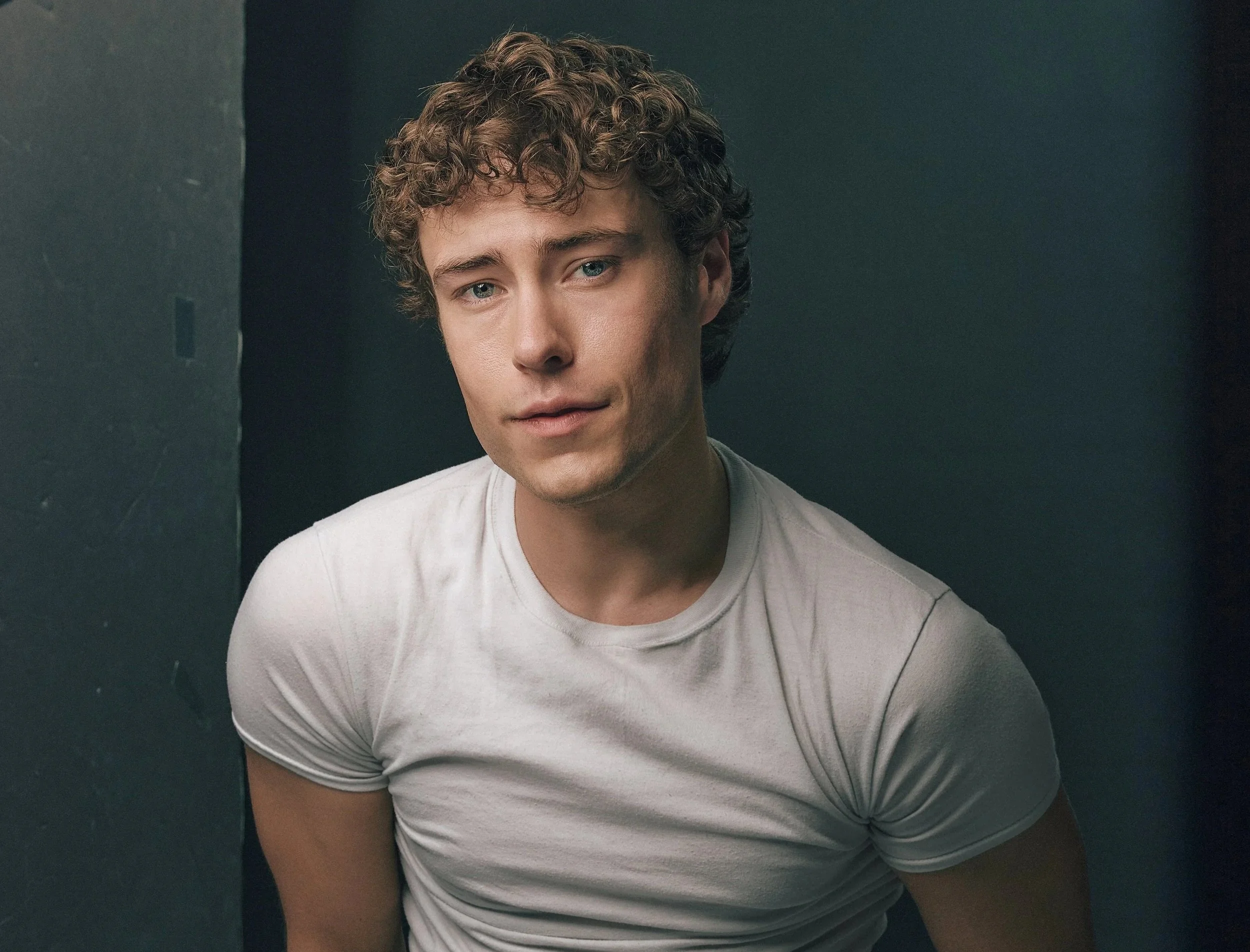

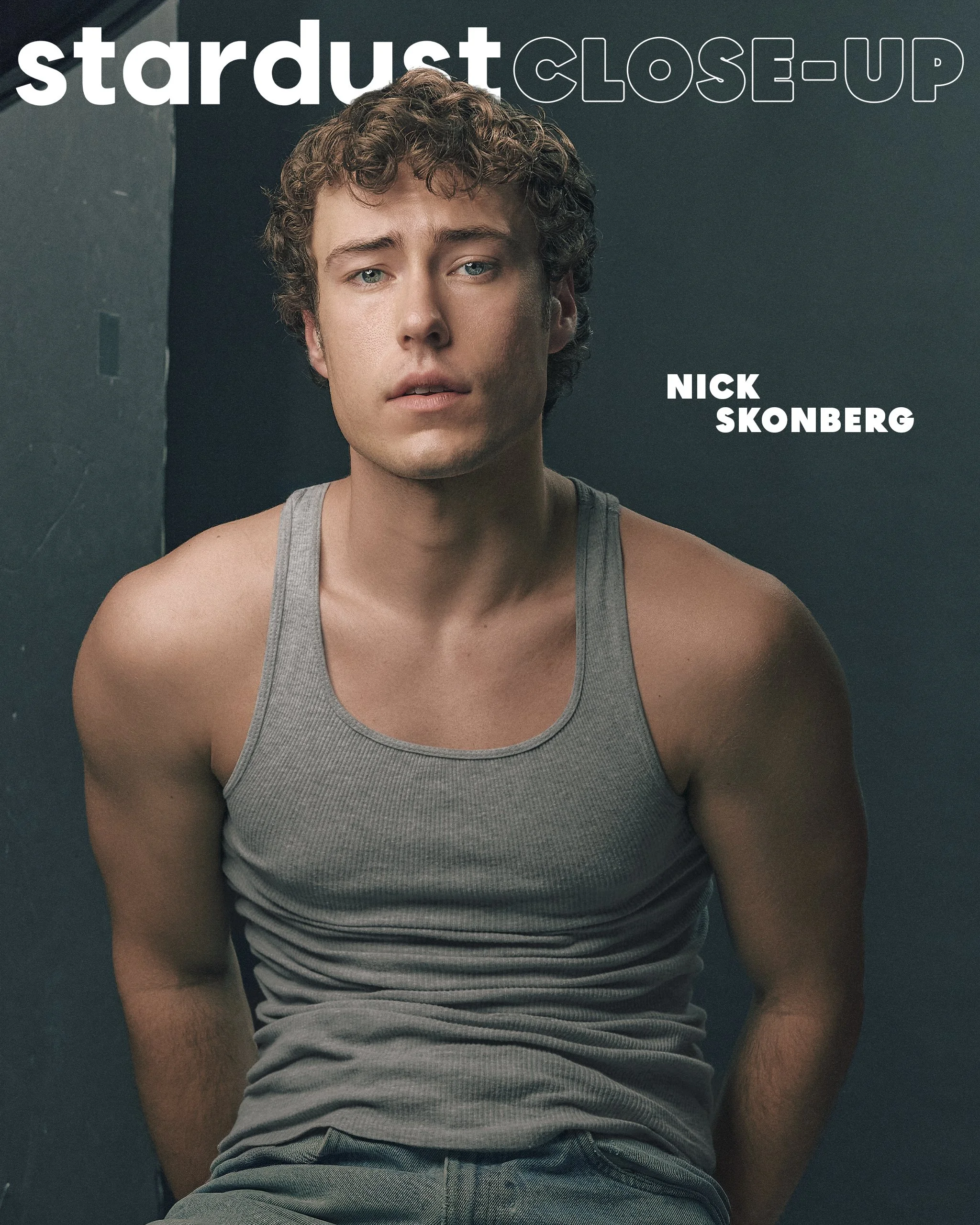
Close-Up with Nick Skonberg
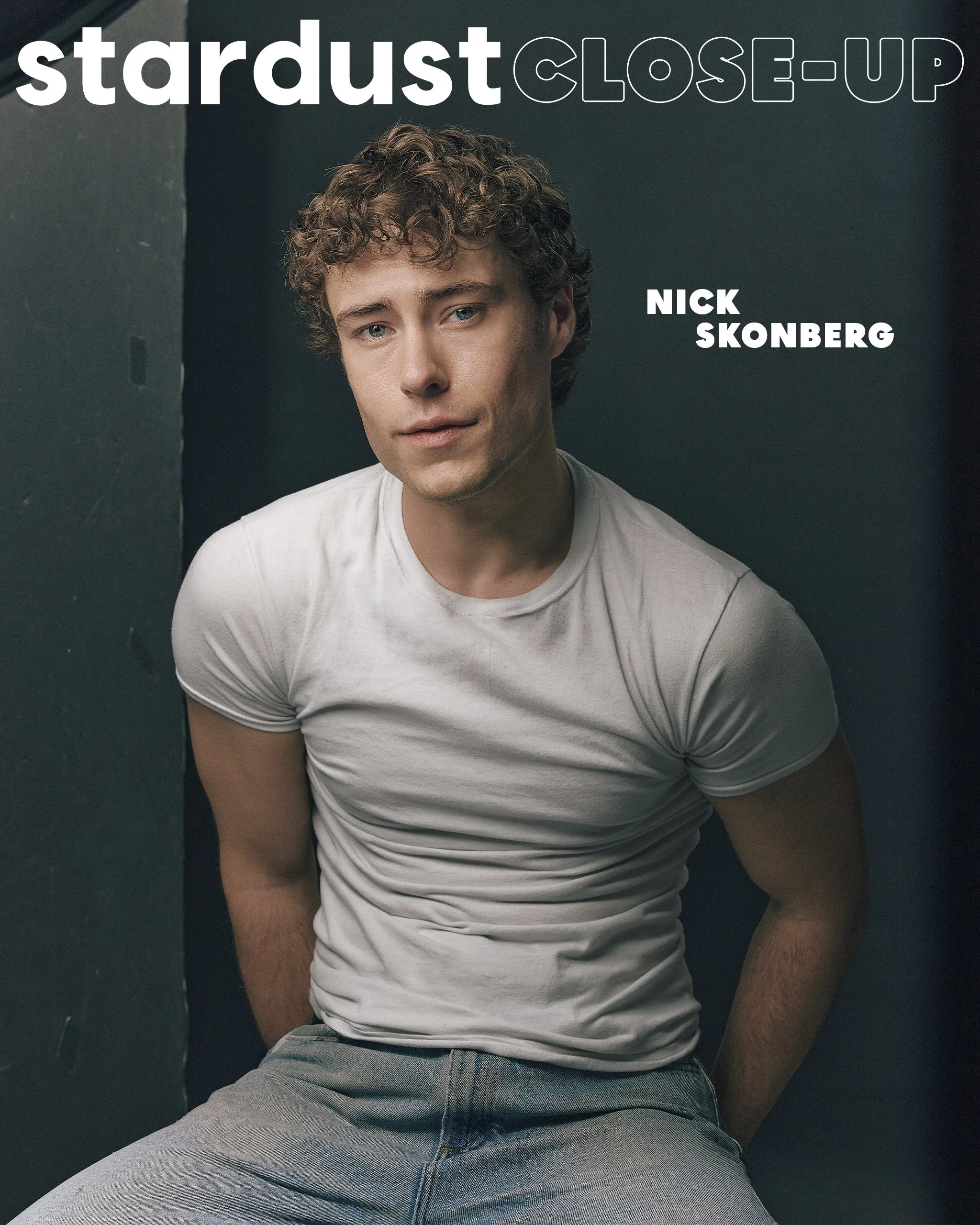
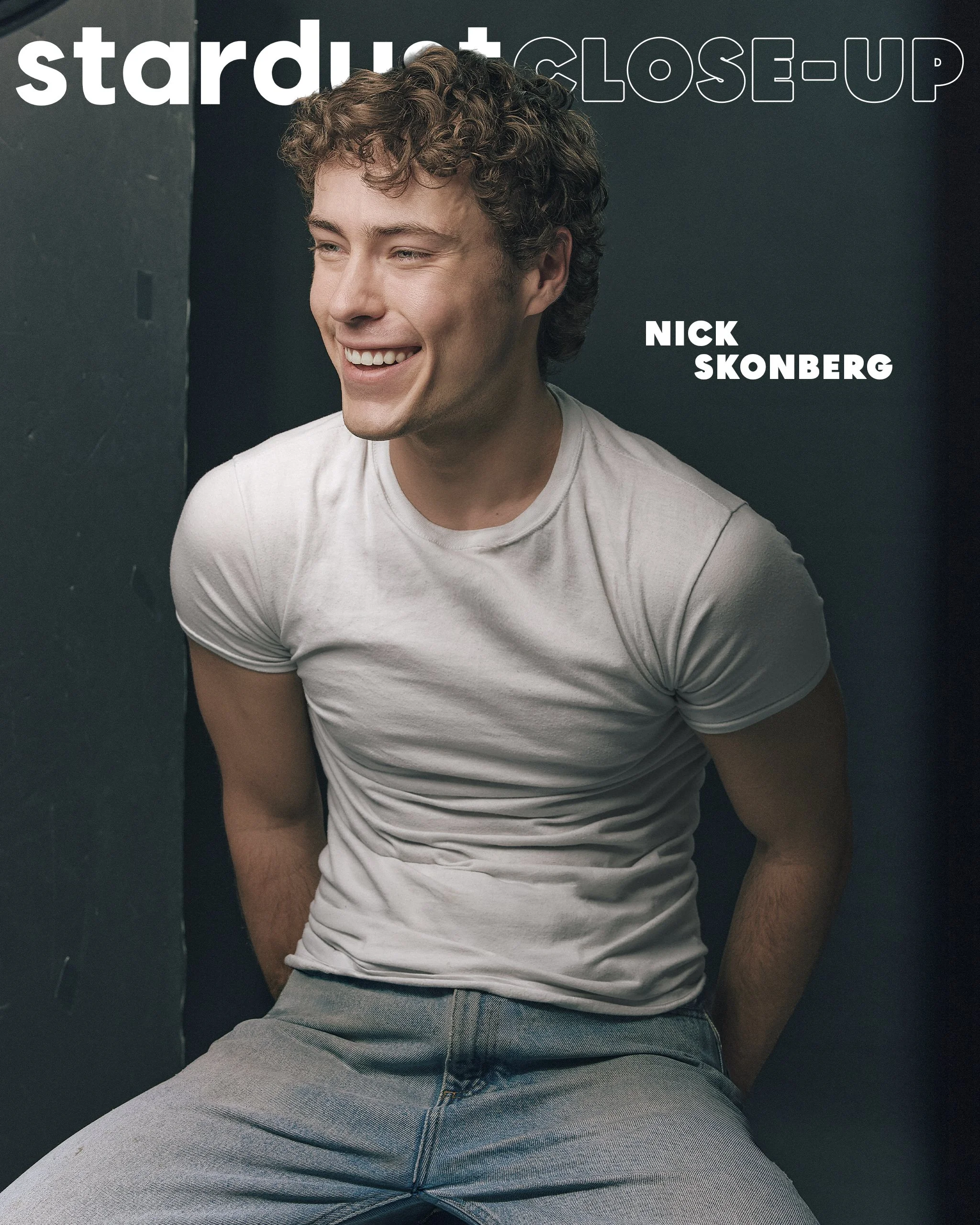
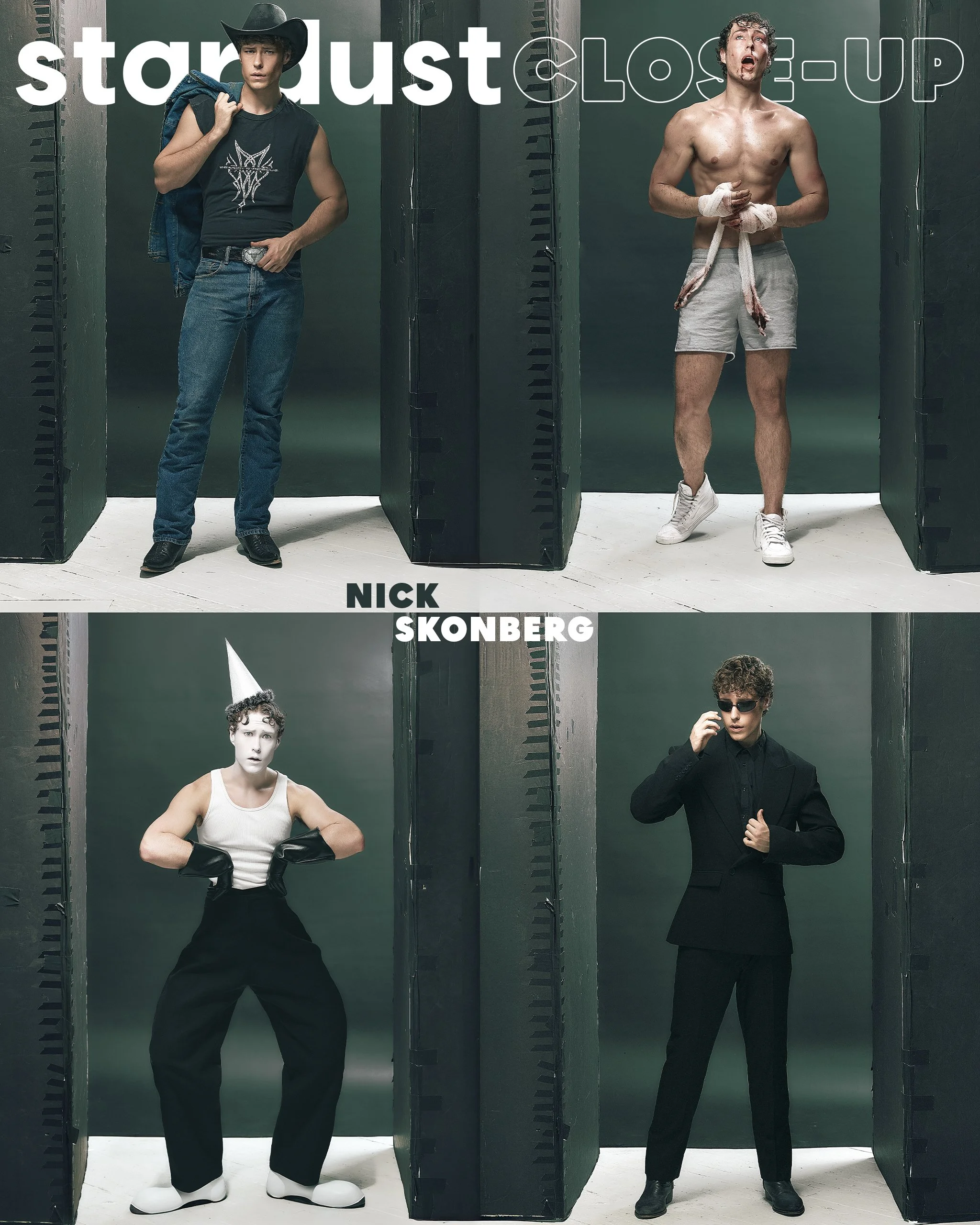
Close-Up is Stardust’s short-form digital cover series spotlighting talent through what feels most revealing: current obsessions, routines, creative process, and the details that bring personality into focus.
Nick Skonberg’s 2025 breakout with Loving My Brother’s Best Friend arrived with the kind of momentum that can rapidly expand a project’s reach. After one clip drew more than 12 million views, viewers went looking for the full vertical romance, and much of the attention soon turned toward Skonberg’s performance as Luca. The central will-they-won’t-they dynamic gave audiences an immediate reason to keep watching, but his protective, passionate interpretation of the character added another pull, balancing the story’s heightened romantic energy with an unusually composed screen presence.
From the first moment he enters the frame, there is something almost Old Hollywood-esque in the way Skonberg carries himself onscreen, with flashes of James Dean’s intensity and the natural vulnerability of River Phoenix, an actor he has long admired. The resemblance feels more spiritual than imitative. Skonberg rarely seems interested in announcing what Luca is feeling; a change in expression, a shift in posture, or an extra beat before responding can do much of the work, giving the character an interior life that extends beyond the dialogue. Those details helped the performance hold attention after the viral moment had brought viewers through the door, turning curiosity about the premise into investment in the relationship itself.
Other vertical projects, including The Cheer Scandal, have given Skonberg different opportunities to work within the form’s distinctive rhythm. Episodes often need to establish chemistry, conflict, history, and a dramatic turn within a compact stretch of time, placing considerable weight on what an actor can communicate almost immediately. Close framing magnifies those choices even further. Skonberg appears comfortable working at that scale, finding small pockets of stillness within fast-moving scenes and letting relationships evolve through gestures and reactions that might otherwise be easy to overlook.
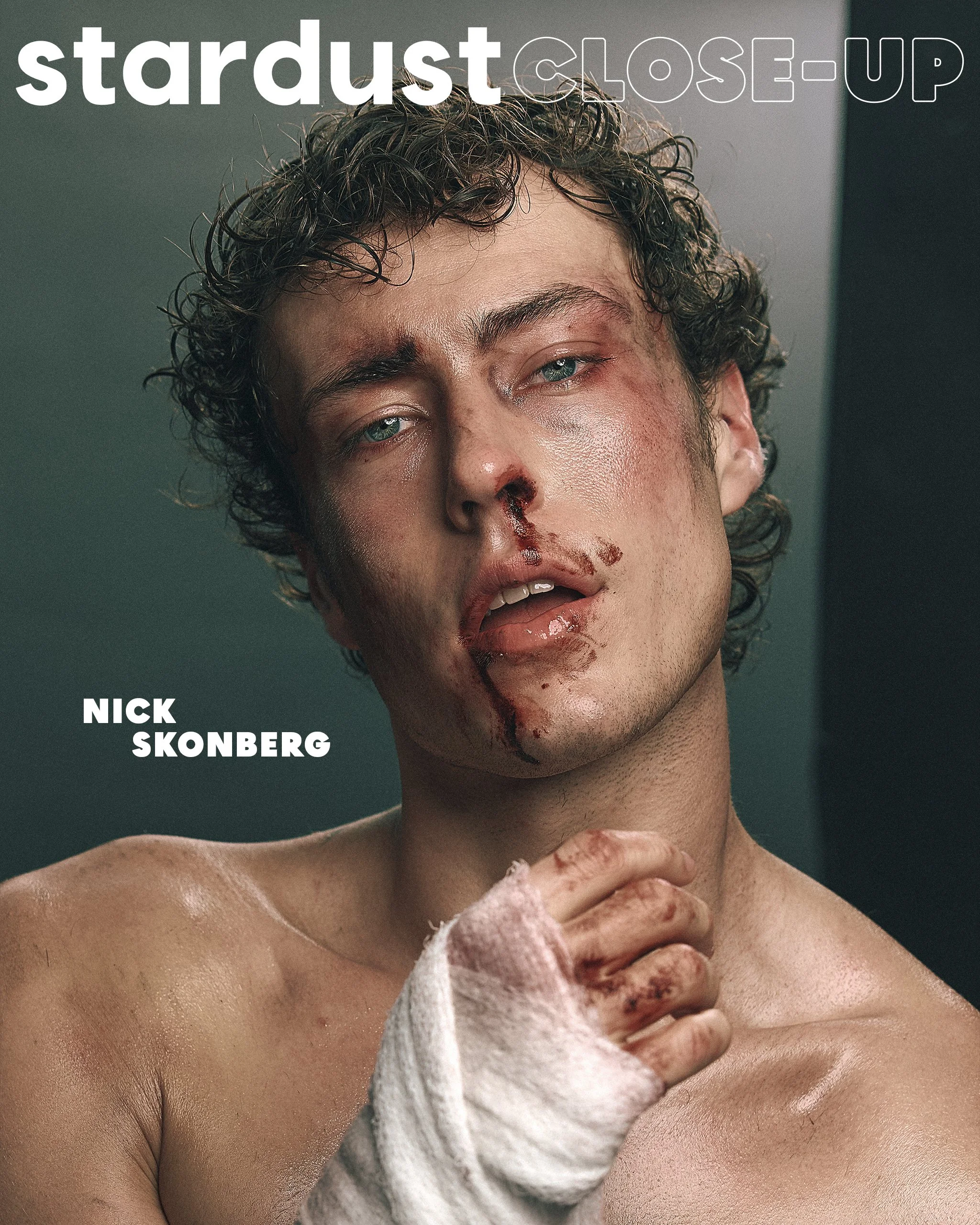
His fascination with those details extends well beyond the projects in which he appears. A self-described film addict and avid Letterboxd user, Skonberg watches movies with the curiosity of someone interested in the mechanics of performance: how actors inhabit a role, how tension changes across a scene, and how a character can reveal more than the script explicitly gives away. His recent drama-thriller Bloodstained Ivory turns that curiosity toward considerably darker material, casting him as an aspiring concert pianist whose dedication gradually becomes entangled with an increasingly destructive pursuit of perfection.
The danger is visible well before the character reaches his most severe choices. At the piano, concentration and ambition initially read as genuine devotion, but insecurity begins altering the way he sees everything around him. Jealousy slips into otherwise ordinary interactions. Doubt hardens into fixation. Even when dialogue is sparse, Skonberg keeps something active beneath the surface through guarded expressions and closely observed reactions, creating the impression of someone constantly measuring his own worth against impossible standards.
Eventually, those standards begin reorganizing his entire life. Support becomes interference when it threatens his focus, and relationships acquire value according to whether they bring him closer to what he wants. The progression is built through compromises that may seem manageable in isolation until their cumulative effect becomes impossible to ignore. Skonberg never needs to mark the transformation too aggressively either; the disturbing part is how plausible each individual step feels before the distance traveled becomes clear.
Viewed together, Skonberg’s recent projects are beginning to suggest the broader direction of his career. Loving My Brother’s Best Friend placed him in front of an audience far larger than the one that knew his work beforehand, while the roles following it have continued widening the kinds of characters he can inhabit. Now, as he crosses genres and tests different parts of his range, the viral moment that first drew attention to him feels increasingly like the beginning of the story rather than its defining chapter.
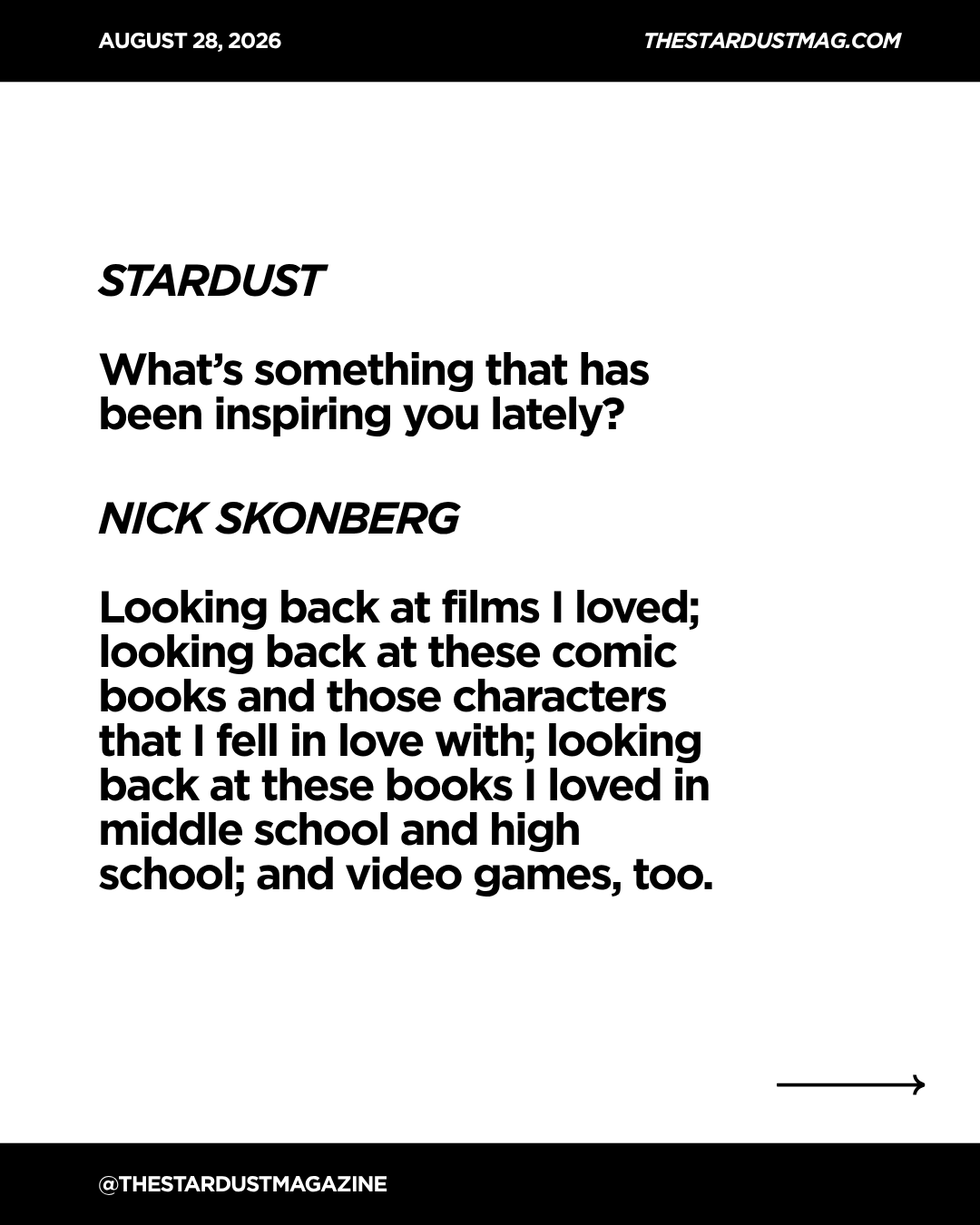
Stardust: What’s something that has been inspiring you lately?
Nick Skonberg: For a couple of projects I’m on the front end of, I’ve been spending a lot of time studying writing and story structure, character design, and all of that, which has been really exciting and really fun. I’ve been able to source a lot of advice and input from a few of my friends, but I think something that’s helped a lot was a recommendation I got from a good friend of mine that I really ran with. It was just looking back at the foundational characters and stories for me. So, for me, that’s been looking back at these films that I loved when I was 8, 10, 13; looking back at these comic books and those characters that I fell in love with; looking back at these books I loved in middle school and high school; and video games, too.
It’s been a bit of a trip down memory lane, but I think the thing that’s been so fun about it is looking back on it now, a couple of years into acting and understanding film—or at least trying to—and asking: Why do I like these? Why did these resonate with me? Why are these the things that made me fall in love with all of this and made me want to do this as a career? It’s been really fun diving back into those characters and those worlds that got me here. It’s been super exciting and really nostalgic.
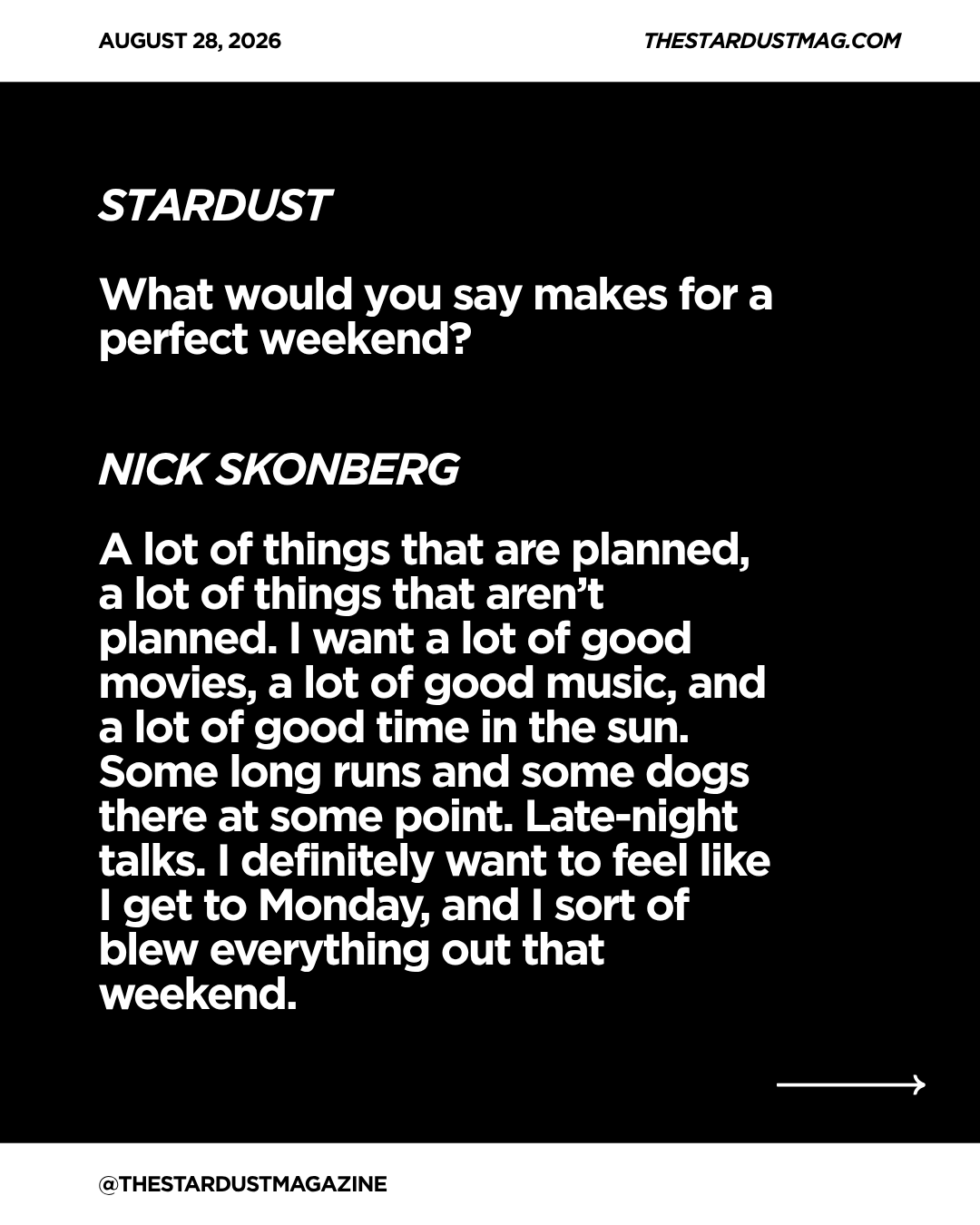
Stardust: What would you say makes for a perfect weekend?
Nick Skonberg: The perfect weekend for me changes with the season and whatever is going on in my life. I definitely want a lot of friends, a lot of family, but honestly, I feel like everybody’s going to say that. I’d love to maybe not know the situation I’m going to be in. I feel like that’s going to determine what the perfect weekend is based on where I am. If I’m at work, that’s one answer. If I’m on vacation at a beach or in the mountains or something, that’d be another answer. But I’d love to be somewhere a little bit outside of my usual surroundings, a little bit outside of the routine I’m used to. I’d love to find a hybrid of being up early and staying out late without being exhausted because of it.
A lot of things that are planned, a lot of things that aren’t planned. I want a lot of good movies, a lot of good music, and a lot of good time in the sun. Some long runs and some dogs there at some point. Late-night talks. I definitely want to feel like I get to Monday and I sort of blew everything out that weekend. But it’d take some dimension-crossing way of getting all the people, all the places, all the things, and all the activities into one weekend. In interview land, though, I think it’ll end up looking a bit something like that.
Stardust: What is one hobby or ritual you never make enough time for?
Nick Skonberg: I think something I never make enough time for is new music. Music is a very important part of my life and my routine. My lifestyle with music is that I have artists I’m obsessed with, and I learn everything about them and listen to all their music on repeat. There’s usually a cycle where I pick one of them and just listen to them until I’m tired of them, and then I’ll find the next one in that kind of ragtag crew.
I think finding new music is definitely something I always wish I took more time for, because I love when you can really trust somebody on aux and they have all these artists and albums you’ve never heard of, and then the party is better, or the car rides are just better. I wish I was that guy, but I’m very predictable with my music lineup. I have my artists; I cycle through them. I do feel like whenever I find a new artist or a new album, I’ll just listen to it on loop until I don’t want to listen to it anymore, and then the cycle repeats. I’d love a way of finding new music that feels a little more natural.
Stardust: What do the people closest to you know you will always say yes to?
Nick Skonberg: I think anybody who’s been in my life for any period of time knows that if it has anything to do with a movie or a dog, I will probably say yes—preferably if they’re connected in some capacity. If I see a dog on the subway, it sort of makes my day. If I meet a dog in my building, it also kind of makes my day. I will show people pics of my dogs as soon as they ask. I’ll even show pics of my friends’ dogs as if they were mine.
I’ll watch a movie at some point during the day, sometimes two or three a day, and I’ll probably talk about it for the next three days to three months. I think anything that involves both of those, preferably at the same time, would be something that anybody close to me knows I’m never going to turn down.
Stardust: As a cinephile and avid Letterboxd user, what is the last film you loved enough to recommend immediately—and why?
Nick Skonberg: I just watched this film, Dogfight, recently with River Phoenix and Lili Taylor. I’d been meaning to watch it for a long time. River Phoenix is a hugely important actor and artist to me in general. I’ve definitely talked about that a lot in these interviews I’ve done. He’s really important to me and to me wanting to do all of this.
It was one of his performances I’d heard of, and I just hadn’t watched it. I downloaded it for a plane ride. I was just so struck by this movie, and I cried a little bit, actually. I thought the acting was brilliant. I thought the writing was brilliant. I thought it was really honest and took the story, the plot, and the characters in a direction that I would not have expected at all when I read the description or even when I first started the film. I just kind of couldn’t stop thinking about it for maybe the week after. And I think that’s sort of how I know I’ve found a film that I’m going to fall in love with for a couple of years. I’ve just been telling everybody about it. I remember it sort of reminded me of a play that my buddy had done, so I immediately texted him, “You have to watch this movie.”
It was one that I couldn’t shut up about, and I think that’s what happens when I really fall in love with a movie. It was amazing. Lili Taylor is an actress whose work I hadn’t really spent a lot of time studying or watching, and I thought she was just the heart of that movie. Her performance moved me so much, and River was just unbelievably good.
Stardust: What first drew you to the role of Luca in Loving My Brother’s Best Friend?
Nick Skonberg: I love coming-of-age movies. It’s definitely been the genre that’s meant the most to me over the course of my life, and I’ve always wanted to dive into that genre as an actor. When I booked it, I was fresh out of drama school, looking for work, and these things looked fun, and I knew they would be a good way to make some money. When I got the script, I was a little excited because it felt a little more grounded than some of the other verticals I’d seen when I was researching the format. I really didn’t know what the genre was or what the vibe was for the actors.
It’s a romantic lead with a little bit more of a jadedness to him in a way that felt a little more natural, but also definitely a sensitivity and sort of a heart to him. I think that was attractive to me as an actor, just figuring out the kind of part I’d want to play in one of these things. It was so much fun. I had the most fun on that film and with that cast and that crew, and I’m really excited about what it’s done for everybody, for that company, and for everybody I was with. I’m so happy I clicked on that Actors Access profile and sent in my audition 15 minutes before the deadline. No reader or tripod—just kind of full-sent it.
Stardust: The viral series reached millions of viewers across social media and introduced your work to a much wider audience. Now that Loving My Brother’s Best Friend has become such an important part of your journey, what does that chapter represent to you?
Nick Skonberg: I think it’s really exciting. I spent so much time at drama school researching the careers of the actors I admired and the arcs and trajectories of those careers. It was definitely staggering when this thing took off as much as it did, because when I started doing verticals, I just expected them to be a creative outlet and a financial source for me as an actor while I was kind of auditioning for other projects. I envisioned them being something that, when other films I’d do took off, an audience could look back on later. But it was different, and it did bring me the first audience I’d ever had and the first attention I’d ever gotten, which was really exciting but definitely staggering, because it threw all that studying and prep I’d done out the window a little bit. Not totally, though, and I think I’m learning that a lot more now.
In the wake of all this, it did feel a little confusing how different my path was going to be from a lot of my heroes, but I think that’s really exciting. I mean, it is really exciting to be at the beginning of something and at a point of change. I think film people inherently have a pretension toward new things. I don’t think that’s ever going to change. Something that’s really exciting about verticals and where they exist in the film space is that they’re getting audiences excited about projects with new actors and new filmmakers, and they’re pieces that aren’t IP-based. There’s no industry, company, or agency backing them. They are simply products made for an audience, really tailored to an audience and really for that audience. And that audience is embracing them and really falling in love with the new talent and new faces they get to find. I think it’s really exciting that I get to be at the beginning of all that and to be one of the first actors from that space to move into mainstream films. That’s really what I’m shooting for right now. I think that’s so exciting.
I’m just so happy I started there. It’s the best treatment an actor could have gotten working on these films. I’m so thankful for that company, for those actors, for the fans, and for the fan companies, too. It’s sort of the best way I could have started. I feel so taken care of and loved, and I just really want to give back to that audience everything they’ve given to me.
Stardust: After working in vertical formats, what have you found most important as a performer when the storytelling relies so much on close-ups, immediacy, and intimacy?
Nick Skonberg: It’s a really great question. I’ve been studying the medium of verticals themselves lately, just working through the early stages as I come back for a final one. On this one, I get a producer role as well as writing and acting. I’m really trying to figure out what the bounds of this format are and how we can push them. I think that applies to the writing, the acting, the directing, but also the cinematography.
I’ve been looking at 9:16 cinematography a lot, and I think it is its own thing which is kind of obvious. It’s very different from traditional filmmaking, but I do think it allows for some really interesting things. Specifically, to what you said, I think the reason romance is the bread-and-butter genre of this form is that you cannot shoot wide. You can’t even really shoot medium close-ups. You kind of have to shoot very close two-shots, over-the-shoulders, and close-ups, so it really has to live within the actors’ faces. When they’re on screen together, they’ve got to be really close, so it naturally lends itself to romance very well. That’s been really interesting—looking at a lot of the actors I admire and the screen presence they can bring to a close-up and to more intimate settings with their characters. Playing with that close proximity to the camera has been really interesting.
Now, going into this next one, I’m looking at how we can push that 9:16 cinematography to add some spectacle and create some of the cinematic quality and expansiveness that films can have within that small of a frame. I think that’s really exciting. Something else that’s been so interesting, because I’ve done two of them so far, is watching Candy Jar and their camera team get better at shooting in 9:16 and shooting in this format, and then figuring out the advances in the format. It’s been so fascinating watching them really learn these new skills. I mean, Candy Jar has ARRI cameras and Cooke lenses, so you’re really working with top-of-the-line equipment at this level of filmmaking. It’s been so exciting to watch them pioneer this new form of the art.
It’s definitely taught me a lot about presence. It’s taught me a lot about stillness, a lot about centralizing emotion, whether that’s in your hand or your eyes or your arm—anything like that. Something I had such a hard time with on the first couple was that they’re harder scripts to do a crazy amount of script work on. Not for any specific reason, but they are a bit more straightforward as characters. I think something that helped with that was realizing that you do go in and really just have to rely on this other actor and what they’re giving you, and what you’re giving to them.
To me, that’s where acting is the best and where I enjoy it the most. So it’s forced me into that mindset instead of spinning out and doing all this crazy script work and prep. At the end of the day, with all the extraneous things you think you need as an actor, you really just have to breathe in that other person. I think that’s been really fun—learning it in this format, where your only hope is to be that close to somebody and that intimate with someone.
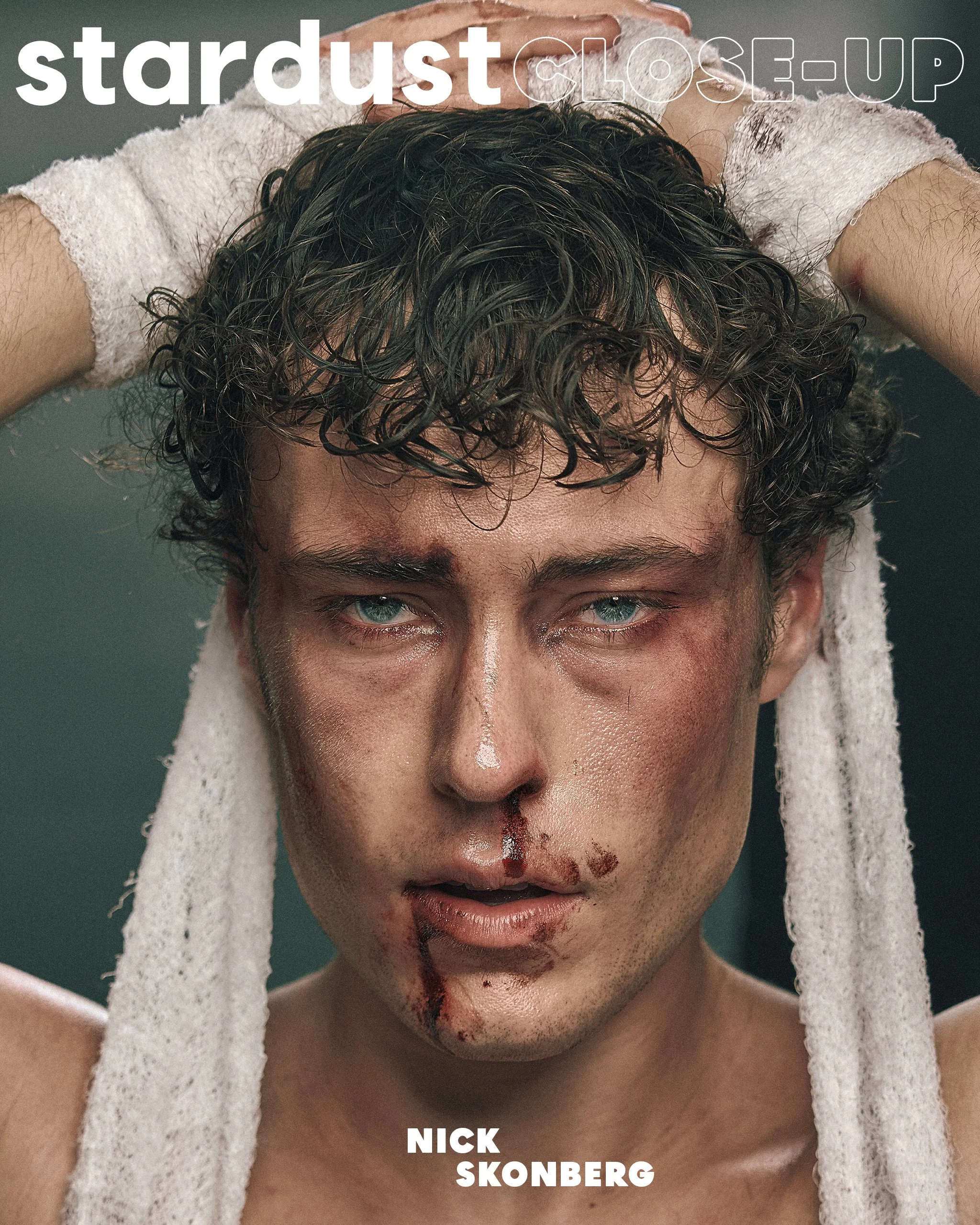
Stardust: What did leading the new drama/thriller Bloodstained Ivory teach you about your own process?
Nick Skonberg: It taught me so much. This is such a long answer, so I’ll try to keep it short and sweet. It was the best film school and the best drama school I could have gotten. We shot this two years ago, midway through my junior year of drama school, and I booked the role at the end of my sophomore year. Ever since I moved up to New York—because I hadn’t really started acting outside of high school theater until I moved up there—I’ve found benchmarks for myself. I’ve made it so that on X film or X assignment, or whatever it’s going to be, I need to throw everything I have at that moment, see how it goes, then go back to the drawing board and see where I am. What went well? What do I wish I had done better? What do I need to work on? What do I need to study? All of those things.
I think Bloodstained, at that point in my life, was the biggest benchmark I could have had. You know: How do you audition for a part? What do you do once you get a part? How do you prepare for a long time for a part? How do you learn things for a part? How do you build a character? How do you integrate all the things you’ve learned from class, from the films you’ve watched, from the interviews you’ve watched, from the books you’ve read—all the things you’re interested in and want to try out? How do you throw all of that into a part and a prep process, form a relationship with the director and the other actors, and then actually get on set? How do you work on your emotional stamina? How do you work on your energy? How do you prepare for the hard days and make sure you’re there for the easy days and don’t phone it in because you just had a crazy scene the day before? How do you pace yourself? And then, on the post-production end, it’s been jumping in with the marketing and helping with the distribution of this film. How do I study where the industry is, where the audience is, where films are, and then what this film means and how it can mean something to people? How can we reach people with it?
I’ve really gotten the most intense crash course in all three levels of production just from this film alone, and I’m so thankful for it because I’ve had the most wonderful people on this film to work with. I think it taught me so many things, at least as an actor. Maybe the scenes that scare you the most are the easier ones, or at least the ones that you kind of slip into more easily. And maybe the ones that are harder are the times when you step up and think something is a little more within your reach, and then those are the ones you trip up on. I think that was something I definitely learned.
The more emotional and physical scenes of this film were the ones where I felt like I got there the most. Then there were some scenes we’d shoot on a Tuesday, where you’d had the weekend off beforehand, and you’d come in and get really confused. You’re like, “It’s more of a transactional scene,” but then you realize afterward that you weren’t there as much as you wanted to be. I think that was something I realized a lot, along with just how I want to prepare for a film. What works for me? If I really give it everything I have, what does that mean, and how do I coordinate that within my own life and my own relationships? What kind of bond with a director do I want to form? What kind of bond with a cast do I want to form? What does my research and prep look like, especially in the physical realm?
It taught me everything that I feel like I needed in order to feel confident going into this professional world of acting. Maybe I was behind when I moved to New York, having not started this until I was 19. It really made me catch up in a way that I think would have taken much longer had I not done this film.
Stardust: The film steadily pushes the character toward an achievement that comes at an enormous psychological and human cost. How did you approach the person he has become by the end of that journey?
Nick Skonberg: I think something that was kind of interesting is that when you’re a younger actor starting out, specifically a younger male actor, the performances you’re recommended and the performances you end up getting really drawn to are the psychological-downward-spiral performances. I think they’re the performances marketed to you as the ones you need to watch. I’d always been geared up to want to do one of those roles at some point, to earn my stripes a bit. I feel like you have an expectation that to really cut your teeth as an actor you have to do one of these parts. But then you have that question of: How do you track somebody’s arc over a film when you don’t shoot in chronological order? You’re shooting out of sequence.
The thing about film that’s different from theater is that it’s not scene by scene; it’s shot by shot. You can explore miles of this character’s arc within a close-up of your finger. I think that was really interesting to me—to plot it out and make sure every single day I knew exactly where he was in his arc, where he’d come from, where he was going, and what had happened the day before. Where was he with the piece? Where was he with the drugs? Where was he with his relationships? I wanted to know exactly where he was so I could really temper the performance in a chronological way and make sure his arc felt steady.
I think one of the things I mentioned in the question before—emotional pacing and energy pacing—was really important to me. I knew there were going to be a couple of days that were just going to suck, and they were going to feel like shit, and you were going to go home and just want to watch Entourage in bed, go to sleep, and not really talk to anybody. And there were going to be some days when you did a hard scene in the morning and then had a chill scene in the afternoon. I think it’s weird like that, and as an actor, you’ve got to be prepared for it because you can’t be an egomaniac diva and take up all the time and space. You’re not the only one working on the set. There are a hundred other people or more who are working just as hard in their own capacities, so you’ve really got to stay professional even when the days are hard for you. I think, in a lot of ways, it was me coming to terms with any anxieties and insecurities I had as an artist starting out. I was a year younger than Ross when we filmed it, and now it’s coming out when I’m a year older than him. I think that’s so interesting.
I’ve talked a lot about how this film is about promise and potential, and how that weighs on a young person, specifically a young artist. Starting out at 19, moving to New York with no connections and no family in this, the only business endeavors I’ve had have come from me having to work my ass off, think five steps ahead, and keep my eye on the ball. I think I had to reckon with Ross as this sort of boogeyman side of me, this version of me if I didn’t have the anchors I do and didn’t have the hold on my own emotions that I do. I could put all that anger, anxiety, stress, confusion, cynicism, and self-consciousness into a part and into a character and let him hold all of that, so that hopefully somebody else who feels the same things—who is scared and confused about feeling like you’re at the beginning of things while also feeling like you’re way behind the curve—can get something meaningful from it.
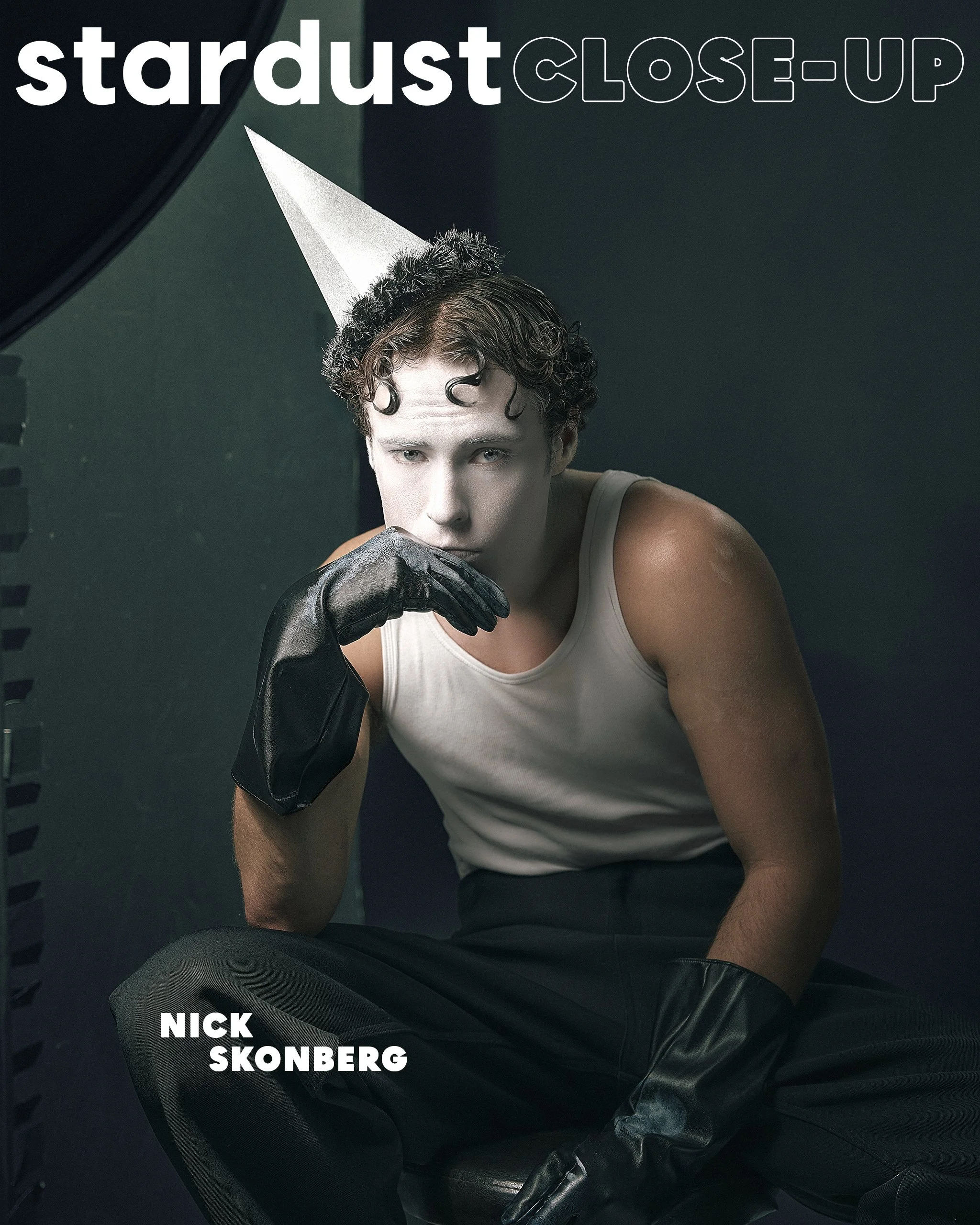
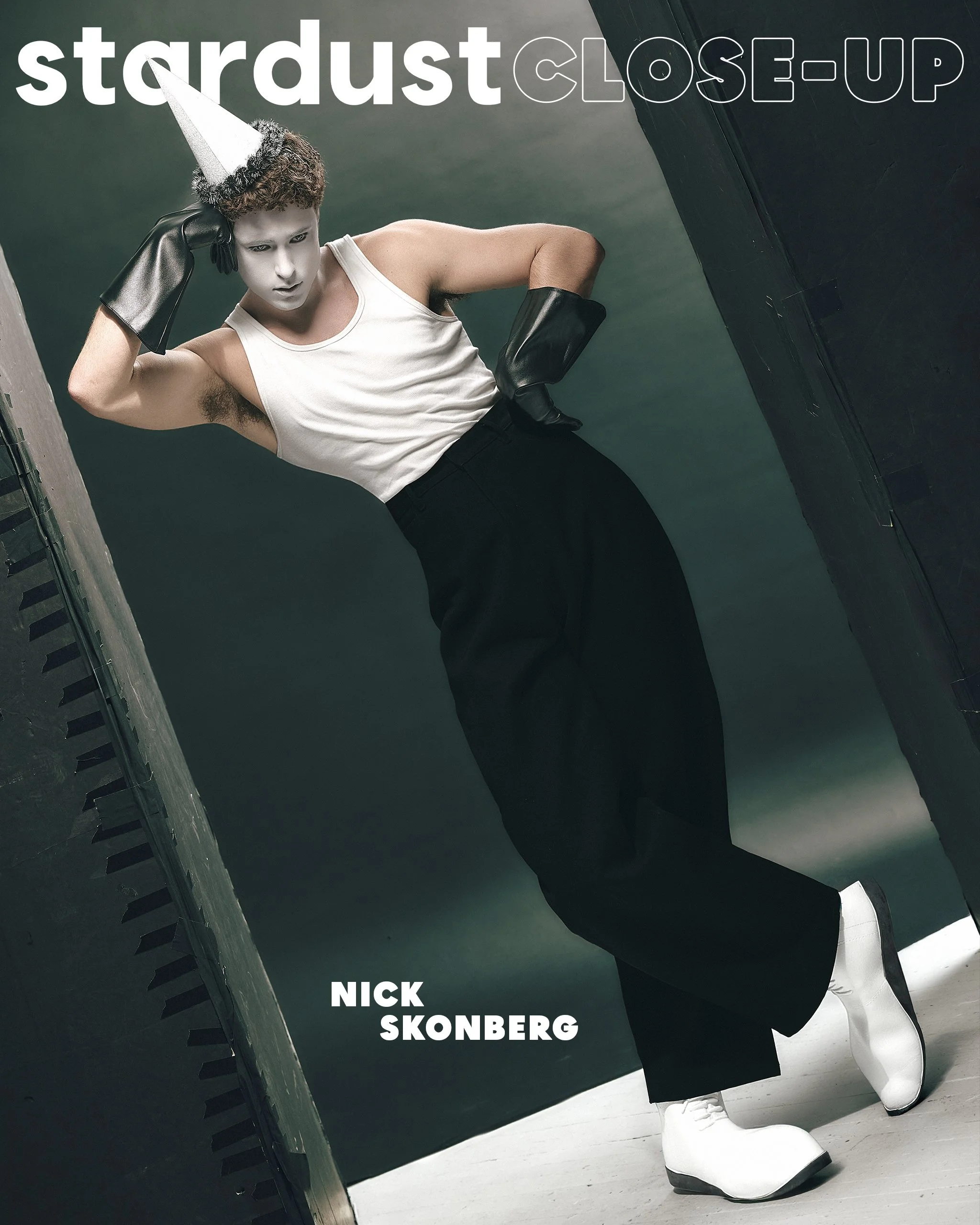
Stardust: There is a particularly striking scene you share with Mackenna Shults where both of you bring something very different to the moment: she leads with raw vulnerability, while your character gradually pulls the exchange somewhere much more volatile. What stands out to you most about creating such a powerful moment together?
Nick Skonberg: First off, I have to give Mackenna Schults the flowers that she wholeheartedly deserves. She’s the most wonderful human being and the most wonderful actor. She is so talented and so hardworking, and she leads with so much heart, care, detail, and precision. It was a really big project for both of us. We met pretty early, and then we FaceTimed a lot and just talked about the characters. We became really good friends really quickly, and I felt so safe and so comfortable with her.
It’s such an interesting dynamic that our two characters have, and having wholehearted trust in the person you’re playing this with, having so much care for that person, and knowing that they have you on the days when you’re not sure if you can stand up—and that you have that for them—is so important.
She is so brilliant in this film. She is my favorite character in this film. She gives my favorite scene in this film. I just saw her in New York recently, and I saw her the last time I was in L.A., and she’s just absolutely the best. I think I know what scene you’re talking about, but I don’t really want to give too many details because it definitely has a lot of spoilers. We shot that near the end of the shoot, which was great. By that point, we had acted with each other a lot and done some of the more emotional scenes in this film together. We really knew how each other worked, and I think that was definitely visible.
I feel like there are certain scenes, as an actor, where you get the script and you are very aware of what day you’re going to shoot them, and it becomes this sort of elephant in the room. But I think we knew that on that day, it would be a hug in the morning, then we probably wouldn’t talk while we were shooting, and then I’d give her a hug at the end of the day, just based on how both of us work. That was definitely the hardest thing I’ve ever had to do as an actor. That scene, especially because of the dynamic between these characters, the dynamic between me and Mackenna, and just the whole crew—we shot it in a really small room, and it is the breaking point for the two characters at the center of this film.
I think Ross comes into that room with so much hatred, anger, jealousy, aggression, and violence, and she comes into that room with so much heart, love, and care, but also presence, strength, and bite. Those two forces meeting was intimidating, and it didn’t feel great. I’m not going to lie and say that was a scene you walk away from and everybody goes out dancing afterward. It was definitely a scene where I kind of had to go to the bathroom and sit with myself for a little while afterward.
I think the crew was very conscious of the effect it was going to have on both of us. But when you go into a scene like that, you really have to know that the other person has you. I knew I had that with Mackenna, and I knew it was the kind of thing where I could come at her with 200% force, and she would meet me with 250%, and we were both going to be able to hold that space for each other. I’m really happy with how that scene came out, in a twisted way. I’m really proud of the work that we both put into it, and I think it brings the film together.
Stardust: Was there a specific moment in the script that made you feel you had to be part of the film?
Nick Skonberg: I think it was less of a specific moment and more of a specific theme. Because when you look at a film about ambition, when you look at a film about young artists, you’re standing on the shoulders of giants. You’re standing alongside Whiplash, Black Swan, The Social Network, and Opening Night. You’re standing alongside these films that have resonated with multiple generations—with people in the shoes of the characters, people who aren’t in the shoes of the characters, people who are artists, and people who aren’t artists.
This idea of promise is what drew me to the film, and it’s what I’ve really wanted to highlight in our marketing. My generation was in high school during COVID. We were looking at kids who were a year older than us, or potentially younger than us, and they were making millions to billions of dollars from brand deals, from dancing in L.A., or from companies they had started. The musicians, actors, filmmakers, and athletes we were looking at were all our age, in the same phase of life as us, but they were making millions of dollars and had worldwide fame and recognition. They were in line to become these great people. I think that created this feeling for our generation, with the comparison that social media brings and how heightened it is right now, that if you don’t have promise, or you haven’t achieved something by a certain point, or you haven’t lived up to something by a certain point, you have nothing, you are nothing, and you mean nothing.
If you don’t have that credit, that big person backing you, or any of that stuff, it can feel hopeless. Especially with artists, especially in art school. If you’re at these schools and some kids have been doing this their whole lives, or some kids have family in the industry, or some kids have an agent who found them really early, or a producer who’s been guiding them, or somebody who’s been trying to plant them in the industry or put them in a project, there’s this feeling that if you don’t have that—or you see somebody else having that—you have nothing. This weight of potential and this weight of promise are immensely heavy on the shoulders of my generation and a lot of the people I’ve grown up around, especially in the arts.
I think that was something this film did interestingly: really examining that culture of art school, that culture of being a young artist, and telling the story of a guy who is doing everything right but, based purely on the fact that he’s at the point where he should be beginning—being in school—he already feels 10 years behind, and there are already people lapping him. Even within his school, he isn’t that guy, and he has to look at who those guys are. There aren’t those teachers in his corner, and there aren’t those jobs coming up for him. It’s about how worthless that makes him feel and how hopeless that makes his dreams feel. I think that felt really important to me to explore with a young character, specifically a young artist. I hadn’t really seen that explored as much in this genre, and it meant a lot to me. I hope it will mean a lot to the world it’s going out into.
Stardust: As you continue to take on a wider range of roles, what helps you turn a character on the page into someone who feels real onscreen?
Nick Skonberg: I think the thing I’m trying to work on a lot right now is bringing more of myself to the parts I play—whoever I am and whatever draws people to me in my life, my friendships, my relationships, my collaborations, and bringing that into characters, whatever that spirit is. I think part of why I fell in love with acting, when I was a little shyer, a little more reserved, a little nerdier in high school, was that it felt like I could say so many things through a character and nobody could know that it was me saying those things. But through this character, I was able to say them. I think that was something that drew me to acting.
It got people to listen to me a bit for the first time, and whatever I needed to say had no weight or repercussions on my life as Nick. It felt like a superhero dual-identity thing. I think I was able to kind of disappear for a little bit and become somebody else in my own way, and I feel like I learned a little bit more about myself through that. There was such a private, ritualistic quality to acting for me.
But I think I’ve gotten too comfortable with that. The times I’ve felt the most proud of the work I’ve done and the most fulfilled by the work I’ve done have been the times when I’ve gotten to kind of slip into a part and not feel like I have a responsibility to Nick—to who he is, what he believes, and what he thinks—and instead really be able to slip into the mindset, the mannerisms, the voice, everything about the character. I think that’s what I love. There are so many actors who embody that. But I also think that when I really look at the actors I admire, in terms of reaching the level of honesty that I want to reach in my work—and that’s sort of the North Star I’m trying to chase—I really do have to bring more Nick in there. I really do have to bring more of who I am, what I am, what I believe, what I think, and all the beauty and the bloodshed that exists within me.
I think that’s harder, and I think it’s scarier, but I think it’s really exciting. If I believe in the work I’m doing, then I owe it to that work to bring myself to it and face those fears. Ross was a character who felt extremely close to home, and I felt like I needed to change to become him. I needed to lose weight. I needed to move differently. I needed to let my hair grow out, and I needed to learn the piano. Focusing on him like that gave me the confidence to step into him, but it also made it harder for me when I went into roles where I didn’t have to do as much. When I’ve done a short film or a scene in class or something where I have to be a little closer to Nick, it feels harder because it’s a lot scarier to me when I don’t have that kind of character to step into. I think that’s really the fear I have to face right now.
When I’m really looking at a part on the page and then looking at actors on screen whom I admire, the honesty they bring to their work comes from them bringing those aspects of themselves. They accentuate the aspects of themselves and the character that they, as artists, want to talk about. I think that’s so brave and honest, and I think that’s so inspiring to me. That’s really where I am right now. It’s very scary and very intimidating, but I think it’s what I owe to the work, and I think that’s really what I want to work on right now. But I also still want to do all that fun, crazy prep stuff because I think that’s where I just get excited about all of this. Going wild for a character is still very fun for me, but that hybrid is important to me right now.
Someone recently asked me about a role I would have wanted to play, and I just instinctively said Feyd-Rautha in Dune: Part Two. Butler was phenomenal, but playing a pale, bald, psycho rock-star alien prince with black teeth and a crazy knife-fight scene does sound extremely fun.
Stardust: What side of yourself as an actor are you most excited for audiences to discover next?
Nick Skonberg: I think the first thing that I want to say when you say this is playfulness. A sense of ease, a sense of confidence—or at least the illusion of confidence. When I really look at so many actors, especially in terms of screen presence, I love this aspect of them. This is true of current actors, and it even dates back to old Hollywood. They make it look so easy, and I think you, as an audience member, are so drawn to them because what they’re doing seems so fun.
And I don’t think that means taking lighter parts or taking lighter films. It’s about finding a way to get that script so ingrained in you, and having such an understanding of that character, that it just comes out naturally and playfully. You’re playing around with it each take, each scene, each moment, each line—bringing that levity, that sense of play, and that presence to it. It’s something I’m really excited to work on myself, and I hope I can bring more of that to the roles I play. I think I have the most fun acting when I’m playing in that capacity. I think that’s something I hope to bring, and I think that’s something an audience loves in an actor. I love when it feels so natural and real, and I think that comes across as a little bit of playfulness. That’s definitely something I want to bring to audiences.
I also want to bring good movies. A big thing for me in my career is that I want to get to the point where I can choose the roles, have an audience behind me through my on-and-off-screen work, and then get to sort of champion projects that I believe in. I spend a lot of time trying to understand where an audience is, but also where the world is, and what the films that are going out into that world are going to mean. I think bringing that perspective to the projects I choose and the characters I choose, and getting to the point where I can work on the writing and producing end of films and kind of champion the right projects and the right characters for that audience, is really important to me. Because I believe in movies, and I believe in audiences. And I believe that an actor with a point of view and an audience behind them is maybe one of the most powerful things in the entertainment industry. I think that’s something I’m working toward—not for ego, but because I believe in it.
Playfulness, good movies, and I also don’t ever want them to know what to expect. I guess I really want to approach every role differently, be a little better every time, learn more each time, and hopefully try to bring something back to the medium, the industry, and the art that have given so much to me. I think that’s really important to me. It’s a lot of things, but I’m just really excited for everything that comes next. I’m excited that, in any capacity, people are along for the ride now, and I’m excited for more people to come with me.
-
Photography by Oliver Zel